



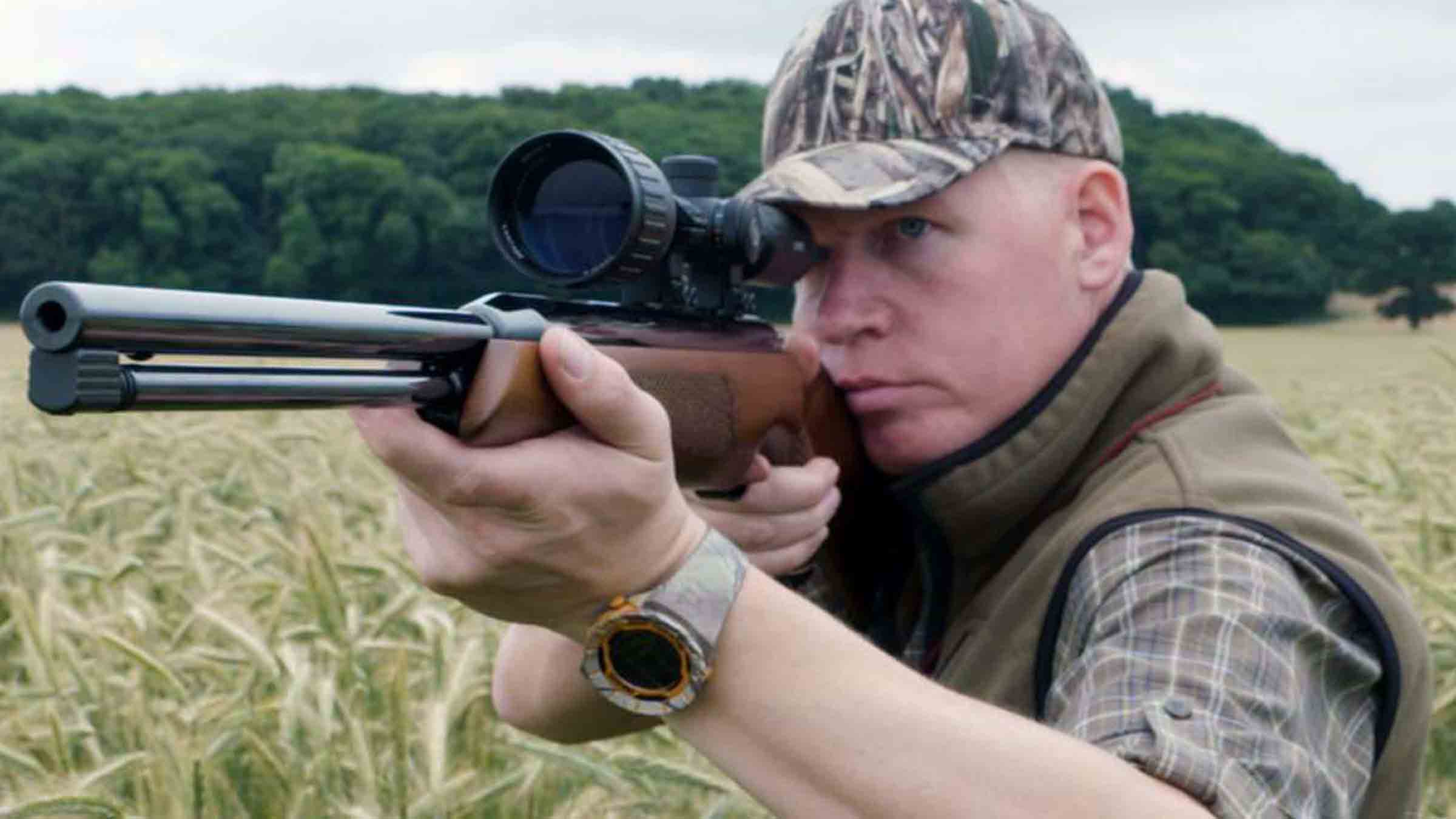
How Far Can a .177 Air Rifle Shoot Accurately?
When shooters ask how far can a .177 air rifle shoot accurately, they are often thinking about two very different things without realising it. Maximum ballistic range - the distance a pellet will travel before hitting the ground - is one figure.
Effective accurate range - the distance at which a shooter can place shots consistently and with confidence - is something else entirely, and it is the only figure that matters in competition or field use.
This guide works through both, using the technical and competitive context that Air Arms brings from over 40 years of British engineering expertise — Imagination Engineered — and direct involvement in Field Target and Hunter Field Target shooting.
Accurate Range vs Maximum Range: Why the Distinction Matters
A .177 pellet fired from a legal UK sub-12 ft/lb air rifle can travel well beyond 100 metres before coming to ground. That figure is largely irrelevant to a working shooter. At those distances, pellet drop is severe, wind drift becomes significant, and the margin for error shrinks to a level where consistent accuracy is no longer achievable without specialised equipment and conditions.
Effective accurate range is defined by the point at which a shooter can no longer place shots within a meaningful group size under real conditions - not ideal ones. For most .177 shooters using well-matched equipment, that boundary sits between 40 and 55 metres depending on the rifle, the pellet, and the environment, provided the shooter applies solid air rifle accuracy fundamentals. Beyond that, results become increasingly variable.
The key distinction
Maximum range tells you how far a pellet travels. Effective accurate range tells you how far you can shoot with confidence. In competition and field use, only the second number has any practical value.
The distinction also matters when choosing equipment. Shooters who confuse the two often underestimate the difficulty of hitting targets beyond 40 metres with a springer, or overestimate what a .177 can do without a regulated air supply behind it. Setting realistic expectations about effective range is the first step toward building a setup that consistently delivers at the distances you actually shoot.
How Pellet Weight, Velocity, and Ballistic Coefficient Shape .177 Calibre Trajectory
Three variables control how a .177 pellet behaves at distance: its muzzle velocity, its weight, and its ballistic coefficient (BC). These interact in ways that directly affect trajectory stability and wind sensitivity - and understanding them helps a shooter make informed choices about pellet selection and holdover.
.177 pellets are of a smaller calibre and, in typical sub-12 ft-lb rifles, are generally faster than .22 equivalents because their smaller diameter creates less air resistance. The difference is commonly around 200 feet per second in many typical setups. In the UK, both .177 calibre and .22 air rifles are still limited to 12 ft-lbs, so the real difference is trajectory and pellet behaviour rather than one having more power, which is why calibre choice becomes especially important when considering .177 or .22 for air rifle hunting. Typical weights for competition .177 pellets run between 7 and 8.5 grains. That lighter weight means the pellet loses velocity relatively quickly compared to heavier different calibres, and it is more susceptible to deflection by crosswind - particularly beyond 30 metres where the pellet has already shed a portion of its initial energy.
Ballistic Coefficient (BC) explained
BC is a measure of how efficiently a projectile retains velocity against air resistance. A higher BC means the pellet holds velocity better over distance, resulting in a flatter trajectory and reduced wind drift. In .177, heavier domed pellets typically offer better BC than lighter or wadcutter designs.
For practical .177 shooting, pellet selection beyond 30 metres becomes a performance decision, not just a preference. A heavier domed pellet with a good BC will maintain a more predictable trajectory and resist crosswind drift more effectively than a lighter flat-nosed alternative. The trade-off is a slightly lower muzzle velocity from the same rifle - but that small loss is usually worthwhile for the consistency it brings at distance. Lighter, aerodynamic diabolo-style pellets produce higher velocity and a flatter flight path, but are more vulnerable to wind drift.
- Lighter .177 pellets (7 grains and below) - faster muzzle velocity, but greater wind sensitivity and steeper drop beyond 30 metres
- Mid-weight domed pellets (7.5-8 grains) - a strong balance of velocity retention and stability for most competition ranges
- Heavier competition pellets (8-8.5 grains) - best BC values in .177, improved wind resistance, preferred for longer FT distances
One important practical point: trajectory at distance is not linear. Drop increases progressively, not evenly, as range extends. A holdover that works at 40 metres will not simply scale to 50 metres - the curve steepens. This is why systematic ranging and holdover practice are core skills for any .177 competition shooter.
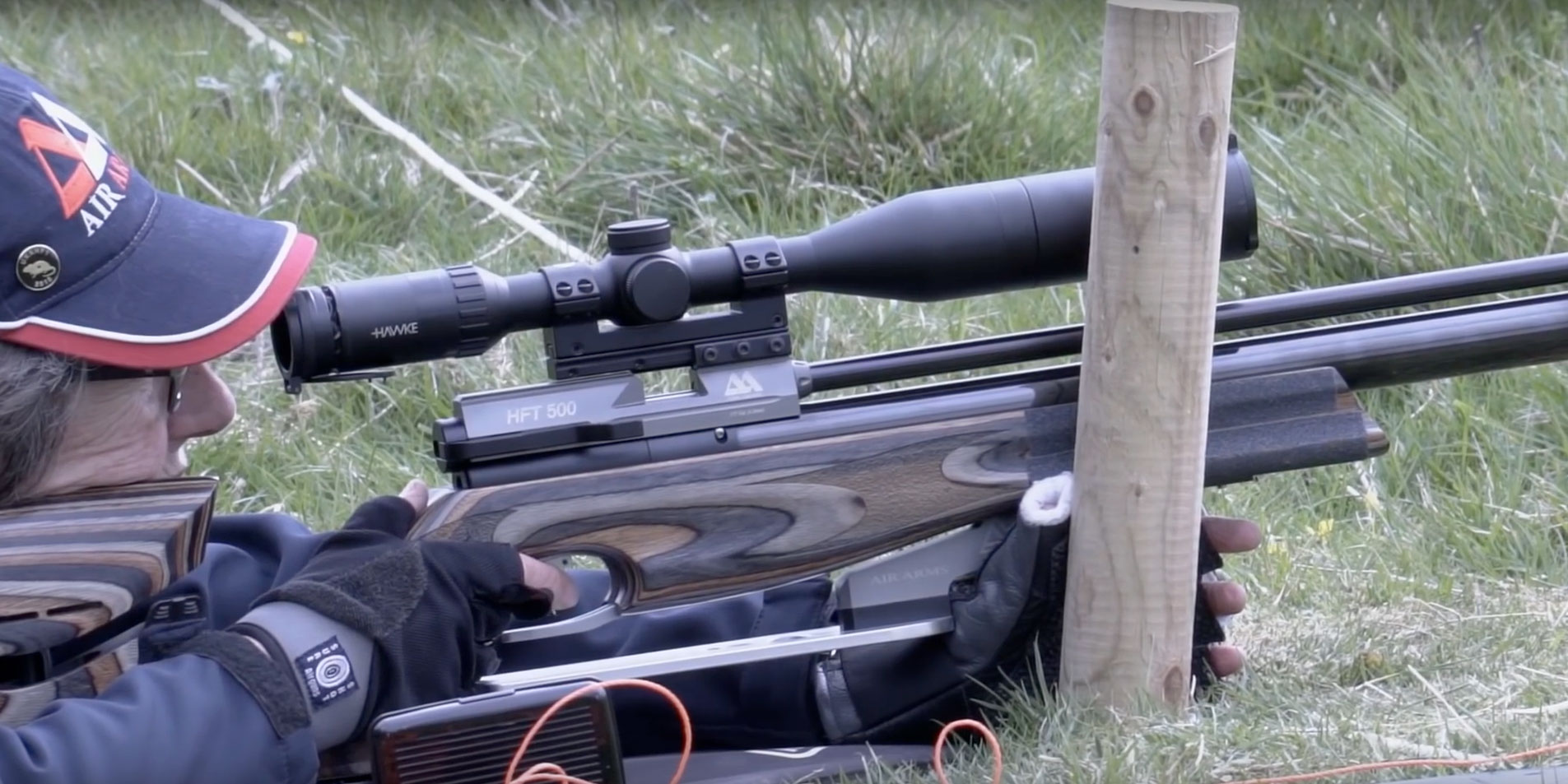
Real-World Distance Benchmarks for Precision Target Shooting: What FT and HFT Competition Demands
Field Target and Hunter Field Target competition provides the clearest real-world test of what a .177 rifle must deliver at distance. Accuracy depends more on rifle design and build quality than calibre alone, so the same gun in .177 or .22 can both be highly accurate. These disciplines set defined course parameters that translate directly into the precision requirements a rifle and shooter must meet.
In UK Field Target (FT) competition, targets are placed at ranges from 8 metres out to 55 metres. Kill zones - the mechanical paddle that must be struck to reset the target - range in size from 15mm to 45mm in diameter. Hitting a 15mm kill zone at 50+ metres with a .177 pellet requires a level of consistency that eliminates almost all equipment and technique variables.
FT competition precision demands
UK Field Target courses present kill zones as small as 15mm at distances up to 55 metres. At that range and target size, there is no margin for inconsistent muzzle velocity or pellet behaviour. Every shot must land in a predictable position relative to the point of aim, which is why consistent shot placement matters so much.
Hunter Field Target (HFT) courses operate within a 45-metre maximum range, with target kill zones typically between 15mm and 40mm, forming the basis of Hunter Field Target shooting as a sport. Shooting positions are fixed - standing, kneeling, and prone - removing some of the prone-only elements of FT. HFT is in some respects a more accessible discipline, but the accuracy requirements are no less demanding given that holdover is estimated rather than calculated from a rangefinder. That standard still reflects practical shot placement under realistic shooting range conditions.
Both disciplines confirm a practical benchmark: at competition level, a .177 rifle must perform accurately out to at least 45-55 metres to be competitive. For target shooting, that usually translates to an effective range of about 50-60 yards, while for pest control or hunting the practical limit is more often 30-40 yards. That is the real-world upper boundary for effective accurate range in .177, and it is the standard that Air Arms’ dedicated competition rifles - the XTi-50 competition rifle for FT and the HFT500 for HFT - are engineered to meet.
How Regulated PCP Systems Improve Consistency at Distance
Shot-to-shot consistency in muzzle velocity is the foundation of accurate long-range shooting. If pellet speed varies across a shot string, impact point shifts - and at 45-55 metres, even small velocity variations translate into missed kill zones. This is where regulated PCP air systems deliver a measurable, practical advantage.
A regulator maintains a stable, consistent supply of compressed air to the valve regardless of how much air remains in the cylinder. The result is a flat muzzle velocity across the shot string - rather than a bell curve that peaks and drops as the cylinder pressure falls. That consistency is not a luxury for competition shooting; it is a necessity.
The Air Arms XTi-50 is built around this principle. Its regulated action is engineered to maintain consistent muzzle velocity across a full shot string, giving competitors the confidence that each shot behaves the same way as the last. At FT distances of 40-55 metres, that consistency is what separates reliable scores from variable ones.
The HFT500 Hunter Field Target rifle applies the same regulated air system principle within an HFT-specific platform. Its free-floating match-grade barrel reduces pressure variations caused by stock contact, and a clean, high-quality barrel helps ensure consistent spin and stability in pellet flight. Combined with the regulated action, this produces the repeatable accuracy that HFT competition demands - particularly across the varying positions of a typical course.
Why spring-powered rifles face a harder challenge at range
Spring-powered underlever and break-barrel rifles introduce a firing cycle variable - the spring compression, release, and piston travel - that occurs before the pellet leaves the barrel. This recoil pattern requires careful technique to manage consistently. A shooter using a TX200 spring rifle at range is working against both external ballistics and the internal firing cycle, which demands exceptional technique to achieve the level of consistency a regulated PCP delivers more naturally.
This does not make spring rifles unsuitable for precision use - the TX200, for example, is respected precisely because its firing cycle is predictable and refined, particularly in the hands of a shooter who understands how to shoot a springer more accurately. But for competition shooters targeting consistent results at 45+ metres, the regulated PCP platform removes variables rather than requiring the shooter to compensate for them.
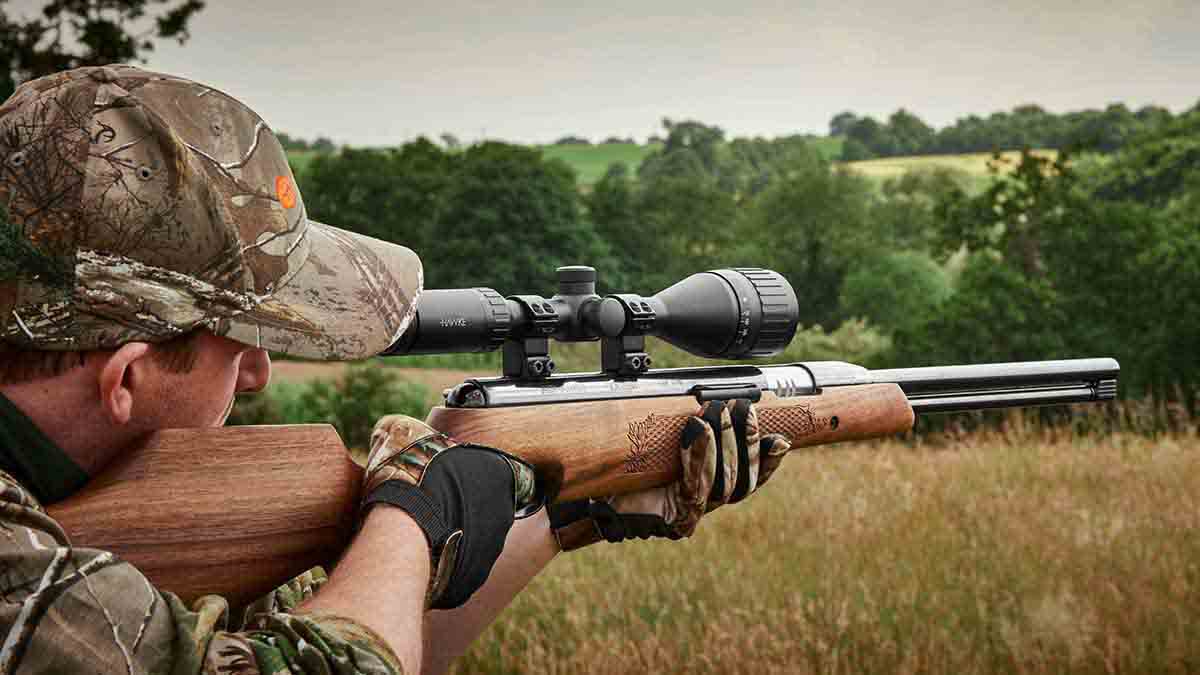
Environmental Factors That Limit Effective .177 Range
The rifle and pellet are only part of the equation. Environmental conditions act on every shot fired outdoors, and .177 pellets - given their light mass - are among the most sensitive projectiles to those conditions. Three factors demand specific attention: wind, temperature, and elevation.
Wind: The Primary Variable at Distance
Crosswind is the dominant external factor limiting .177 effective range. Because .177 pellets are light, they present a relatively large surface area relative to their mass - meaning a crosswind applies more lateral force per unit of mass than it would to a heavier .22 pellet. At ranges beyond 30 metres, even a moderate crosswind introduces drift that must be either compensated for through holdover or accepted as a miss.
Field Target courses often take place in wooded or partially sheltered terrain, which creates inconsistent, gusty wind conditions - arguably harder to read and compensate for than a steady crosswind. This is one reason why experienced FT competitors spend significant time developing wind-reading skills alongside shooting technique. A technically excellent shot released at the wrong moment in a gust will still miss a small kill zone at 50 metres.
Temperature: Air Density and Velocity Effects
Temperature affects air density, which in turn affects both pellet velocity and trajectory. Colder air is denser, increasing drag and reducing effective muzzle velocity slightly. Warmer air is less dense, reducing drag and allowing the pellet to travel marginally faster and flatter. These differences are small in absolute terms, but at competition distances they are sufficient to shift point of impact.
For UK shooters, who regularly compete in temperatures ranging from near-freezing to warm summer conditions, this means holdover settings established at one temperature may need slight adjustment in significantly different conditions. Regulated PCP rifles help here by isolating the air supply variable - velocity consistency from the rifle itself is maintained - leaving temperature as a known and manageable external factor rather than one compounded by shot string inconsistency.
Elevation and Terrain
Shooting across elevation changes alters the effective ballistic distance compared to a flat-range shot, so the shooter must determine the true effective distance rather than rely only on straight-line range. A target on a slope requires holdover adjustment based on angular rather than straight-line distance. Most FT and HFT courses incorporate elevation variation, and experienced competitors factor this into their range estimation accordingly.
Practical environmental management
Establish your holdover data at the temperatures typical for your regular shooting locations. Log shots across different conditions and note the shifts in point of impact, using scope references or recorded aim points when building data for sloped shots and changing terrain. This field data, built from your specific rifle and pellet combination, is more reliable than any theoretical table.
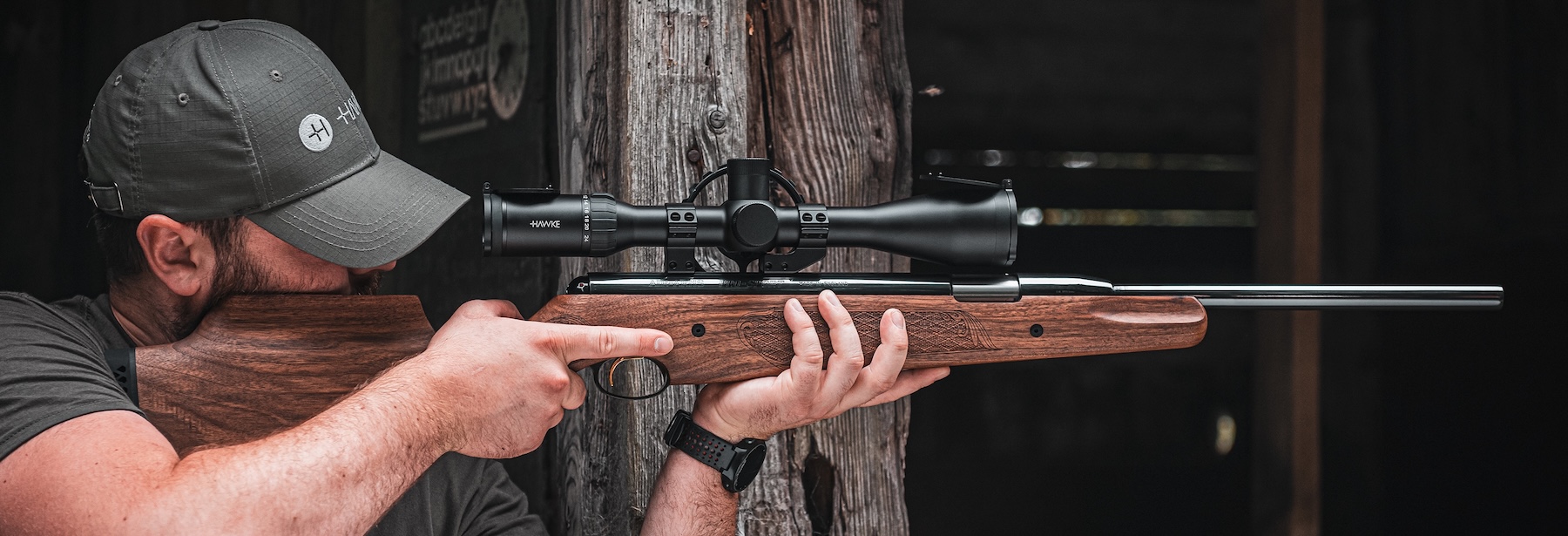
Choosing the Right .177 Setup for Your Distance Goals
The right .177 calibre setup depends on the distances you intend to shoot consistently and the level of performance you need at those distances. Working backwards from that target range is a more useful approach than simply buying the most capable rifle available.
For shooters targeting FT competition performance at the full 55-metre range - including small kill zones under variable conditions - the XTi-50 is built specifically for that demand. Its regulated action, fully adjustable stock, and championship-proven engineering provide the platform that FT competition requires. It is not a general-purpose rifle adapted for competition; it is a purpose-built tool, developed with direct input from top competitors.
For HFT competition within the 45-metre maximum range, the HFT500 competition rifle provides the precision and consistency needed to score reliably across all shooting positions. Its free-floating match-grade barrel and regulated air system are calibrated to the specific demands of HFT courses, where repeatability across prone, kneeling, and standing shots is essential for a strong scorecard.
Matching your .177 setup to your distance goals
Define your maximum shooting distance
Identify the realistic maximum range you will be shooting at — whether that is pest control or hunting at 30 metres, recreational plinking to 40 metres, or target shooting and competition work up to 55 metres. This defines the accuracy standard your rifle must meet.
Choose pellets matched to that range
At ranges beyond 30 metres, prioritise domed pellets in the 7.5–8.5 grain range with the best BC your rifle shoots consistently. Test pellets at your target distance, not just at 25 metres.
Select the appropriate platform
For target distances up to 40 metres, a quality spring rifle with disciplined technique can perform well, and many shooters weigh this against PCP options when considering PCP vs spring air rifles. There are different types of air guns for different jobs, and here the focus is the air rifle rather than an air pistol. For competition distances of 45–55 metres, a regulated PCP removes variables that spring-powered rifles require the shooter to compensate for, which is a key consideration when deciding between PCP and spring air rifles.
Build and document your holdover data
Establish point-of-impact data at 10-metre increments from your zeroed distance to your maximum range. Log conditions when you gather this data and note how wind and temperature affect results. This field-built holdover map is your most reliable guide to accurate range management.
Practice environmental reading, not just shooting
Beyond 40 metres, wind-reading and trigger timing in changing conditions are as important as technical ability. Include variable-condition sessions in your practice — not only ideal days — to build the skill set that competition distances demand.
Both the XTi-50 and HFT500 carry Air Arms’ 3-year warranty and are supported through the authorised dealer network, providing confidence not just in the initial purchase but in the long-term performance and servicing of the rifle. For competitive shooters, that reliability of support matters as much as the engineering in the rifle itself.
Illustrative competitive scenario
A club-level FT shooter using a regulated .177 PCP air rifle, matched competition pellets, and documented holdover data for their local course will consistently outperform a technically comparable shooter using mismatched equipment or relying on improvised range estimation. In precision target shooting, the aim is repeatable hits in the centre, and setup quality matters more than chasing the longest number a gun can claim. The limiting factor at 50 metres is rarely the rifle - it is the system around it.
The 177 air rifle effective range question, answered practically: for a well-configured regulated .177 PCP with matched pellets and a disciplined shooter behind it, consistent accurate performance extends to 45-55 metres under manageable conditions. That is the real benchmark - not a maximum ballistic figure, but a reliable working range that competition experience has defined and proven.
Find the Right .177 Air Rifle for Your Shooting Goals
Find the Right .177 Rifle for Your Shooting Goals
Explore the Air Arms range of precision .177 air rifles, including the XTi-50 and HFT500, designed and built in the UK for competitive field target and hunter field target shooting. Whether you're optimising for FT distances or building your first serious competition setup, our rifles are engineered to deliver the consistency and accuracy your shooting demands. Visit your nearest authorised Air Arms dealer to find the right rifle for your distance goals.