



What Are the Legal Restrictions on Airgun Moderators in the UK: What's Legal and What's Not
Questions about what are the legal restrictions on airgun moderators in the UK come up regularly among shooters - and the confusion is understandable. In England and Wales, a moderator fitted to a sub-12 ft/lb air rifle is generally legal to own and use without a Firearms Certificate, while moderators for air rifles over 12 ft/lb and other Section 1 firearms require the correct certification; Scotland and Northern Ireland have additional air weapon and moderator certificate rules to check. The language around moderators, suppressors, silencers, and firearms law can feel tangled, and the consequences of getting it wrong are serious enough that many shooters simply avoid the topic altogether. That is a shame, because for most UK air rifle owners and recreational shooters using a sub-12 ft/lb rifle, the legal picture is actually quite clear once it is properly explained.
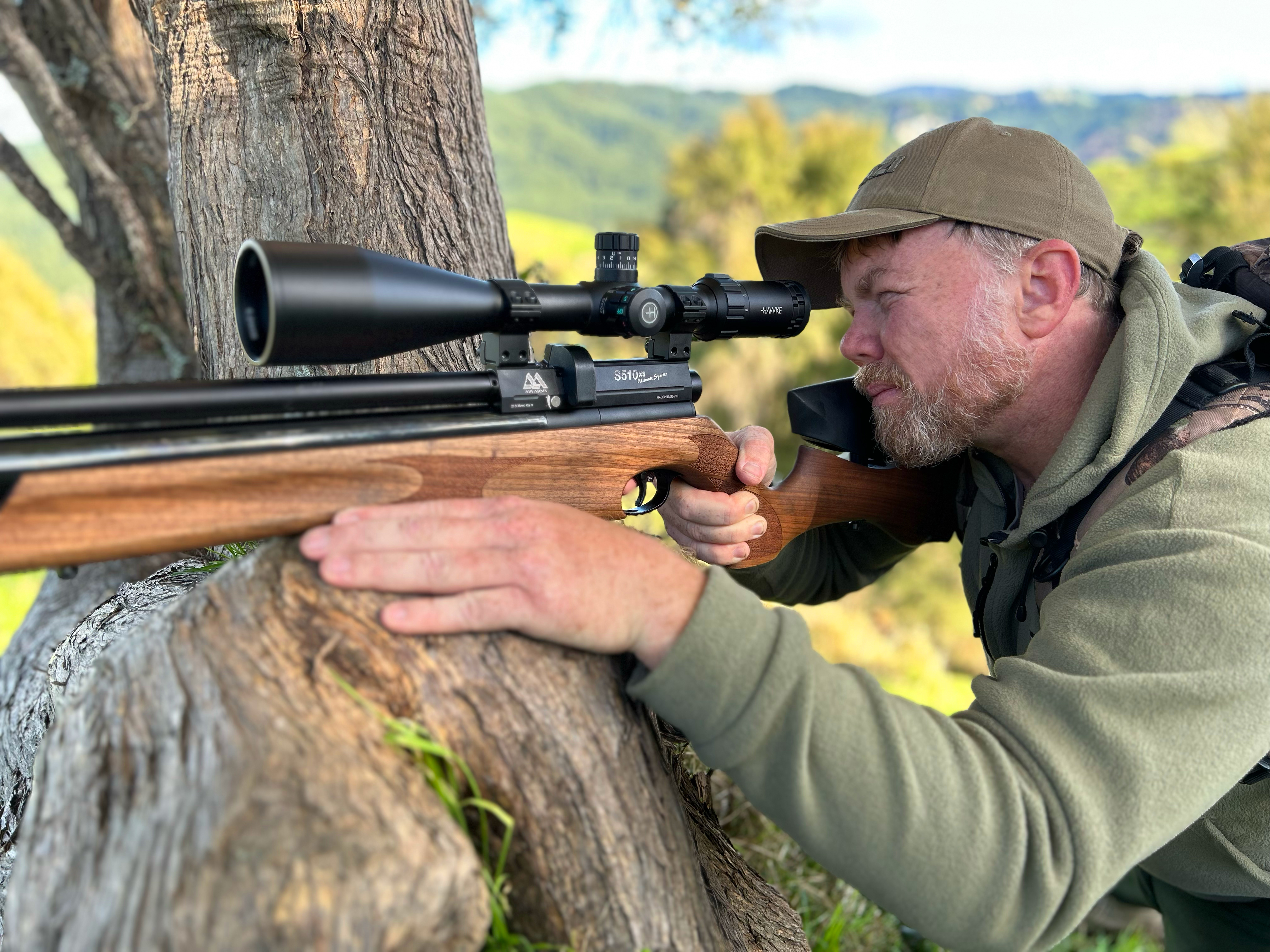
This guide is for UK air rifle owners and recreational shooters who want to stay compliant and make informed choices. It sets out the UK legal framework for airgun moderators, explains the distinction between moderators and suppressors, covers the regional differences across England, Wales, Scotland, and Northern Ireland, and clears up common misconceptions about what is and is not allowed. It also looks at practical fit and compatibility questions, including Air Arms rifles like the TX200 and S510 Tactical, so you can understand both the law and how it applies in real use.
This is not legal advice
This article is intended for general information purposes only. It does not constitute legal advice and should not be relied upon as a substitute for professional legal guidance. Legislation is subject to change. If you are uncertain about your specific situation, consult a qualified legal professional or contact your local police firearms licensing department.
Moderators vs Suppressors: Understanding the UK Legal Distinction
The words moderator, suppressor, and silencer are often used interchangeably in everyday conversation - but in a legal context, the distinction matters considerably. In the UK, the term moderator is most commonly used when referring to a sound-reducing accessory fitted to an air rifle. The word suppressor tends to appear in the context of Section 1 firearms: centrefire rifles, shotguns, and other weapons that require a Firearms Certificate (FAC) to own.
Both devices work on a similar mechanical principle - trapping and slowing the expanding gas that follows a projectile to reduce the report. But from a legal standpoint, what matters is not the device itself in isolation. It is the firearm it is attached to that determines how the device is classified and regulated.
A moderator on a sub-12 ft/lb air rifle occupies a very different legal space from a suppressor on a Section 1 centrefire firearm. Understanding this separation is the starting point for every other question in this guide.
Key term: Sub-12 ft/lb air rifle
In England and Wales, an air rifle with a muzzle energy output of 12 ft/lb (foot-pounds) or below does not require a Firearms Certificate to own or use. This sub-12 ft/lb power threshold in UK air rifle law is the legal cut-off that determines whether a rifle is treated as an air weapon or a Section 1 firearm under UK law.
What the Firearms Act 1968 Actually Says About Air Rifle Sound Moderators
The Firearms Act 1968 is the primary piece of UK legislation governing the ownership, use, and modification of firearms. Under Section 1 of the Act, certain weapons and accessories are controlled - and owning them without the appropriate certificate is a criminal offence.
Moderators, when used with Section 1 firearms, are themselves classified as Section 1 items. That means fitting a moderator to a centrefire rifle or a shotgun in certain configurations requires not only that the firearm is certificated, but that the moderator is also listed on that certificate.
However, the Act treats air weapons differently. In England and Wales, a sub-12 ft/lb air rifle does not fall under Section 1 - it is classified as an air weapon and sits outside the FAC framework. Because the air rifle itself is not a Section 1 firearm, a moderator fitted to it does not become a Section 1 item. In England and Wales, you do not need a Firearms Certificate to fit or own a moderator on a sub-12 ft/lb air rifle.
This is the key legal distinction that many shooters are unclear on. The moderator does not independently trigger Section 1 classification. Its legal status follows the status of the rifle it is attached to.
As of June 2025, moderators are being removed from firearms licensing controls. The Crime and Policing Act 2026 deregulated sound moderators on Section 1 firearms in England, Wales, and Scotland, and since 29 June 2026 they're no longer within that licensing framework there - though Northern Ireland's moderator licensing is unchanged, and Scotland's separate air-weapon moderator rules (above) still apply. The practical effect is that certificate holders no longer face a separate legal requirement for moderator entries under firearms licensing controls, while police administration is reduced. In the government response, 94% of consultation respondents supported removal, and the change was presented as reducing police administrative burdens while supporting public safety through clearer, proportionate controls, while shooters still need to understand how airgun suppressors work in practice and in law.
Where this changes: over-12 ft/lb rifles
If your air rifle produces more than 12 ft/lb at the muzzle, it is classified as a Section 1 firearm regardless of whether it was originally manufactured as an air weapon. In that case, a moderator fitted to it would also become a Section 1 item, and the rifle would be treated as an FAC-rated air rifle requiring licensing and specific lawful use. This is one of the most important reasons to ensure your rifle has been independently verified to be within legal power limits.
Regional Differences: England, Wales, Scotland, and Northern Ireland Compared
UK firearms law is not uniform across all four nations. While the Firearms Act 1968 forms the legislative foundation across Great Britain, Scotland and Northern Ireland each have regulatory contexts that affect how air rifle ownership and use is treated - and by extension, how moderators interact with those frameworks.
England and Wales
In England and Wales, sub-12 ft/lb air rifles are exempt from the FAC requirement. A person can acquire a moderator for such a rifle without any form of certificate or licence. Because it's still classed as an air weapon component, it must be purchased in person or collected from a Registered Firearms Dealer rather than posted directly to a home address as part of the sale. You must be 18 or older to obtain one legally in the UK. This is the most straightforward legal position, and the one that applies to the majority of recreational shooters in the UK.
Scotland
Scotland introduced additional restrictions on air weapons through the Air Weapons and Licensing (Scotland) Act 2015. Under this legislation, anyone in Scotland who wishes to possess or use an air weapon - including sub-12 ft/lb air rifles - must hold a valid Air Weapon Certificate under Scottish law, issued by Police Scotland. The Scottish Government has separately considered air-weapon licensing questions in this area, so shooters in Scotland should watch for future changes to local controls.
This is a significant difference from England and Wales. While a moderator on a sub-12 ft/lb rifle does not require a separate FAC, in Scotland, a moderator is treated as a licensed component part of the air weapon under the 2015 Act, in addition to the AWC required for the rifle itself - it isn't automatically covered. Owning or using an air weapon in Scotland without an AWC is a criminal offence, and shooters there should be familiar with the full Scottish airgun law and Air Weapon Certificate requirements.
Northern Ireland
Northern Ireland operates under a separate firearms licensing regime governed primarily by the Firearms (Northern Ireland) Order 2004. In Northern Ireland, all air weapons - including those that would be exempt in England and Wales - require a Firearms Certificate. This means air rifle ownership in Northern Ireland is significantly more regulated than in the rest of the UK.
Shooters in Northern Ireland should contact the Police Service of Northern Ireland (PSNI) Firearms and Explosives Branch for guidance specific to their situation, including questions about moderators.
Summary: Regional requirements at a glance
England and Wales - No FAC required for sub-12 ft/lb air rifle or moderator. Scotland - Air Weapon Certificate required for the rifle, and the moderator is licensed as a component part under the same framework. Northern Ireland - Firearms Certificate required for all air weapons. Regulations are significantly different from the rest of the UK. Always verify current requirements with the relevant licensing authority in your region.
How to Check a Moderator Is Legally Compatible With Your Air Rifle and Firearm Certificate
Legal compatibility between a moderator and your air rifle is not just about paperwork - it is also about ensuring the rifle remains within its legal power limit once the moderator is fitted. There is a common belief that moderators reduce a rifle's power output. In practice, the effect on muzzle energy is typically very small and often negligible, but shooters should not assume that a rifle running close to the 12 ft/lb limit will remain safely below it after any modification, especially when adding other air rifle accessories chosen by shooting style and budget that may affect handling and setup.
The safest and most reliable way to confirm where your rifle sits is to have it independently chronographed by a qualified gunsmith or through your registered dealer. This gives you a documented, accurate reading of your rifle's power output - with and without any accessories fitted.
- Confirm your rifle's muzzle energy output is within the sub-12 ft/lb legal limit, ideally with a recent independent chronograph test.
- Check that the moderator you intend to fit is designed and marketed for use with air rifles, not Section 1 firearms.
- Verify that the thread pattern on your rifle's barrel matches the moderator - fitting is mechanical, and using the wrong adapter can cause accuracy issues.
- Some airgun moderators require front sight removal before installation, so it is worth confirming that before purchase.
- If your rifle is in Scotland, confirm your Air Weapon Certificate is current before using the rifle in any configuration.
- Purchase from a reputable source - Air Arms authorised dealers are the most reliable point of contact for compatible accessories and current guidance.
A moderator that is clearly sold as an air rifle accessory by a reputable dealer will not in itself create a legal problem for a sub-12 ft/lb owner in England and Wales. The concern arises when rifles are not power-checked, or when shooters unknowingly use accessories designed for Section 1 firearms, or assume the same moderator is correctly matched without checking barrel and fitting compatibility.
Common Misconceptions That Could Land You in Trouble
Misinformation around moderator law circulates widely — on forums, in clubhouses, and in casual conversation. Some of it is harmless misunderstanding; some of it, if acted on, could put a shooter in a genuinely difficult legal position, including through unlawful possession.
Misconception 1: All moderators require a licence in the UK
This is not accurate for sub-12 ft/lb air rifles in England and Wales. The FAC licensing requirement applies to moderators used on Section 1 firearms - not to air weapons operating within the legal power limit. Conflating the two is one of the most common sources of confusion among recreational shooters.
What matters in legal terms is lawful possession, not whether someone casually calls the item a silencer or a moderator.
A second misconception is that fitting a moderator to an air rifle automatically makes it resemble an illegal weapon. The appearance of a firearm does not determine its legal classification — power output and the relevant legislative framework do. Appearance is still relevant in one practical sense, addressed in the callout below.
Misconception 2: Because the law says it is legal, there is nothing else to consider
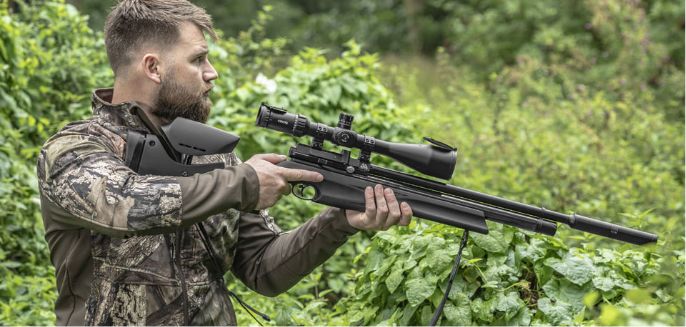
Legal compliance is necessary but not sufficient on its own. A sub-12 ft/lb air rifle fitted with a moderator may still attract attention in public spaces or be misidentified by a member of the public or a police officer. This does not make the shooter a criminal, but it does mean being prepared is sensible.
A third misconception is that the rules are the same across all four UK nations. Scotland and Northern Ireland both have distinct regulatory contexts, as set out in the regional section above. Assuming England and Wales rules apply elsewhere is a mistake with real legal consequences.
Finally, some shooters assume that because a moderator is available at retail, it is legal in every context. A person still needs to consider where the item will be used and whether they can lawfully possess a sound moderator in that setting.