



Air Rifle Moderator vs Silencer: What UK Shooters Must Know
The terms 'moderator' and 'silencer' are often used as if they mean the same thing. For a casual conversation, that might not matter. Under UK firearms law, it does. Understanding exactly where the distinction lies - and what it means for how you equip your air rifle - is not a matter of pedantry. It is the difference between a straightforward accessory choice and an unintended legal problem.
This guide covers the legal position clearly, explains how an air rifle moderator actually works, and gives you the practical information you need to make the right call - whether you're shooting in your garden, at a local club, or lining up for an HFT or Field Target event.
Moderator or Air Rifle Silencer? Why the Terminology Matters Under UK Law
The word 'silencer' carries specific legal weight under UK firearms legislation. Under the Firearms Act 1968, a silencer fitted to a Section 1 firearm - a centrefire rifle or pistol, for example - is itself a controlled item. You need a licence to possess it. The term 'silencer' in that context refers to a sound-reducing device attached to a firearm that would otherwise require a Firearms Certificate, though shooters and retailers may also refer to similar items as sound moderators or suppressors.
A moderator, in the context of air rifles, refers to the same type of device in engineering terms - a muzzle-fitted attachment that reduces the acoustic report of a shot. But the legal status of that device depends entirely on what it is fitted to. A sub-legal-limit air rifle sits outside Section 1 classification when it operates within the prescribed power threshold, and accessories attached to it follow a different set of rules.
Why language precision matters
Using 'silencer' and 'moderator' interchangeably without understanding the legal context creates genuine confusion. The device may be mechanically similar - but its legal status is determined by what rifle it sits on, not what you call it. Always use the correct terminology when speaking to retailers who sell these items, clubs, or governing bodies, especially when you need to decide what is appropriate for your setup and to understand your wider legal responsibilities under UK air rifle laws.
This is not a technicality for its own sake. It shapes how you discuss your equipment at a competition, how you communicate with your dealer, and how clearly you understand what you are and are not permitted to own. That distinction also reflects the difference between an air rifle moderator and the silencers used on a gun, where noise is created by the explosion of gases when a round is fired. Getting it right from the start is simply good practice. You must be over 18 to buy an air rifle moderator in the UK.
Are Air Rifle Moderators Legal for Air Rifles in the UK Without a Licence?
For the majority of UK air rifle shooters, the answer is yes - with an important condition. That general treatment applies whether the moderator is a fixed unit or a removable one, depending on the air rifle. Moderators fitted to sub-12 ft/lb air rifles are generally not subject to Section 1 certification requirements under current UK firearms law. The rifle itself is not a Section 1 firearm at that power level, so the accessory does not inherit that classification.
Verify current regulations before purchasing
The information in this article is general guidance only. UK firearms law can change, and individual circumstances vary. Always verify the current legal position with your local police firearms licensing department or a qualified legal authority before making any purchasing decision involving a moderator.
The 12 ft/lb power threshold is the defining line for unlicensed air rifles in England and Wales. Scotland requires an Air Weapon Certificate for any air weapon regardless of power. A rifle operating below this limit does not require a Firearms Certificate to own or use. Moderators fitted to those rifles fall within the same general exemption - they are not separately licensable items in this context.
The exceptions are worth understanding clearly. If your air rifle exceeds 12 ft/lb - placing it in the FAC (Firearms Certificate) category - then the legal position of an attached moderator changes. FAC-rated air rifles are Section 1 firearms, and a sound moderator attached to one may require specific licensing consideration. If you are shooting a higher-powered rifle under an FAC, the question of moderator legality is one to raise directly with your licensing authority.
- Sub-12 ft/lb air rifles: moderators are generally legal without a licence in England and Wales. Scotland requires an Air Weapon Certificate regardless of power, and that certificate framework extends to sound moderators.
- FAC-rated air rifles (above 12 ft/lb): the legal position of an attached moderator requires separate verification
- Northern Ireland: firearms law differs from Great Britain - always check the relevant local legislation
- Retailer purchase: reputable airgun shops often carry a large range of airgun moderators from established manufacturers; some buyers also look online, but how items are sold and delivered can differ by retailer and product type
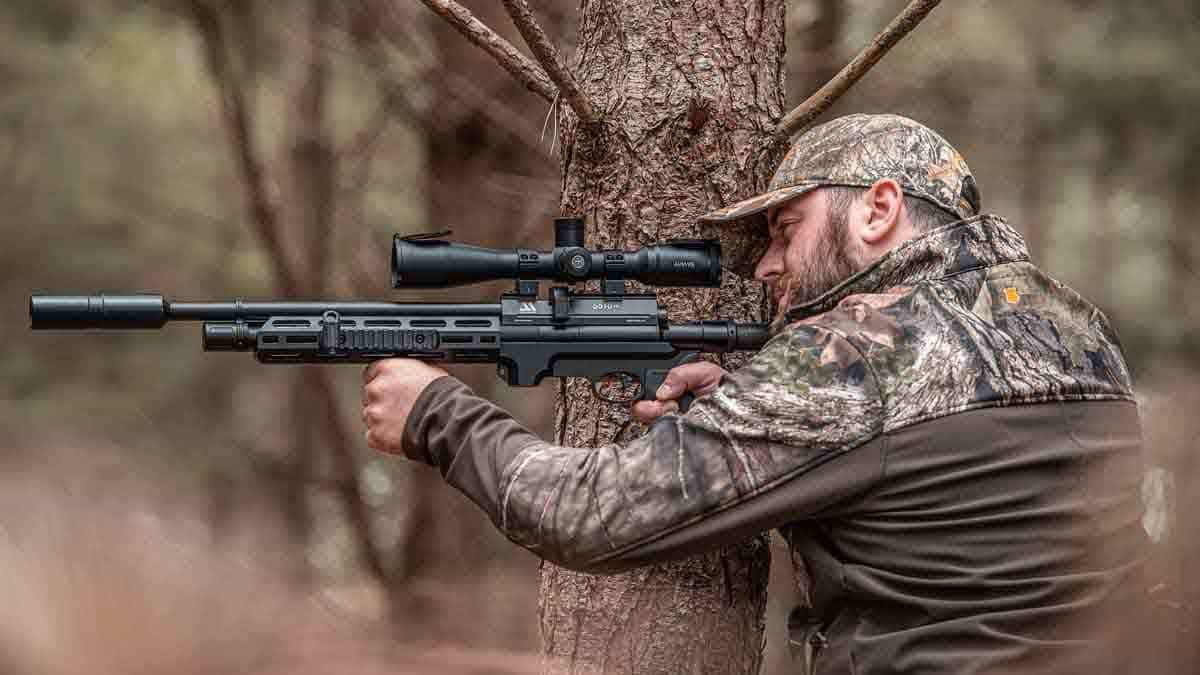
How Sound Moderators Work Without Affecting Your Rifle's Power Output
A common concern - and a question that surfaces regularly in club discussions - is whether fitting a moderator reduces or alters the power output of a rifle. It does not, and understanding how an air gun suppressor actually works requires a brief look at the mechanics.
The report of an air rifle shot is caused primarily by the rapid expansion of compressed air or gas as the pellet exits the barrel. The pellet itself is already travelling at its maximum velocity by the time it leaves the muzzle - the noise comes from the gas escaping behind it. An air rifle silencer or moderator is intended to reduce muzzle report rather than mechanical action noise. A moderator captures and manages that escaping gas; it has no effect on the forces that accelerated the pellet.
How a Moderator Reduces Muzzle Report
Gas enters the moderator
As the pellet exits the barrel, the propellant gas behind it enters the moderator body through the muzzle. The pellet passes through the centre channel unobstructed.
Expansion chambers slow the gas
Inside the moderator, the gas passes through a series of internal baffles and expansion chambers. Each stage forces the gas to expand, slowing its velocity and reducing its pressure progressively. Many designs additionally use sound-absorbing materials such as felt and foam, and internal volume also influences how effectively that gas can be managed.
Sound energy is dissipated
By the time the gas exits the moderator body, its velocity and pressure have dropped substantially. The acoustic energy - the 'crack' or 'thwack' of the shot - is reduced proportionally. Projectile velocity remains unchanged. On many air rifles, noise reduction is typically around 30-40 decibels, though results vary by design. This does not create true silence; it simply makes the shot less intrusive.
This is an important point for competition shooters. A moderator fitted to a correctly set-up rifle does not push you over power limits. It does not alter chronograph readings. What leaves the barrel is exactly what the rifle's air system was configured to produce - the moderator only manages what happens to the gas after the pellet has gone.
Entry-Level vs Precision Moderators: What's the Real Performance Difference?
Not all moderators are built to the same standard, and while appearance may catch the eye, fit, alignment, and tested performance matter far more. For recreational or backyard use, an entry-level moderator will deliver a meaningful reduction in muzzle report and is a reasonable choice.
Entry-level moderators typically use simpler baffle geometry and are manufactured to wider tolerances. Internal materials and build quality vary as well, with some designs using felt, foam, or plastic to help absorb sound. They work, and for many shooters they work well enough. The trade-off appears at the margins: less consistent attenuation from shot to shot, potentially more variation in how the moderator sits on the muzzle, and less attention to alignment precision and cost often reflects that.
A well-made moderator should not reduce accuracy and may improve consistency by softening muzzle movement or perceived recoil. The result is consistent, repeatable noise reduction and a fitment that does not compromise the rifle's inherent accuracy.
- Entry-level: simpler baffle design, wider manufacturing tolerances, effective for recreational use
- Mid-range: improved internal geometry, better materials, suitable for club use and informal competition
- Precision/competition grade: tight tolerances, refined expansion chambers, consistent attenuation, appropriate for FT and HFT competition rifles
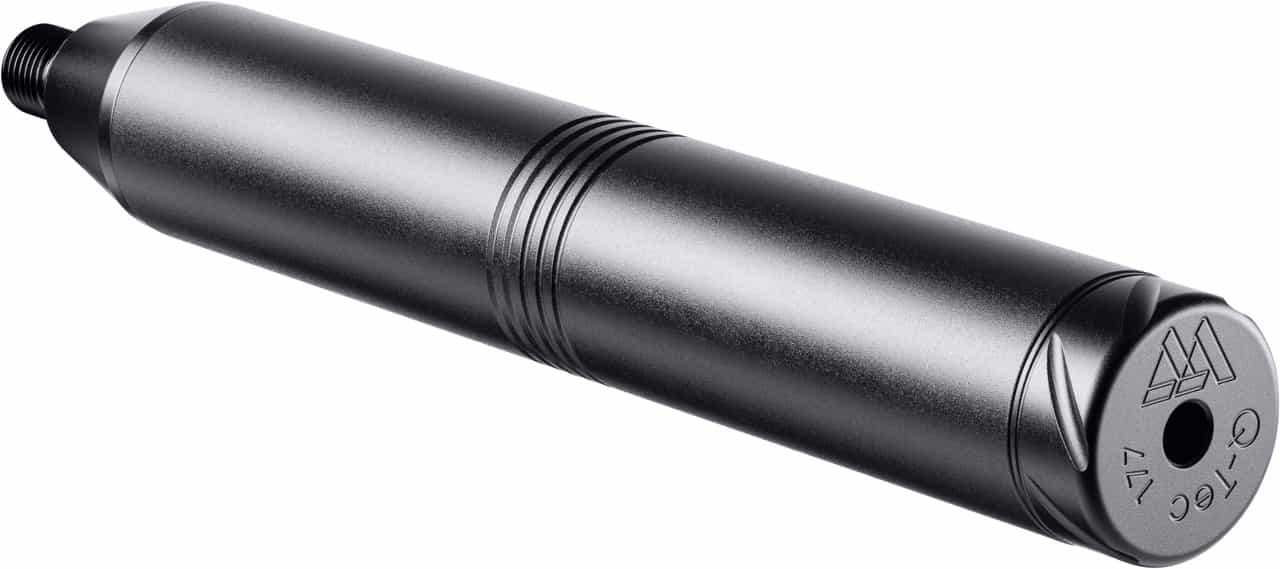
Choosing and Fitting a Moderator to Your Air Arms Rifle for Club and Competition Use
Selecting the right moderator for an Air Arms rifle involves more than picking the quietest option on the shelf. The right choice should suit the rifle’s overall setup, especially if it is one of the pcp air rifles, as a moderator’s effect varies by rifle type and is usually most noticeable on a pcp model. Several practical factors determine whether a moderator will work correctly and - critically - not affect your rifle's performance or balance.
Thread compatibility
Air Arms rifles use a defined muzzle thread specification. Before purchasing any moderator, confirm that the thread pattern matches your specific model. Using an adapter is possible, and some rifles or air pistols may need adapters to match thread sizes, but a direct-thread fit is usually the better option for alignment; it also introduces an additional junction point, so for a competition rifle a direct-thread fit is always preferable where available. Your Air Arms authorised dealer can confirm the correct specification for your rifle, and the moderator should screw on cleanly and concentrically to avoid fitment issues.
Weight and balance
Adding a moderator to the muzzle shifts the balance point of the rifle forward, which is already a precisely configured platform. This shift can affect how the rifle sits in your hold - particularly for standing and kneeling positions in HFT, and a heavier unit can also change how the rifle feels through the stock and front end. Lighter precision moderators minimise this effect. It is worth testing the fitted combination before competition day to understand any adjustment needed. The extra weight should suit your discipline and hold rather than simply look right.
Barrel length and overall configuration
A longer barrel already provides more time for gas to decelerate before reaching the muzzle, which can affect how much additional attenuation a moderator delivers across the rifle’s overall setup. On rifles with shorter barrels, a moderator typically delivers a more noticeable reduction in report. Moderators also tend to be most effective on PCP rifles because more of the report comes from escaping air volume. For Air Arms rifles - built in the UK with over 40 years of engineering expertise - the barrel configuration is already optimised for performance, so moderator length becomes the primary variable to consider, alongside the need to stay within UK air rifle law on power and ownership.
Pre-purchase moderator checklist for Air Arms rifles
- Confirm the muzzle thread specification for your specific Air Arms model with your authorised dealer
- Choose a moderator weight appropriate to your shooting position and discipline
- Verify the moderator is sourced from a reputable airgun retailer
- Check that the total rifle length with moderator fitted meets any venue or competition equipment rules
- Test the fitted combination on a range session before a competitive event
Will a Moderator Affect Your Eligibility in HFT or Field Target Events?
The short answer is that moderator use is generally permitted in both HFT and Field Target competition, provided the rifle remains within the power limit and the moderator does not breach any specific equipment rules set by the governing body for that event. The British Field Target Association (BFTA) and the relevant HFT governing bodies set the rules for their respective disciplines - and those rules are the authority on this question, not general assumptions.
In practice, moderators are a common sight at FT and HFT events across the UK. Many competitors fit them as standard. They are also valued outside competition for hunting and target shooting, where a reduced report is often useful. The critical point is that the rifle, when chronographed, must still read at or below 12 ft/lb. As established earlier, a correctly fitted moderator does not affect power output - so this is not typically a concern. Where it does become relevant is if a poorly fitted or non-standard moderator creates any obstruction or measurement issue during equipment checks.