



How Do Air Rifle Silencers Work? A Guide for UK Shooters
If you've ever wondered how do air rifle silencers work, the short answer is this: a sound moderator reduces muzzle noise by slowing and dispersing the burst of compressed air that follows the pellet out of the barrel, using internal baffles to break up the pressure wave. Sound moderators are one of the most commonly fitted accessories on UK air rifles, yet the mechanics behind them are rarely explained well.
For UK air rifle shooters who want a quieter, more comfortable setup, that matters for practical reasons as much as technical curiosity: less disturbance to neighbours and wildlife, easier compliance with club expectations, and better shooting comfort without affecting normal rifle use. This guide covers where air rifle noise comes from, how a moderator’s internal structure reduces muzzle report.
Why Air Rifles Make Noise - and Why It's Different from Firearms
The noise an air rifle produces is fundamentally different in origin from a firearm's report. Firearms generate sound primarily through combustion - the rapid chemical explosion of a propellant creates an enormous pressure wave. Air rifles produce no combustion at all.
Instead, the sound you hear when shooting an air rifle comes from the sudden release of compressed air or gas from the breech area as the pellet exits the barrel. That expanding gas follows the pellet out at high pressure, then meets the ambient air at the muzzle and creates turbulence. This turbulent pressure wave is the primary source of muzzle report in air rifles.
Spring-powered rifles add another layer. When the piston fires, it generates a sharp mechanical thump in addition to the muzzle release. That internal piston sound travels through the stock and can be just as noticeable as the muzzle report itself. PCP rifles skip this entirely - the shot cycle is much quieter mechanically, and the noise is almost exclusively from the gas release at the muzzle.
Muzzle Report - What It Actually Is
Muzzle report is the sound produced when compressed gas exits the barrel behind the pellet. In air rifles, this is always pneumatic in origin - compressed air or CO2 expanding rapidly - not a combustion event. This distinction matters because it shapes how a moderator works and what it can realistically achieve.
It's also worth noting that a pellet travelling above the speed of sound creates a separate crack - a sonic boom of its own. UK legal-limit air rifles operating at or below 12 ft/lb are typically kept below the sound barrier with most pellet weights, but this is worth understanding if you're experimenting with lighter or faster pellets.
How an Air Rifle Silencer (Sound Moderator) Works: Baffles, Gas Expansion, and Noise Reduction
A sound moderator - also called a silencer, suppressor, or moderator depending on context - is a cylindrical device that attaches to the muzzle of the barrel and, when correctly fitted, does not completely silence an air rifle but significantly reduces muzzle noise. Its job is to slow and dissipate the expanding gas before it exits into the open air, reducing the pressure wave that causes the audible report. An air rifle silencer works on similar principles to firearm suppressors, but is designed specifically for pneumatic air rather than combustion gases.
Inside, the moderator contains a series of internal chambers separated by baffles - disc-like or cone-shaped partitions with a central hole just large enough for the pellet to pass through cleanly. Each baffle creates a separate expansion chamber, and multiple baffles force a convoluted path for escaping air, creating turbulence and slowing it further.
Here's how it works step by step:
- The pellet exits the barrel and enters the moderator body at high velocity.
- The compressed gas following the pellet expands into the first baffle chamber, losing pressure and velocity.
- Gas passes progressively through each subsequent chamber, losing more energy at every stage.
- By the time the gas exits the moderator, its pressure has dropped significantly - and with it, the volume of the report. As this happens, air rifle moderators are handling cold, compressed air as it expands through the chambers.
The pellet itself is unaffected by this process. It travels through the central bore of the baffles without contact, so there is no meaningful loss of velocity or power from fitting a correctly sized moderator. The moderator is managing the gas that follows the pellet, not the pellet itself.
Does a Moderator Reduce Power?
A well-fitted moderator does not reduce pellet power in any meaningful way. The pellet has already left the barrel before the gas expansion is moderated. Velocity loss, if present, is negligible and well within normal shot-to-shot variation. The key condition is correct bore alignment - a misaligned moderator can clip pellets, which is both dangerous and damaging to accuracy.
The number of baffles, their spacing, and the internal volume of the moderator all influence how effective it is. Some high-quality airgun moderators also use porous or sound-absorbing materials such as foam or felt to dampen residual sound energy. More chambers generally mean more opportunity for gas to slow down - but there are diminishing returns, and a well-engineered compact moderator will often outperform a poorly designed larger one.
Spring-Powered vs PCP Air Rifles: Does Moderator Performance Differ Between Rifle Types?
Yes - and it's a distinction worth understanding before you fit one.
On a PCP rifle like the Air Arms S510 Tactical, the primary noise source is the muzzle gas release, because PCP air rifles store and release pre-compressed air from a reservoir. A moderator addresses this directly and effectively. PCP air rifles generally benefit most because so much of their report comes from escaping air at the muzzle. Because the shot cycle itself is mechanically quiet - no piston spring, no heavy internal moving parts - fitting a moderator to a PCP can produce a very noticeable reduction in report. The result is a noticeably quieter shooting experience.
Spring-powered rifles like the present a more nuanced picture, and many shooters weigh these differences carefully when deciding between PCP and spring air rifles for their primary setup. The moderator still reduces muzzle report effectively, but the mechanical thump of the piston firing remains. This internal action sound travels through the stock and is not addressed by a muzzle moderator at all. So while the muzzle crack is reduced, the overall acoustic signature of a spring rifle is more complex.
Spring vs PCP - Setting Realistic Expectations
On a PCP, a moderator is highly effective because the muzzle report is the dominant noise source. On a spring rifle, the moderator manages one part of the noise - the muzzle crack - but the piston action is a separate sound that persists. Both benefit from a moderator, but the PCP typically sees the greater overall reduction, which is one of the factors worth considering if you are choosing between second-hand PCP and springer air rifles.
It's also worth noting that sound reduction is not fully consistent across different pellet types and power levels. A pellet with a poor bore seal - either too loose or too large for the bore - can allow gas to escape inefficiently, creating more turbulence. Heavier pellets tend to produce a slightly different acoustic result than lighter ones at the same power level. And any pellet approaching the speed of sound will generate its own sonic signature regardless of moderator quality.
The practical takeaway: match your pellet well to your rifle's bore, shoot within legal power limits, and choose a quality moderator - you'll get the best acoustic result from that combination, especially when you consider how moderators sit alongside other key air rifle accessories for UK shooters. That matters in hunting as well as target shooting, where a quieter report can help avoid spooking nearby quarry and cause less disturbance around the target area.
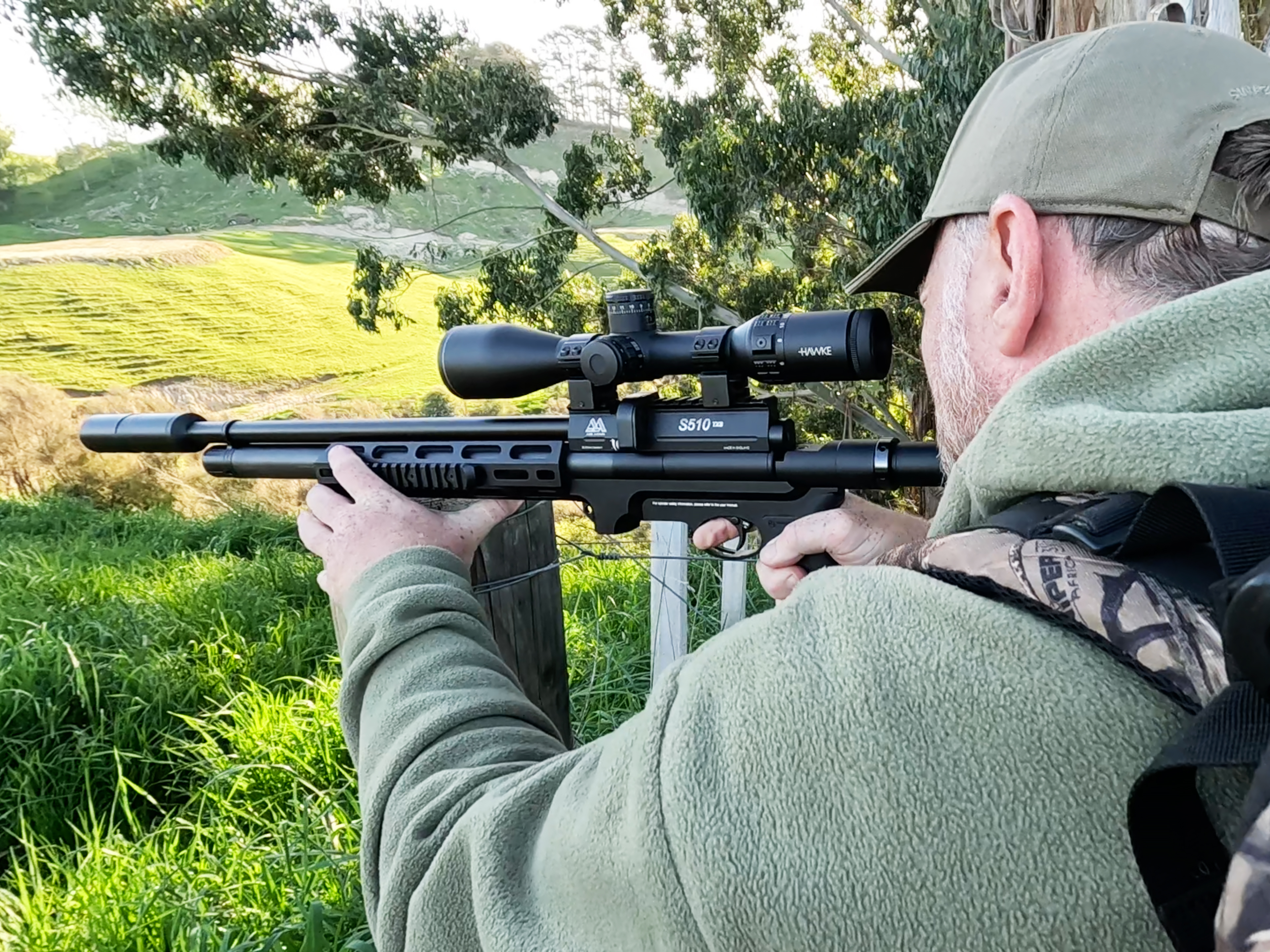
Moderated Shooting in the UK: Legal Considerations and Why It's Good Practice at Clubs and in the Field
In the UK, fitting a sound moderator to an air rifle is entirely legal and widely encouraged. There is no licensing requirement for air rifle moderators - unlike firearms suppressors - which is another reason not to conflate the two. In June 2025, UK law will remove sound moderators from licensing controls. Outside the UK, legal considerations vary, and local laws in some regions may regulate or ban airgun moderators or silencers.
The case for moderated shooting in club and backyard environments is straightforward. Shooting ranges and clubs operate within residential or semi-rural areas, and reducing muzzle report is a matter of courtesy as much as anything else. A quieter rifle is less disruptive to neighbours, less likely to disturb wildlife in a field shooting context, and more comfortable for shooters and bystanders over extended sessions.
Many clubs actively encourage or require moderated rifles as part of their range rules. This reflects a wider culture of responsible shooting — one that Air Arms, with over 40 years of British engineering expertise, supports through the design of its rifles and the guidance it provides to UK shooters.
- Reduced disruption to neighbours in backyard and semi-rural shooting settings.
- Less shot-to-shot fatigue for the shooter during longer range sessions.
- Minimised wildlife disturbance when shooting in field environments.
- Compliance with club range rules that mandate or recommend moderated shooting.
- A quieter experience that keeps shooting as a sport sustainable and accepted in local communities.
Moderated shooting is not about stealth. It's about being a considerate, responsible shooter - which is exactly the standard UK airgun moderators are meant to support, and an important distinction from firearm silencers.
Choosing the Right Moderator: Fit, Thread Compatibility, and What to Look For
The wrong moderator fitted incorrectly is worse than no moderator at all, just as choosing the wrong platform can be an issue when deciding between PCP and spring air rifles overall. Getting the fit right is the single most important factor - both for safety and for acoustic performance. The wrong adapter can also cause accuracy problems or physical damage, especially across many airguns where thread standards and barrel profiles differ.
The first consideration is thread compatibility. Air Arms rifles use specific muzzle thread specifications, so any moderator you fit must match the thread pitch and diameter on your particular model. Fitting a moderator with an incorrect thread or using an adapter that doesn't align properly is unsafe. Always check the specification for your rifle before purchasing.
What to Check Before Buying a Moderator
Thread Size
Confirm the muzzle thread specification for your specific Air Arms model. Thread pitch and diameter vary between rifles and calibers - a universal moderator without the correct adapter will not seat safely. Most airgun suppressors use 1/2 UNF, but you should still confirm the exact specification for your rifle and setup.
Some rifles also require the front sight to be removed before the moderator can screw on correctly.
Calibre Bore Clearance
The moderator's internal bore must be appropriate for your caliber. A .22 pellet must pass through a .22-rated bore without contact. Using a moderator rated for a different caliber risks pellet strike and serious damage.
Weight and Balance
A heavy moderator shifts the rifle's balance toward the muzzle. This can affect hold and swing, particularly on lighter rifles. Consider whether the additional weight works with your shooting style and position.
Construction Quality
Look for a moderator with a solid, well-machined body. Internal baffles should be correctly aligned - any play or misalignment in the baffle stack compromises both safety and performance. Tight manufacturing tolerances also help keep high-pressure air contained and managed consistently through the expansion chambers inside the baffle structure.
Some moderators can be cleaned if they are designed for disassembly.
Intended Use
A compact moderator suits a shorter, more manoeuvrable rifle. A larger unit with more baffle chambers suits a full-length rifle where muzzle-heavy balance is less of a concern. Match the moderator to how you actually shoot.
For Air Arms rifles, the best guidance is to work with an authorised dealer who can confirm the correct specification for your model. This avoids thread mismatch, ensures correct bore alignment, and means you benefit from informed advice backed by the rifle manufacturer's knowledge.
Never Guess on Thread Fit
A moderator that is not correctly threaded onto the muzzle can work loose during firing. A loose or misaligned moderator that allows pellet contact with the baffle stack is dangerous and will destroy accuracy. If in doubt, consult an authorised Air Arms dealer before fitting any moderator to your rifle.
Air Arms backs every new rifle with a 3-year warranty and dedicated aftersales support through its authorised dealer network. That network is also the right place to ask accessory questions - including moderator compatibility - so you get the right answer first time.