



Does a Silencer Reduce Power Air Rifle?
The question comes up constantly at clubs and on forums: does a silencer reduce power in an air rifle? In practice, no - a moderator does not reduce power in any meaningful way, because the pellet’s speed and energy are established inside the barrel before it reaches the moderator at the muzzle. For air rifle users, whether you are a casual shooter or a more serious airgun enthusiast, that distinction matters because many people worry that adding a silencer will cost them power, affect accuracy, or change how the rifle behaves.
What is worth understanding is what a moderator actually does and does not do. This guide looks at the physics behind pellet velocity, how moderators affect noise, when fitment can influence consistency or point of impact, and what to keep in mind if you are choosing one for a regulated PCP air rifle. For a broader overview of how air gun suppressors work in practice, it’s also useful to understand their design, legal status, and real-world benefits. The aim is simple: to help you judge your setup properly, avoid wrong assumptions, and make informed decisions without mistaking noise reduction for lost performance.
What Actually Happens at the Muzzle When You Fire an Air Rifle with Compressed Air
When you pull the trigger on a PCP air rifle, the regulator releases a precise volume of compressed air behind the pellet. If you are new to the platform, it helps to understand how a PCP air rifle works in detail so the role of the regulator and air reservoir is clear. That gas pressure accelerates the pellet down the barrel, and by the time the pellet reaches the muzzle, its velocity is already set. The energy transfer - muzzle energy - is determined entirely by what happens inside the barrel, not beyond it.
The noise you hear when firing comes from two sources: the muzzle report from compressed air exiting the barrel, and the rifle’s mechanical noise from the action itself. A moderator can reduce the muzzle report, but it does not silence the mechanical action noise from air rifles. The moderator's job is to manage that gas expansion after the pellet has already left the barrel. It is working on the sound, not on the projectile. Air rifle moderators are designed for lower-pressure gases than those used in firearms.
Key point
Muzzle energy is determined inside the barrel. By the time a pellet enters a moderator, its velocity is already fixed. The moderator cannot reduce power that has already been delivered.
Silencer and moderator are often used interchangeably for air rifles, but the difference in naming does not change the physics. A moderator is a post-muzzle device. It has no influence over the pressure that built behind the pellet during the firing cycle, and no mechanism to slow a pellet that is already in free flight. The energy the pellet carries downrange is set before moderation begins.
How Airgun Moderators Work and Why They Don't Rob Your Rifle of Power
Inside airgun moderators - whether you call them airgun suppressors, silencers, or sound moderators - the function is to slow, cool, and redirect the expanding propellant gas that follows the pellet out of the barrel. They do this with internal baffles and expansion chambers, with some designs also using sound-absorbing materials such as felt or foam. Each baffle presents a larger volume for the gas to expand into, reducing its pressure and temperature progressively before it exits the end of the moderator.
The pellet itself passes through the centre of each baffle with clearance on all sides. It is not in contact with the baffles, and those baffles exert no retarding force on it. The gas that follows is what the moderator is designed to act on - not the projectile.
- Baffles slow and cool expanding propellant gas after the pellet has passed
- The pellet travels through the baffle centres with clearance - no contact, no drag
- Sound reduction is achieved by managing gas expansion, not by interfering with the projectile
- Any effect on pellet velocity is negligible under normal, correctly fitted conditions
In theory, if a moderator were significantly misaligned - badly threaded, canted, or fitted with baffles that did not provide adequate clearance for the calibre in use - there is a risk of a baffle strike. That is a physical impact between the pellet and a baffle. But this is a fitment problem, not a design characteristic of moderators in general. A correctly matched, properly fitted moderator will not touch the pellet at all.
Baffle strikes are a fitment issue, not a moderator issue
Using a moderator that is not matched to the calibre of your rifle, or fitting one with damaged threads, risks a baffle strike - a direct hit between pellet and baffle. This affects accuracy dramatically. Always verify calibre compatibility and thread integrity before fitting.
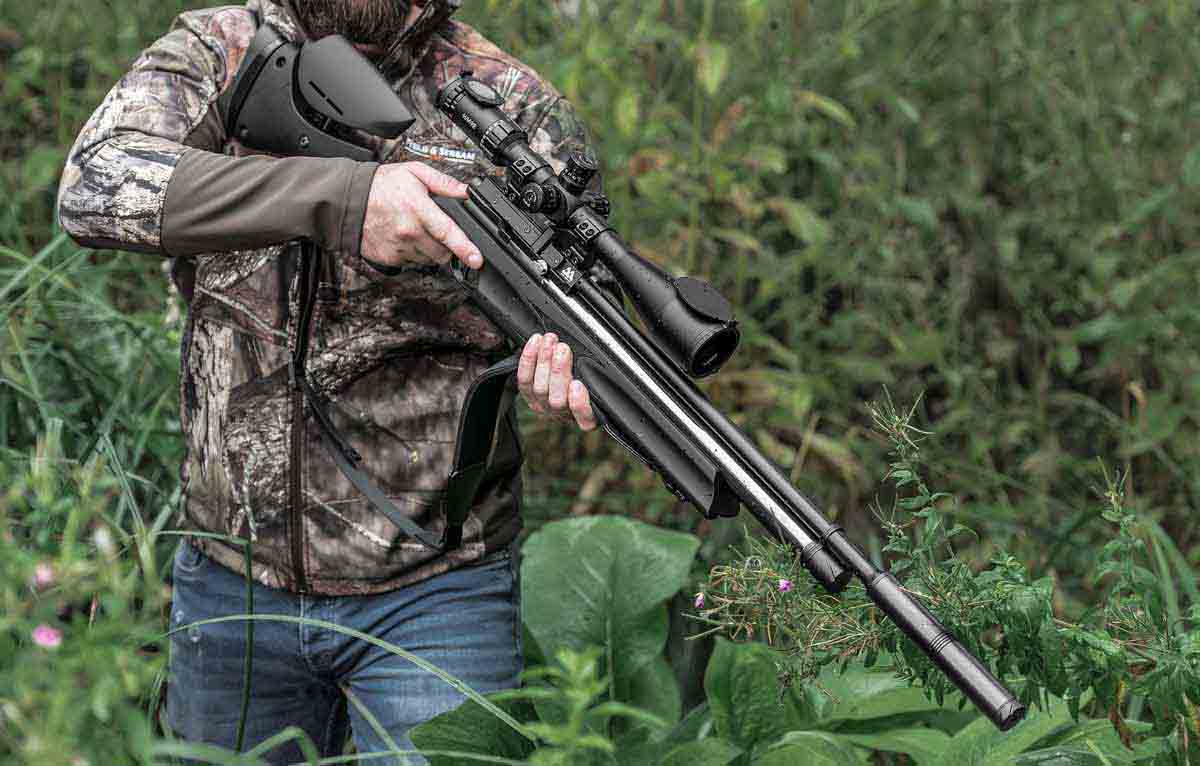
Why Regulated PCP Air Rifles Make Moderator Performance Predictable
The consistency argument is where regulated PCP platforms like the Air Arms S510 Tactical and Ultimate Sporter have a genuine engineering advantage — though it is worth noting these are distinct platforms serving different shooter profiles. The S510 Tactical is built for versatility and modularity across a range of shooting applications, while the Ultimate Sporter is developed for competitive precision and full adjustability. Both rifles use a regulator to deliver a precise, fixed volume of air per shot, regardless of the remaining charge in the cylinder. Shot-to-shot pressure is stable, which means shot-to-shot velocity is stable.
Why does this matter for moderator use? Because moderators work most effectively on pcp air rifles by quieting the escaping muzzle air created when compressed air is released. The moderator is handling the same gas profile, shot after shot. There are no spikes, no drop-off, no variation for the baffles to respond to differently across a string of shots. The interaction between rifle and moderator is repeatable.
Regulation and moderator consistency
On a regulated PCP, the regulator does not just improve shot-to-shot velocity consistency - it also ensures the moderator sees a predictable gas signature on every shot. This makes the entire system more stable, and moderator behaviour more consistent across a full cylinder.
Unregulated springers or gas-ram rifles work differently. The pressure behind each shot can vary more significantly with the charge state, and some of that variability translates to differences in the gas volume reaching the moderator. This does not mean moderators cause problems on those platforms, but it does mean the gas dynamics are less uniform. On a regulated PCP, that variability is engineered out.
Rifles like the S510 Tactical and Ultimate Sporter — though distinct platforms serving different shooter profiles — are built on the same foundation: over 40 years of British engineering expertise, and multiple Airgun of the Year award wins (2019, 2020, 2021, 2023, 2025). Both are designed and tested to perform consistently across configurations, and moderator use is part of normal operation for each, not an afterthought. That is why they generally benefit more from moderators than spring or gas-ram rifles, where more mechanical action noise remains and cannot be removed by the moderator.
Real-World Accuracy Impact: What Changes and What Stays the Same
When a shooter first fits a moderator, there are a few things they are likely to notice - and a few things they will find remain exactly the same. A moderator does not reduce power, but a high quality airgun moderator can make a noticeable difference to comfort and, when correctly fitted, sometimes help the rifle feel more accurate in practical use.
Velocity does not change in any meaningful way. On a well-regulated PCP with a correctly fitted moderator, the pellet is leaving the barrel at the same speed it always did. The pellet behaves identically at distance because its ballistics are unchanged. Trajectory, holdover, and group size at 30, 40, or 50 metres remain the same.
Point of impact, however, can shift slightly when a moderator is first fitted. This is not a power effect - it is a weight and barrel harmonics effect. Adding mass to the muzzle changes the vibration characteristics of the barrel during the firing cycle. On some rifles the shift is negligible; on others it is enough to require a small zero adjustment. This is normal and expected, and it is corrected with a couple of shots at your zero target. Any accuracy benefit comes from a stable, well-aligned fit and a calmer shooter response, not from increased pellet power.
- Velocity - stays the same on a correctly fitted, calibre-matched moderator
- Trajectory and ballistics - unchanged; holdover remains consistent
- Group size at practical target distances - no meaningful change
- Point of impact - may shift slightly on first fitment due to barrel harmonics; corrected by re-zeroing
- Noise signature - reduced, making the rifle quieter, which can improve concentration and reduce flinch
One practical benefit worth noting: reduced muzzle noise can improve shooting comfort and concentration, particularly during long sessions. Less noise means less distraction, and some shooters find they see a marginal improvement in consistency simply because there is less anticipatory tension in the shot cycle. This is not a performance gain from the moderator itself - it is a human factor benefit.
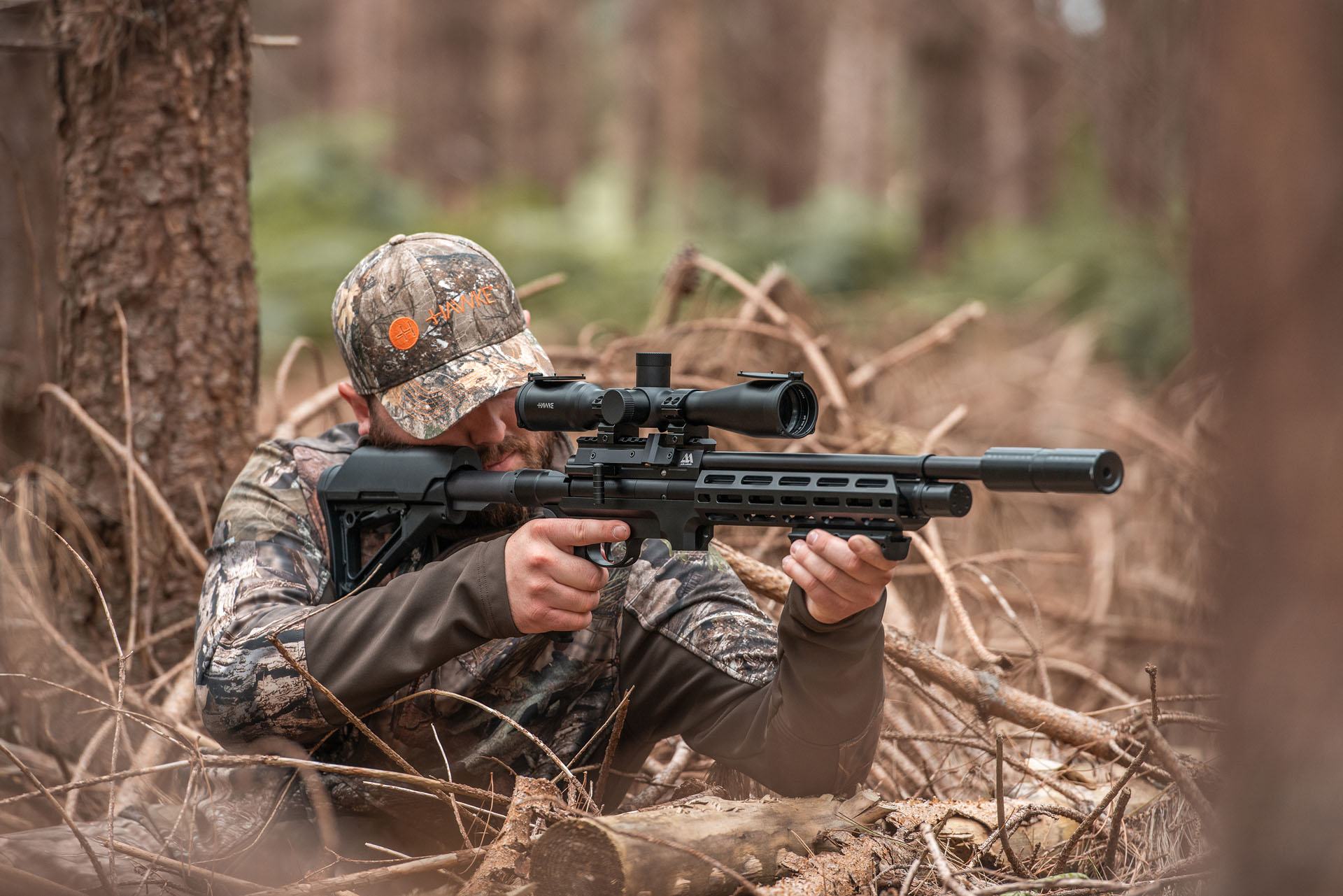
What to Look for When Choosing an Air Rifle Silencer That Won't Compromise Your Zero
Choosing the wrong moderator is the fastest way to introduce accuracy problems that have nothing to do with power loss. The following factors are the ones that actually matter.
Moderator Selection: What to Check
Calibre matching
The internal bore of the moderator must be sized for your calibre. A .177 moderator used on a .22 rifle risks a baffle strike on the first shot. Always confirm the moderator is rated for your pellet diameter before fitting.
Thread compatibility
Check the thread specification of your barrel against the moderator. Most UK air rifles use half-inch UNF threads, but verify against your specific model and make sure the moderator will suit that barrel correctly. A poorly engaged thread creates misalignment, which is a direct accuracy risk.
In practical UK terms, air rifle moderators are legal to own, no firearms licensing is required, and moderators for sub-12 ft-lb airguns remain exempt from licensing. These rules sit within the wider framework that governs air rifle ownership and use in the UK, including power limits and licensing, so it is worth checking the current law for air rifles in the UK before you buy or modify a setup. You must be at least 18 years old to buy a silencer, so decide only after checking both the rifle and the purchase rules. Local laws or site rules may still restrict use in some areas.
Baffle alignment
When the moderator is fitted and hand-tightened, the pellet path must run cleanly through the baffle centres. Any canting or wobble indicates a thread or fitment problem that must be resolved before shooting.
Weight and balance
Heavier moderators shift the rifle's balance point forward. This changes how the rifle sits in the hand or on a rest. Consider this when selecting - a moderator that transforms a well-balanced rifle into a front-heavy setup can affect hold consistency more than any acoustic benefit.
Re-zeroing after fitment
Treat first-time moderator fitment as you would any barrel change. Shoot a group at your normal zero distance before any competition or field use. Minor point-of-impact shifts are expected and correctable. Establish your zero with the moderator fitted and leave it.
Once you have a correctly fitted, calibre-matched moderator on a regulated PCP like the S510 Tactical or Ultimate Sporter, there is very little ongoing maintenance concern, and accessories such as the Air Arms Moderator Adapter for backyard shooting can make it easier to keep one fitted consistently across different setups. The moderator becomes part of your zero — remove it and you will need to re-zero; put it back and you return to where you were. Treat it as a fixed part of your setup rather than something you swap regularly. Both rifles carry a 3-year warranty, so if any issue arises with your setup over time, you have the backing of Air Arms' dedicated aftersales support network to resolve it.
Keep it consistent
Once zeroed with a moderator fitted, leave it in place for range and field sessions. As with other parts of your setup, it should be treated as one of the core air rifle accessories you choose to match shooting style and budget, and its use must sit alongside your responsibilities under UK air rifle laws when adults are supervising or storing guns for others. Repeatedly removing and refitting a moderator introduces small variables in thread engagement that can shift your point of impact over time.