



Do Air Pistols Count as Firearms? UK Law Explained
Whether air pistols count as firearms under UK law is one of the most commonly misunderstood questions in recreational shooting. The answer is not a simple yes or no - it depends entirely on the power output of the pistol in question. Get it right, and you can own and use an air pistol with no licence required. Get it wrong, and you are in possession of a Section 1 firearm without the legal authority to hold one.
Air Arms has been manufacturing air guns in the UK since 1983, and in that time the legal framework around ownership has remained one of the most consistently misunderstood areas of the sport. This article explains exactly how the UK Firearms Act 1968 classifies air pistols, where the legal power threshold sits, what the rules are for ownership and use, and what activities are off-limits regardless of your pistol's specification. It is written to inform — not to replace advice from the Home Office or a qualified legal professional.
How UK Law Defines an Air Pistol or Air Gun
Under the UK Firearms Act 1968, an air pistol is defined as any air-powered weapon with a barrel shorter than 30 cm, or an overall length of less than 60 cm. This distinguishes air pistols from air rifles, which are longer-barrelled and governed by a slightly different set of rules. The physical dimensions set the category - but it is the muzzle energy that determines the legal status.
The legislation does not treat all air pistols equally. It draws a hard line based on how much energy the projectile carries as it leaves the muzzle. Below that line, the pistol is treated as a low-powered airgun. Above it, the same physical object becomes a firearm in the eyes of the law - with all the licensing and storage obligations that status carries.
What Makes Something an Air Pistol Under UK Law?
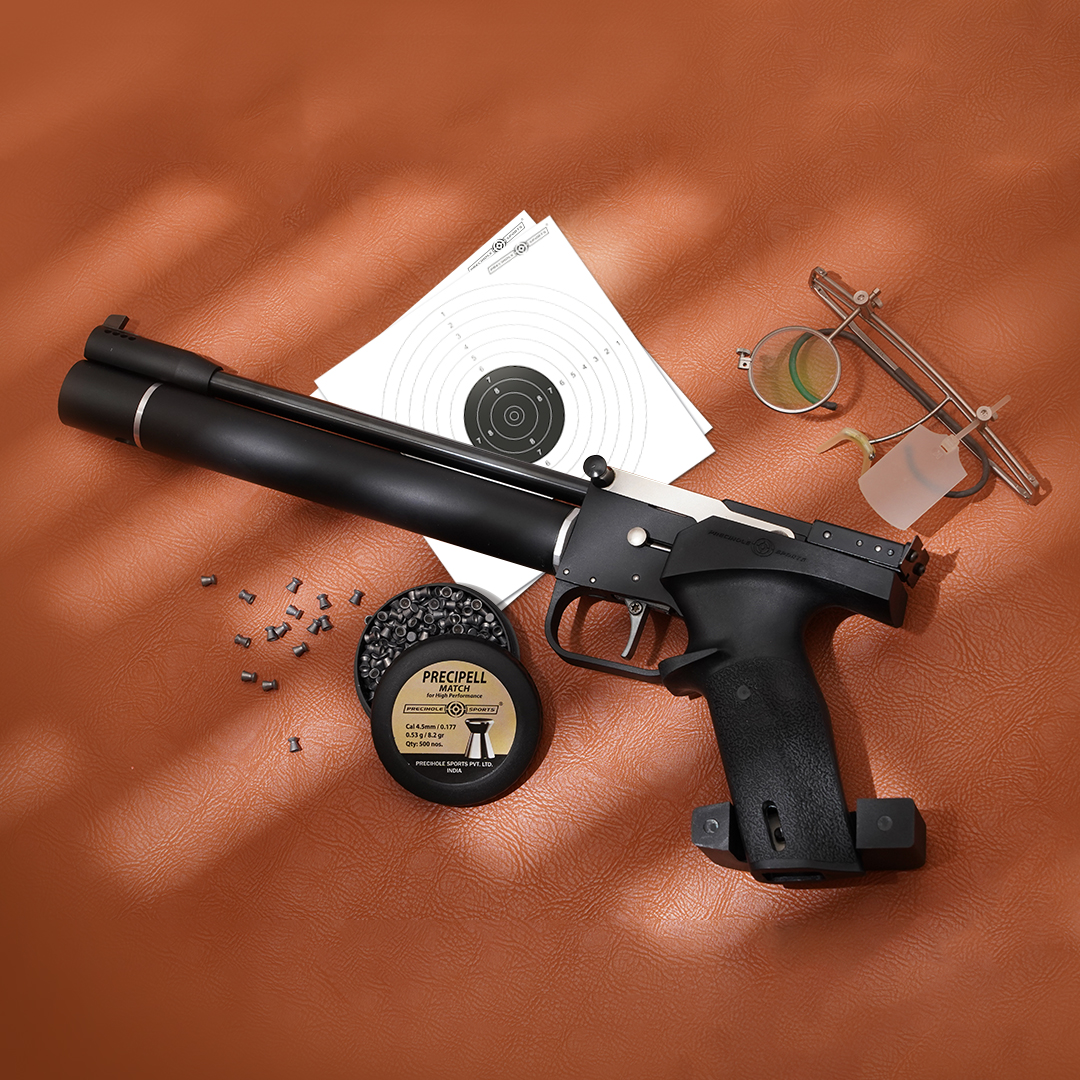
An air pistol is an air-powered weapon with a barrel under 30 cm or an overall length under 60 cm. These are the physical criteria set out under the UK Firearms Act 1968. Whether that pistol is legally a firearm or not is a separate question - determined by its muzzle energy output, not its appearance or design, and by the typical shooting disciplines air pistols are used for.
It is worth noting that the term 'air pistol' covers a wide range of mechanisms - spring-powered, CO2, and pre-charged pneumatic (PCP) designs all fall under this classification if they meet the dimensional criteria. The power source does not change how the law categorises them. What matters is the energy at the muzzle.
When Does an Air Pistol Become a Firearm Under the Firearms Act in UK Law?
The legal threshold is clear and specific. An air pistol that produces a muzzle energy above 6 ft/lbs (foot-pounds) is classified as a Section 1 firearm under the UK Firearms Act 1968. At that point, it requires a Firearms Certificate (FAC) issued by your local police force. An air pistol producing 6 ft/lbs or less is not classified as a firearm and can be owned without a licence in England and Wales, whereas an air rifle has a higher certificate threshold of 12 ft/lbs in England and Wales; separate guidance explains whether air rifles are legal to own in the UK.
For context, most commercially available air pistols designed for recreational use are well within the sub-6 ft/lbs limit. However, some higher-specification PCP air pistols can exceed this threshold - particularly those modified or tuned for increased power. If you are ever uncertain about the muzzle energy of a specific model, check the manufacturer's specification sheet before purchase. Power output should be clearly documented, and higher-powered platforms may require you to obtain an air rifle licence or Firearms Certificate in the UK.
The 6 ft/lbs Threshold is a Hard Legal Boundary
An air pistol producing more than 6 ft/lbs of muzzle energy is a Section 1 firearm under the UK Firearms Act 1968. Owning or using one without a valid Firearms Certificate (FAC) is a criminal offence. Always verify the stated muzzle energy of any air pistol before purchase, particularly if it is a higher-powered or modified platform.
It is also worth understanding that this classification is fixed to the weapon, not the individual. If you buy a sub-6 ft/lbs air pistol and later have it tuned beyond the legal limit, it becomes an FAC-required firearm the moment it crosses that threshold - regardless of whether you intended to use it at higher power or were even aware of the modification's effect.
Do You Need a Licence or Firearm Certificate to Own or Use an Air Pistol in the UK?
For most recreational shooters in England and Wales, the straightforward answer is no - provided the air pistol produces no more than 6 ft/lbs of muzzle energy. No Firearms Certificate, no shotgun licence, and no registration is required to purchase, own, or use a compliant sub-legal-limit air pistol.
Scotland operates under a different regime. From January 2016, Scottish law introduced a mandatory air weapon licence for all airgun owners - including those owning sub-legal-limit air pistols. This is called an Air Weapon Certificate and is issued by Police Scotland. If you live in Scotland or intend to use an air pistol there, you must hold a valid Air Weapon Certificate or be specifically exempt.
Scotland Has Additional Licensing Requirements
Unlike England and Wales, Scotland requires an Air Weapon Certificate for any air pistol, regardless of its power output. This law came into force in January 2016 under the Air Weapons and Licensing (Scotland) Act 2015. Owning or using an air pistol in Scotland without this certificate is a criminal offence, even if the pistol is well within the 6 ft/lbs limit. For a broader overview of what an Air Weapon Certificate is and why it is required in Scotland, contact Police Scotland for details on how to apply.
In Northern Ireland, air weapons are subject to even stricter controls. All air pistols require a Firearms Certificate regardless of power output. If you are based in Northern Ireland, the rules governing ownership are significantly more restrictive than those applying in England and Wales - always check the current requirements with the Police Service of Northern Ireland (PSNI) before purchase.
Age Restrictions, Supervision, and Where You Can Shoot
Even where no licence is required, ownership and use of an air pistol is subject to age-based rules that recreational shooters need to understand clearly. These restrictions apply regardless of the pistol's power level - they are about the person using it, not the specification of the weapon.
- You must be 18 or over to purchase an air pistol.
- Under-18s cannot have an air pistol in a public place unless supervised by an adult aged 21 or over.
- A person under 14 cannot be given an air pistol as a gift or have one in their possession outside private property, even under adult supervision.
- A person aged 14 to 17 can be supervised using an air pistol on private premises with permission from the occupier.
Where you use an air pistol matters as much as who uses it. Shooting in a public place is generally not permitted. Recreational use is legal on private land where you have permission from the landowner, and you should always check with the landowner before shooting on their property. Similar principles apply to the law for air rifles in the UK. Air pistols are primarily used for target shooting and competitive sports, so approved clubs or ranges that hold the appropriate authorisation are usually the most appropriate setting for regular use. Air pistol clubs and ranges often offer the safest and most practical option for regular recreational shooting, providing a controlled environment with appropriate safety infrastructure already in place.
If you are shooting in a garden or on private land, you must ensure that pellets cannot leave the boundary of that land. Firing a pellet beyond your property boundary - even unintentionally - can create a criminal liability under the Firearms Act. A suitable backstop is not optional; it is a legal and safety requirement, and it can also help avoid the kind of neighbour complaints about airgun use and air pistol law in England that often arise when shooting is not carefully managed.
Backstops Are a Legal Requirement, Not Just a Safety Habit
When using an air pistol on private land, ensure a robust backstop is in place to prevent pellets from leaving the boundary. Firing a projectile beyond your land - even accidentally - can constitute an offence under the Firearms Act 1968. Purpose-built pellet traps are the simplest and most reliable solution for backyard or garden use.
Transporting and Storing an Air Pistol Legally
Owning a compliant air pistol legally is only part of the picture. How you move and store it matters too - and this is where a number of recreational shooters unknowingly create legal risk for themselves.
When transporting an air pistol in public, the law does not prescribe a single specific method, but the Firearms Act 1968 is clear that carrying an air weapon in a public place in a way that causes public alarm or fear, or without a reasonable excuse, can result in a criminal offence. In practice, this means your air pistol should be unloaded, in a secure case or bag, and not visible to passers-by. Transporting it openly or in a way that could reasonably alarm members of the public is inadvisable both legally and practically, and similar rules govern carrying an air rifle in public in the UK.
- Transport in a secure, closed case - not openly visible
- Ensure the pistol is unloaded before and during transportation
- Where possible, keep ammunition separate from the pistol during transit
- Be able to demonstrate a clear and legitimate reason for having the air pistol in public - such as travel to or from a shooting range
For storage at home, no specific legal standard is mandated for sub-legal-limit air pistols in England and Wales - unlike centrefire firearms, which require an approved gun safe. However, responsible storage practice is strongly advisable: keeping an air pistol where it cannot be accessed by children or unauthorised individuals is both a safety and moral obligation, and may also affect liability in the event of an incident. A locked cabinet or case is the sensible minimum, mirroring best practice for keeping an air rifle in a locked cabinet or other secure storage.
Responsible Storage Reflects Good Ownership
While sub-legal-limit air pistols in England and Wales do not have a legally mandated storage standard, responsible ownership means keeping them secure and out of reach of children or anyone who should not have access. A locked case or cabinet is a straightforward, low-cost solution that reflects the kind of careful ownership the law expects - and that the wider shooting community rightly values.
What Air Pistols Cannot Be Used For Under UK Law
Even where ownership is perfectly legal, there are specific uses for air pistols that the law prohibits outright. Understanding these limits is as important as knowing the licensing rules.
Air pistols are not legal for hunting game or quarry in the UK. The power output of a compliant sub-6 ft/lbs air pistol is insufficient to ensure a clean, humane kill on any legally huntable species - and using an underpowered weapon on live quarry raises serious animal welfare concerns. Beyond the ethical issue, using an air pistol for hunting is likely to fall foul of animal welfare legislation regardless of the target species. This is not a grey area.
- Hunting game, vermin, or quarry with a sub-6 ft/lbs air pistol - prohibited on welfare and legal grounds
- Using an air pistol in a public place without a clear lawful purpose and reasonable excuse
- Carrying an air pistol in a way that could cause alarm - an offence under the Firearms Act 1968
- Supplying, gifting, or lending an air pistol to anyone under 18
- Firing pellets beyond the boundary of private land where you are shooting
- Owning or using an air pistol in Scotland without a valid Air Weapon Certificate
A practical example: a shooter with a perfectly legal sub-6 ft/lbs air pistol takes it to a local park for informal target practice. Even if the pistol is never fired, carrying it in a public place without a clear lawful reason is sufficient to attract police attention and potential prosecution under the Firearms Act. Understanding where legal use begins and ends is not optional — it is what separates responsible ownership from an avoidable offence.
As a manufacturer operating within UK legal frameworks for over 40 years, Air Arms builds products that are designed to sit within these boundaries by specification. Understanding the law is not just a regulatory exercise - it is what enables shooters to use their equipment with confidence, in the right environments, and without legal risk. The Home Office publishes guidance on airgun law in England, Wales, and Scotland that is worth reading in full, and consulting a legal professional is always advisable if you have specific questions about your circumstances.