



Air Pistol vs Air Rifle Which Should I Choose?
The air pistol vs air rifle question comes up constantly among new and recreational shooters in the UK - and the straight answer is that neither is universally better. The right choice depends on how you plan to use it, where you will shoot, and how confident you are handling it: air pistols tend to suit short-range indoor target shooting, while air rifles are usually the better fit for longer-range shooting, outdoor plinking, and pest control.
What matters is matching the platform to the job. If you're choosing your first airgun for target shooting, club use, garden plinking, or pest control, the differences in accuracy, effective range, power, legal limits, and handling will shape what is practical, safe, and worthwhile. This guide walks through those practical differences so you can decide which platform fits your shooting goals rather than buying the wrong type first.
What's the Difference Between an Air Pistol and an Air Rifle?
At the most basic level, the distinction is form factor. An air pistol is a short, single-handed platform held and fired without a shoulder stock. An air rifle is a longer firearm designed to be shouldered, using both hands for support and control. That physical difference cascades into everything else - power, accuracy, effective range, and legal classification.
Both platforms propel a pellet using compressed air or gas. The mechanism used to generate that compression varies. Spring-powered rifles and pistols use a coiled spring and piston driven by a cocking action. Pre-charged pneumatic (PCP) systems use a pressurised air cylinder filled from an external pump or dive bottle. CO2-powered platforms use disposable cartridges. Each has trade-offs in convenience, maintenance, and consistency.
The key engineering difference between a pistol and rifle is barrel length. A longer barrel gives a pellet more time to stabilise under propulsive force and provides a greater sight radius - the distance between the front and rear sighting points. Both factors directly influence accuracy. Rifles, with their substantially longer barrels, hold a natural advantage here. Pistols trade that accuracy potential for compactness and portability.
Sight Radius Explained
Sight radius is the distance between your front and rear sights. A longer sight radius makes it easier to align the sights precisely - small alignment errors have less angular impact over a greater distance. Rifles have a longer sight radius than pistols, which contributes directly to their accuracy advantage.
Both air pistols and air rifles are available in a range of action types, calibres, and configurations. For most recreational shooters in the UK, the most common calibre is .177 vs .22 air rifle (4.5mm vs 5.5mm), with .177 favoured for flatter trajectories and .22 widely used in rifles for pest control. Pistols are almost exclusively used in .177 given their power and range limitations.
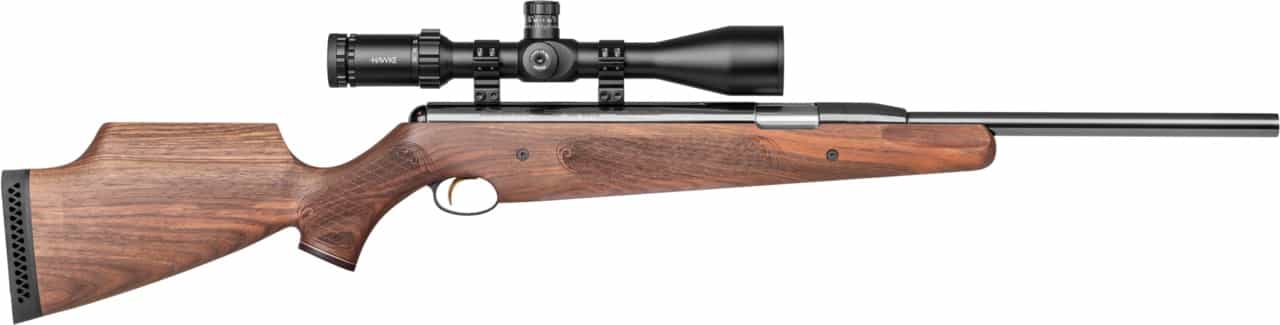
Accuracy and Effective Range: How Each Platform Compares
When it comes to accuracy, air rifles hold a clear structural advantage - and it is not simply down to shooter skill. The physics of a longer barrel, combined with a supported two-handed hold and a shoulder stock to anchor against, create a fundamentally more stable shooting platform.
Air pistols are typically effective at ranges up to around 10 metres - which is why 10m air pistol is a recognised Olympic shooting discipline. At that distance, with a good technique and appropriate sights, a quality pistol can produce tight groups. Beyond 10-15 metres, the combination of lower muzzle energy, shorter barrel, and the instability of a one-handed hold makes consistent accuracy significantly more difficult to achieve.
Air rifles are capable of accurate shooting at considerably greater distances. For a recreational shooter using a quality spring or PCP rifle, 25-30 metres is a practical and achievable range for precision work. New shooters who want to build safe, consistent technique for this kind of target work will benefit from an air rifle target shooting beginner's guide. Hunters and pest controllers regularly shoot at distances well beyond that, depending on the quarry and conditions.
Why Barrel Length Matters
Air rifles generally deliver greater accuracy at longer ranges due to their longer barrel length and sight radius. This is not a minor advantage - it is a structural feature of the platform. For any shooting beyond short indoor distances, a rifle gives you a meaningfully better starting point.
For indoor club shooting at 10 metres - a common setup in many UK clubs - a well-maintained air pistol can be genuinely competitive and is purpose-suited to that application. If your ambitions extend to garden shooting, outdoor plinking at varied distances, or any form of pest control, a rifle is the more capable tool.
Power, Compressed Air, Legality, and UK Regulations You Need to Know
UK law is clear on power limits, and understanding them is not optional - it is the foundation of responsible ownership for either platform.
- Air pistols must produce less than 6 ft/lb of muzzle energy to be legally held without a firearms certificate (FAC) in England and Wales (Scotland and Northern Ireland have different rules).
- Air rifles must produce less than 12 ft/lb of muzzle energy to be held without an FAC in England and Wales (Scotland and Northern Ireland have different rules).
- Any air weapon exceeding these limits is classified as an FAC firearm and requires a certificate from your local police firearms licensing unit; understanding what an FAC air rifle is and how it is regulated is essential before considering higher-powered setups.
- In Northern Ireland, separate legislation applies - if you are based there, check with the PSNI.
There is an additional legal point that is critical for anyone considering an air pistol for pest control or hunting. Air pistols are not legally suitable for hunting in the UK. The sub-6 ft/lb power limit means they cannot produce sufficient energy to humanely dispatch quarry. Using an air pistol for hunting would be both irresponsible and potentially unlawful under animal welfare legislation.
Air Pistols and Hunting - A Hard Line
Under UK law and established best practice, air pistols are not appropriate for pest control or hunting. Their power output is insufficient for a clean, humane dispatch of any quarry. If hunting is part of your intended use, an air rifle is the only appropriate choice.
Both platforms require responsible storage. Air weapons must be stored securely to prevent access by unauthorised persons - this applies equally to pistols and rifles, FAC or not. A locked cabinet is the practical standard. Safe, responsible storage is a legal and ethical obligation, not an optional extra.
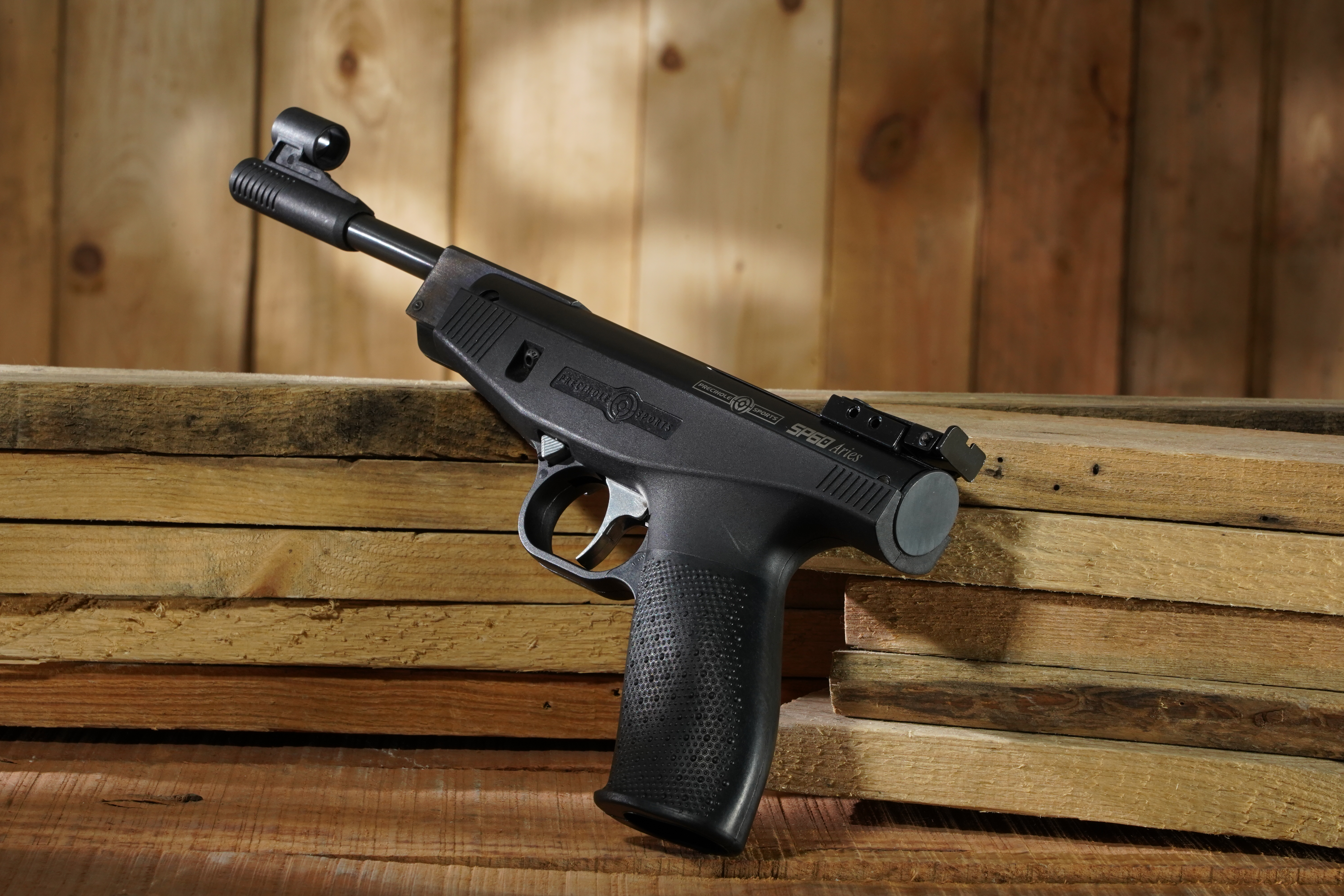
What Are You Shooting For? Matching Platform to Target Shooting Purpose
The single most important question when choosing between platforms is: what do you actually want to do with it? The answer narrows your decision considerably.
When Air Pistols Make Sense
Air pistols suit a specific set of circumstances well. They are compact, lightweight, and work well in confined spaces. If your primary shooting environment is indoors - a spare room, basement, or club range at 10 metres - a pistol is a practical and capable choice, especially once you understand what an air pistol is used for and the disciplines it suits.
- Short-range indoor plinking and target practice at 6-10 metres
- Training for discipline and trigger control in a compact format
- Club shooting in 10m air pistol disciplines
- Situations where space and storage are genuinely limited
When Air Rifles Are the Better Fit
For most recreational shooters in the UK, an air rifle will prove the more versatile platform. It opens up a wider range of shooting environments, greater effective range, and genuine suitability for pest control if that is part of your intended use, so taking time to read a complete beginner's guide to air rifles will help you choose and use one safely.
- Garden and backyard shooting at 20-30 metres and beyond
- Pest control and rabbit or squirrel management on farmland, where choosing between bolt action air rifle .177 vs .22 calibres can influence effective range and impact
- Club target shooting across a range of distances and disciplines
- Developing a broader shooting skill set as confidence grows
A spring-powered underlever rifle like the Air Arms TX200 is a good example of what a well-chosen entry point into air rifles looks like. It is entirely self-contained - no external air supply needed, no cylinders to fill, no CO2 cartridges. You cock it, you shoot, you repeat. For a new shooter who wants reliability and simplicity without ongoing consumable costs, a quality spring rifle is a genuinely compelling choice.
Illustrative Scenario
Consider a shooter with a garden of around 20 metres who wants to plink at paper targets and occasionally manage pigeons. An air pistol would struggle at that range and is not legal for pest control. A spring-powered air rifle, stored safely and used responsibly, fits both needs cleanly. The platform choice here is not close.
Handling and Learning Curve: Which Is Easier to Get Started With?
This is where new shooters often assume the pistol wins on simplicity. It is smaller, lighter, and feels less intimidating. In practice, the opposite tends to be true when it comes to building accurate technique.
Air pistols demand precise trigger control, a steady wrist, and a consistent one-handed hold - all at the same time. Without the stability of a rifle stock against the shoulder, any movement in the hand, wrist, or forearm translates directly into pellet deviation. Beginners often find that shooting a pistol accurately at even short distances is harder than it looks.
Air rifles, by contrast, give you three points of contact - the shoulder stock, the grip hand, and the support hand under the forend. That triangulated support makes it significantly easier to hold the rifle steady while developing trigger technique. Most new shooters find they can achieve satisfying, consistent results with a rifle more quickly than with a pistol.
Starting Well With Either Platform
Whichever platform you choose, joining a local club is the fastest route to safe, confident shooting. Experienced shooters and club range officers can correct technique early, help you understand safe handling, and often give you the chance to try different platforms before committing to a purchase, while also explaining the benefits of air guns over firearms in terms of cost, regulation, and accessibility.
That said, if your specific goal is 10m air pistol shooting as a discipline - with its focus on mental control, breath management, and refined trigger technique - then a pistol is the right tool, and the learning challenge is part of the point. It is a demanding discipline precisely because the platform gives you so little mechanical assistance.
Spring-powered rifles add one additional handling consideration worth noting. The spring action produces a characteristic recoil sequence - the piston moves forward, then back - which requires a relaxed hold and consistent technique to shoot accurately. This is sometimes called the spring gun paradox: the rifle shoots best when held lightly. It takes some adjustment, but most shooters develop the feel for it relatively quickly with practice.
Which Platform Is Right for You?
There is no single right answer - but there is usually a clearer answer once you are honest about your circumstances. Run through these practical questions before making a decision.
Decision Framework: Pistol or Rifle?
Where will you shoot?
If your primary space is indoors at 6-10 metres, a pistol is practical. If you have a garden, access to a club range, or want to shoot outdoors at varied distances, a rifle is the better fit.
What do you want to do?
Plinking and informal target practice suit both platforms at appropriate ranges. Pest control requires a rifle - legally and practically. Club disciplines may specify one platform over the other.
How much do you want to spend on ongoing costs?
CO2 pistols and rifles carry ongoing cartridge costs. A quality spring-powered rifle like the TX200 has virtually no consumable costs after purchase - you provide the pellets and the cocking effort.
How quickly do you want to see results?
New shooters typically find it easier to build consistent accuracy with a rifle, due to the added support the stock provides. If you want to make solid progress quickly, that matters.
What are your long-term ambitions?
If you see yourself moving into club competition, pest control, or more varied shooting over time, a rifle gives you more room to grow; many shooters also appreciate the broader benefits of air guns over firearms as their involvement deepens. If you are specifically drawn to 10m pistol as a discipline, commit to it - it rewards dedicated practice.
For the majority of recreational shooters starting out in the UK - particularly those with garden access, an interest in general plinking, or any interest in pest control - an air rifle is the more practical, versatile, and rewarding first platform. Air Arms rifles, multiple Airgun of the Year award winners (2019, 2020, 2021, 2023, 2025), offer a dependable starting point built on over 40 years of British engineering expertise, grounded in our promise of precision and support - with a 3-year warranty and aftersales support through our authorised dealer network to help you find a retailer in your area.
An air pistol earns its place for shooters drawn to indoor short-range disciplines, or where compactness genuinely matters. In those contexts, it is simply the right tool for the job.