



What Is a Bolt Action Air Rifle and How Does It Work?
If you're looking at PCP air rifles for the first time, the term bolt action appears everywhere - but what it actually means, and how it affects your shooting experience, is rarely explained clearly. Understanding what a bolt action air rifle does, and why it's designed that way, makes choosing the right platform much easier. This guide walks through the mechanics, the practical differences between loading systems, and what the design means for you as a UK shooter.
What Is a Bolt Action Air Rifle? A Simple Definition
A bolt action air rifle is one where the shooter loads each pellet by manually operating a bolt - a small handle that moves back and forth to open the breech, accept a pellet, and seal the rifle ready for firing. The bolt is the mechanism that controls access to the chamber.
This loading style is common across both PCP (pre-charged pneumatic) and some spring-powered platforms, but it's important to distinguish between the two. On a spring-powered bolt action rifle, the bolt typically also cocks the firing mechanism. On a PCP bolt-action rifle, the bolt's primary job is pellet loading and breech sealing - the power comes from stored compressed air, not a spring. These are fundamentally different systems, and most high-performance bolt-action rifles you'll encounter in a UK club or range setting are PCP designs.
How the Bolt Action Loading System Works on a PCP Air Rifle
The mechanical sequence of a bolt action PCP is straightforward once you break it down into stages. Each stage serves a specific purpose, and understanding it helps you operate the rifle confidently and consistently.
The Bolt Action Loading Sequence
1. Draw the Bolt Back
Pulling the bolt handle rearward opens the breech - the entry point into the barrel. This movement retracts the bolt probe (a small rod that extends forward into the breech when closed) and exposes the loading port. The air transfer port is sealed at this point, keeping the rifle safe to handle.
2. Load the Pellet
With the breech open, a single pellet is placed into the loading port, skirt-first toward the barrel. On single-shot designs, you place the pellet directly. On magazine-fed PCP rifles, the magazine rotates to present the next pellet automatically as the bolt is drawn back.
3. Push the Bolt Forward
Closing the bolt drives the probe forward, which seats the pellet into the barrel's rifling and seals the breech. Consistent seating at this stage is critical - a pellet seated at the same depth and alignment with every shot produces more consistent ballistics down the barrel.
4. Fire
When the trigger is pulled, the sear releases the striker, which opens the air transfer port briefly. A controlled burst of compressed air from the rifle's air reservoir, which stores high pressure air typically around 2,000 to 3,000 psi, travels through the port, past the seated pellet, and accelerates it down the barrel. This pressurised air system is one reason PCP air rifles are known for accurate shooting and low recoil. The bolt holds the breech sealed under this air pressure, ensuring all of the energy goes into moving the pellet.
The probe is one of the most important components in this process. It both seats the pellet and forms the seal at the rear of the chamber. A well-machined probe - operating in a tight-tolerance breech - minimises air leakage and ensures repeatable pellet placement. This is where the engineering quality of the rifle directly affects accuracy. That reservoir is charged from an external air source such as scuba tanks or hand pumps.
Bolt Action vs Sidelever vs Underlever: What's the Difference?
Loading mechanism choice affects how the rifle handles and how it fits different shooting styles. The three most common designs each take a different approach to pellet loading - understanding the differences helps you decide which suits your intended use.
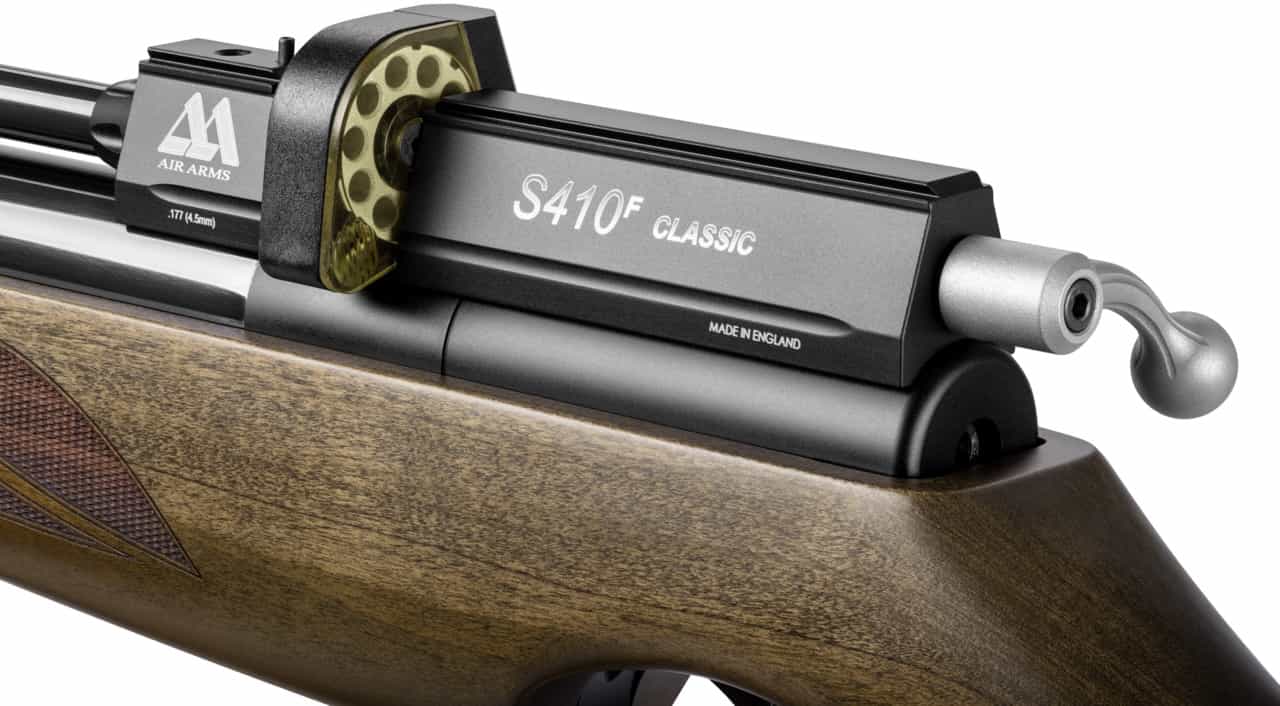
Bolt Action
The bolt sits on the side or top of the action and travels in a linear path when operated. It's fast to cycle, works naturally with both single-shot and magazine-fed setups, and doesn't require the shooter to significantly shift their position between shots; in PCP form, this air rifle type is commonly used for target practice and small game hunting, including rabbits and squirrels. They are also valued for relatively quiet operation compared with traditional firearms. For many shooters, the bolt handle stays within easy reach of the trigger hand, making cycling quick and repeatable, although compared with simpler designs, bolt-action systems can involve slightly more maintenance because of the bolt, probe, and magazine-related moving parts.
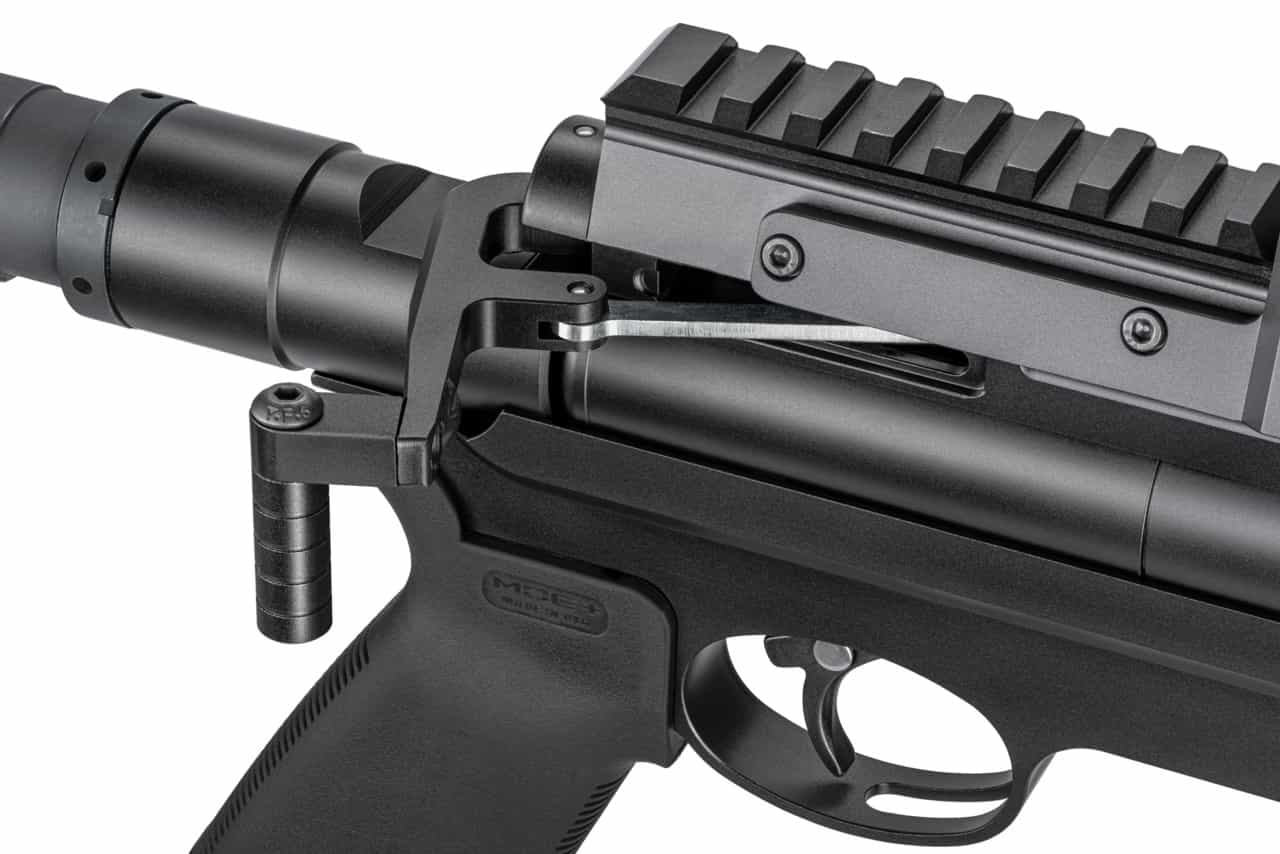
Sidelever
A sidelever design uses a lever mounted on the side of the action - typically folded flat against the stock when not in use. Pulling the lever back opens the breech, and pushing it forward loads and seals the pellet. Sidelevers are a popular choice on dedicated field target and HFT rifles because the lever can be operated without significantly disturbing the rifle's position on a rest or bag. It also avoids the requirement to move a bolt handle above or below the scope.
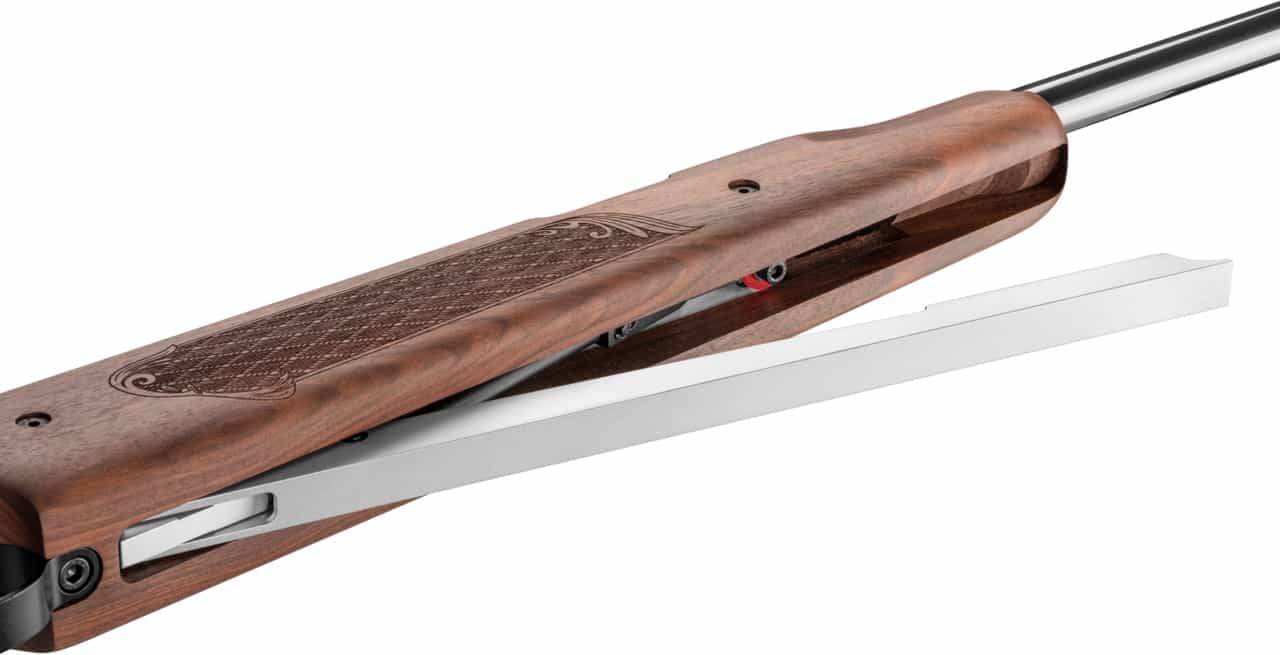
Underlever
An underlever is a loading lever that sits beneath the action and is pulled down and forward to cock the rifle. On spring-powered rifles the underlever also compresses the mainspring, and like a break barrel air rifle or underlever spring system it uses a spring piston or gas piston power source, so it serves a dual function. On a spring underlever rifle, the mechanism is entirely self-contained: no external air supply is needed. In a break barrel format, the barrel hinges downward to cock the rifle and load a pellet, which is why spring piston rifles are often recommended to both beginners and seasoned shooters. The TX200 is widely regarded as one of the finest spring underlever rifles available, and it demonstrates how a well-engineered underlever system delivers reliable, consistent performance without any dependency on compressed air.
Quick Comparison: Three Loading Systems
Bolt action - Fast cycling, natural hand position, magazine compatibility, common on versatile PCP platforms. Sidelever - Minimal positional disruption, popular in competition FT/HFT, keeps scope line clear. Underlever - Common on spring-powered rifles, self-contained, no air system required.
The honest answer to which is better: none of them is universally superior. Bolt action suits shooters who value versatility and speed of cycling across different positions. Sidelever suits precision target shooters who prioritise minimal disturbance. Underlever suits those who prefer spring-powered, self-contained simplicity, while multi-shot bolt-action platforms such as the Air Arms S410 appeal to shooters who want rapid follow-up shots with consistent handling. In a spring piston design, a coiled spring stores the energy in the compression chamber during cocking and then drives the piston forward when fired, while a spring or gas piston setup keeps the rifle self-contained without external charging gear. Your discipline and intended use should guide the choice.
Why High-Performance PCP Rifles Use Bolt Action Designs
When manufacturers design competition and precision PCP rifles, bolt action loading consistently appears as the chosen mechanism. This isn't coincidence - it reflects a combination of engineering and practical advantages that other systems don't replicate as cleanly.
- Seal consistency: The bolt probe creates a reliable, repeatable seal at the breech with each cycling action. This keeps air transfer efficient and consistent shot to shot.
- Mechanical simplicity: A linear bolt mechanism has fewer moving parts than some alternative designs, which reduces potential points of wear and keeps the action smooth over extended use.
- Magazine compatibility: Bolt action designs work cleanly with rotary magazines, allowing shooters to load multiple pellets and cycle through them without reloading individually - a practical advantage in club, pest control, and recreational shooting contexts.
- Cheek weld retention: A well-positioned bolt handle can be cycled without the shooter lifting their head from the stock, maintaining sight picture and shooting position between shots.
- Adaptability: The bolt action platform suits a wide range of barrel lengths, stock configurations, and accessory setups, making it the natural choice for modular rifle designs.
These properties matter most when accuracy and consistency are the priority. In recreational target shooting, pest control, and club competition alike, a loading mechanism that doesn't introduce variation between shots is a genuine advantage — and bolt action delivers that reliably. It's this combination of mechanical simplicity and repeatable precision that Air Arms describes as Imagination Engineered: purposeful design that serves the shooter in the real world.
For Beginner Shooters
Bolt action rifles are not harder to operate than other loading types - if anything, the direct, linear motion of the bolt is easier to learn and repeat correctly than a sidelever or underlever. Most new shooters find they develop consistent bolt technique quickly, which directly supports accuracy development early on.
What to Look for in a Bolt Action Air Rifle as a UK Buyer
Buying an air rifle in the UK involves some specific legal and practical considerations that are worth understanding before you commit to a platform. Getting these right from the start saves frustration and ensures your rifle works for the discipline you have in mind.
Power Output and the 12 ft/lb Limit
In the UK, air rifles that exceed 12 ft/lb muzzle energy are classified as firearms and require a Firearms Certificate (FAC), which is particularly relevant when considering whether you need a licence for a PCP air rifle. Sub-12 ft/lb rifles can be owned and used without a licence, making them the standard choice for club, recreational, and pest control use, but you must still comply with the wider law for air rifles in the UK. Most quality PCP bolt action rifles are available in sub-12 ft/lb configurations, and this is what the majority of UK buyers should be looking at initially, alongside understanding whether air rifles are legal to own in the UK for their age and circumstances.
Calibre Selection
The two most common calibres for UK air rifle shooting are .177 and .22. Each has a practical application:
- .177 (4.5mm) - Flatter trajectory, higher velocity, and the required calibre for most formal target shooting disciplines. A strong choice for club shooting and accuracy-focused practice.
- .22 (5.5mm) - Heavier pellet, greater downrange energy, and generally considered more effective for pest control and hunting applications within legal limits.
If your primary use is target shooting at a club, .177 is typically the practical choice. If you're intending to use the rifle for pest control on a farm or smallholding, .22 is the more common recommendation, and it’s worth exploring in more detail whether .177 or .22 is best for air rifle hunting. A good dealer can advise based on your specific application.
Club and Range Suitability
Bolt action PCP rifles are fully accepted at UK clubs and ranges, provided they are used within the law for air rifles in the UK. If a buyer is comparing a PCP with other action air rifles, CO2 models use 12-gram or 88-gram cartridges rather than a refillable reservoir. Those rifles are often chosen for target practice and some small game hunting because they allow rapid firing and consistent power output, although temperature changes can affect accuracy and power. By contrast, pump-powered options such as a pump action air rifle can offer adjustable power based on the number of pumps, unlike the fixed shot cycle of a PCP air gun. There is nothing about the loading mechanism that restricts use in a formal setting - in fact, the controlled, deliberate loading process suits the pace of target shooting disciplines well. If you're joining a club, speak to the range officer about any specific calibre or power requirements for the disciplines they run.
UK Buyer Checklist: Bolt Action PCP Air Rifles
- Confirm the rifle is rated sub-12 ft/lb (no FAC required) or that you hold an appropriate certificate if buying higher-powered.
- Choose calibre based on intended use: .177 for target shooting, .22 for pest control or hunting.
- Check whether the rifle is single-shot or magazine-fed, and whether spare magazines are available.
- Confirm the rifle is sold with a 3-year warranty and has authorised dealer support in your area.
- Check that the bolt position (left or right-hand) suits your shooting hand.
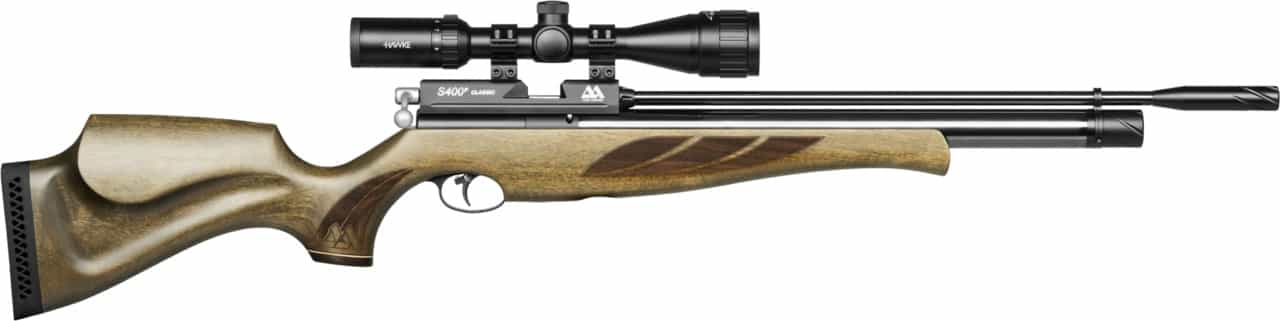
How the Air Arms S400 Uses Bolt Action in a Precision Platform
The Air Arms S400 is a purpose-built example of bolt action design in practice — a single-shot PCP that strips the loading process back to its simplest, most deliberate form, and delivers consistent results because of it.
The S400 uses a traditional bolt action where each pellet is loaded by hand directly into a wide, generously-sized breech. The bolt handle is positioned for a natural, comfortable grip, and the forward stroke seats the pellet and seals the chamber ready to fire. There is no magazine system involved — the shooter controls every aspect of each shot individually, which is exactly the point. For target shooters and beginners developing technique, that single-shot discipline removes variables and puts the focus squarely on accuracy.
The bolt probe is machined to close tolerances, delivering the consistent pellet seating and breech seal that defines an accurate PCP. Paired with a match-grade Lothar Walther barrel developed to Air Arms specification, this means the mechanical foundation for accuracy is already in place before the shooter has fired a single shot.
Beyond the bolt system, the S400 incorporates an adjustable two-stage trigger, a built-in manometer for pressure monitoring, and a dovetail scope rail as standard. Shot count varies by model, and pcp airguns more broadly can deliver anything from around 30 to 400 shots per fill depending on reservoir size and tune. The stock — produced by the Minelli Group in walnut or beech — is designed for natural balance and comfort over extended sessions.
S400 in Practice
A club shooter using the S400 benefits from the bolt action's repeatable seating consistency and the deliberate, single-shot format that encourages proper technique with every cycle. The action is smooth and forgiving enough for beginners, while precise enough to remain a credible choice for experienced shooters at club level.
The S400 is available in .177 and .22 calibre in sub-12 ft/lb configuration, with practical shot count being one of the buyer considerations when comparing PCP rifles for multiple shots, making it compliant for standard UK club and range use without an FAC. It is backed by Air Arms' warranty and a network of authorised dealers who can provide setup advice and ongoing support. Built in the UK with over 40 years of engineering expertise behind it, the S400 demonstrates what a properly engineered bolt action platform delivers — reliability, precision, and nothing you don't need.