



What Does an Air Rifle Chronograph Tell You: Understanding FPS and What Your Air Rifle Chronograph Is Really Telling You
A chronograph gives you numbers. What it does not give you - unless you know how to read them - is answers.
Most shooters who chronograph their rifles focus on one figure: velocity. But FPS alone tells you surprisingly little about how your rifle is actually performing. The metrics that matter - Extreme Spread (ES), Standard Deviation (SD), and muzzle energy in ft/lb - are where the real diagnostic value lives. Understand those four outputs together, and a chronograph becomes one of the most useful tools in your kit. Ignore three of them, and you are leaving significant information on the table.
This guide is written for competitive and performance-focused shooters - particularly those running regulated PCP platforms in Field Target and Hunter Field Target disciplines - who want to move beyond surface-level readings and use chronograph data with real precision.
What Is a Chronograph Actually Measuring? A Quick Primer
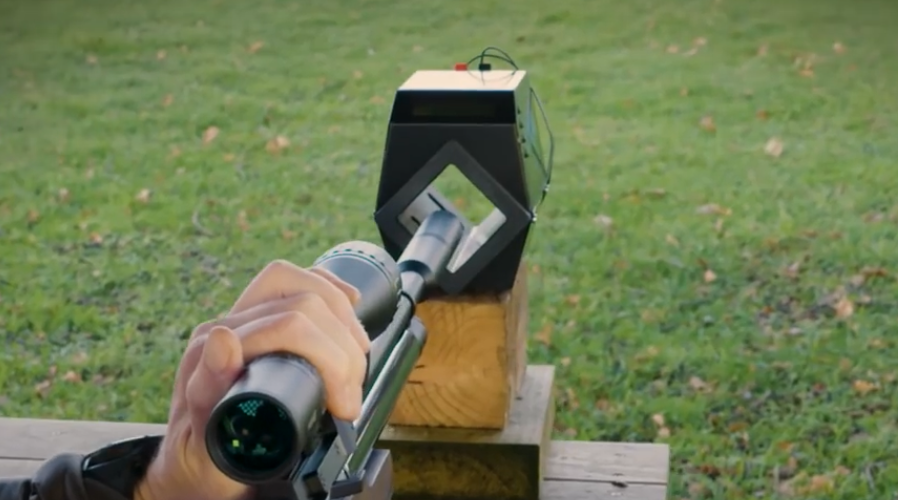
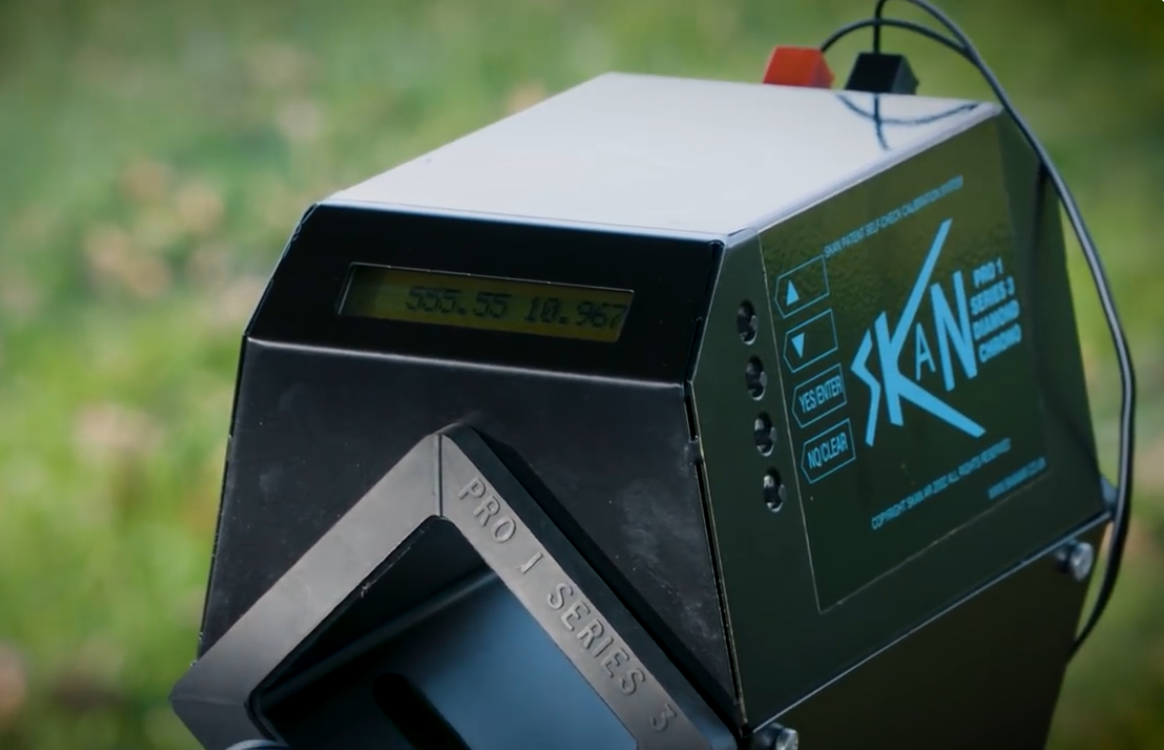
A chronograph measures the time it takes a pellet to travel between two optical sensors placed a fixed distance apart - typically around 15 cm for most portable units. From that transit time, it calculates velocity in feet per second (FPS), with velocity measured from the projectile passing between sensors. That is the only thing the hardware is actually doing: measuring time across a known distance, while everything else is derived from measured speed rather than directly measured by the chronograph.
Everything else - ES, SD, muzzle energy - is derived from that velocity figure. Some chronographs calculate these metrics automatically across a shot string. Others provide raw velocity per shot and leave the computation to the shooter. Either way, the starting point is always the same: an accurate FPS reading, taken consistently at the muzzle.
Placement matters
Position your chronograph approximately 9 inches in front of the muzzle, centred in the optical path. Ambient light conditions affect sensor reliability - bright, diffuse lighting gives the most consistent readings. Avoid shooting directly into strong sunlight or low artificial light.
One important distinction: the velocity your chronograph records is not quite the velocity at the muzzle. By the time the pellet reaches the sensors, it has already decelerated slightly due to air resistance. For practical purposes across short chronograph distances this difference is negligible, but it is worth noting if you are working toward precise energy calculations for legal compliance.
FPS Explained: How Muzzle Velocity Affects Trajectory and Point of Impact
FPS is the base unit from which everything else is calculated. It tells you how fast the pellet is leaving the barrel - and that figure has direct consequences for trajectory and point of impact, particularly at the distances that matter in field target competition.
Air rifle pellets travel at subsonic velocities - typically in the range of 780 to 860 FPS for most competition PCP setups (this is illustrative; actual figures vary depending on rifle configuration, pellet weight, fill pressure, and ambient conditions) - and they are subject to gravity from the moment they leave the muzzle. A higher average velocity produces a flatter trajectory, which means less holdover correction is needed at varying distances. Higher FPS can be useful, but it is not automatically an advantage if it comes at the expense of consistency or the wrong pellet choice. A lower velocity means more pronounced drop, and a tighter dependence on accurate ranging.
The critical implication for Field Target shooting is this: even a small shift in average FPS between sessions can move your point of impact at longer ranges. Your average muzzle velocity gives you a clearer basis for comparing sessions than a single fast shot. If your rifle is shooting 10 FPS slower than when you set your scope zero, that change in trajectory may be enough to miss a kill zone at 45 or 50 metres, depending on the target size. This is not theoretical - it is the reason consistent velocity matters so much in precision disciplines.
Velocity consistency is a zeroing issue
Your scope zero is set for a specific average velocity. If that average drifts - due to temperature, fill pressure, regulator performance, or pellet batch changes - your zero becomes inaccurate. Tracking FPS across sessions lets you catch that drift before it costs you shots.
FPS also determines whether your rifle is operating within UK air rifle legal limits. Muzzle energy is calculated directly from velocity and pellet weight - which is covered in detail in the muzzle energy section below. The key point here is that FPS is not just an interesting data point: it is the root measurement from which both legal compliance and ballistic performance are assessed. Multiple factors affect downrange results, and FPS is only one of the factors behind whether you hit the target cleanly at distance.
Extreme Spread (ES): What Shot-to-Shot Variation Tells You About Your Rifle
Extreme Spread is the simplest consistency metric your chronograph produces - and also the easiest to misread as the whole picture.
ES is calculated by subtracting the lowest velocity recorded across a shot string from the highest. If your string of ten shots runs between 820 FPS and 833 FPS, your ES is 13 FPS. For most shooting applications, a 20 FPS extreme spread is a workable benchmark, while competition rifles often aim tighter. That is the total velocity window your rifle is operating within across that string.
A lower ES is always better. A tight ES indicates that the air system - particularly the regulator in a PCP - is delivering a consistent charge to the pellet on each shot. A wide ES suggests variability somewhere in that system, whether in the regulator, the valve, fill pressure depletion, or pellet-to-pellet weight inconsistency.
Extreme Spread defined
ES = Highest velocity in string - Lowest velocity in string. It captures the full range of velocity variation across your shot sample. Percentage-based reading can be more useful than raw numbers alone; for example, a 2% ES at 900 FPS is generally acceptable at 55 yards. It is fast to calculate and easy to interpret, but it is sensitive to outliers - a single anomalous shot pulls the figure wider than the rest of the string may justify.
The limitation of ES is that it only describes the extreme ends of your shot distribution. One flyer - caused by a deformed pellet, a disturbance in the loading process, or a momentary regulator irregularity - can produce an ES figure that looks alarming even when the remaining nine shots of your string are exceptionally consistent. This is why ES is best read alongside SD, not as a standalone verdict on your rifle. At distance, a significant change in ES can open the group size enough that the probability of a clean hit drops; for example, a 4% ES can create enough vertical shift to miss by around 1 MOA at 75 yards.
Standard Deviation (SD): The Statistically Stronger Measure of Consistency
Where ES tells you the gap between your fastest and slowest shots, Standard Deviation tells you how the whole string is distributed around the average. It is a more complete picture of velocity behaviour - and for competitive shooters, it is the metric that carries the most diagnostic weight because it links velocity consistency to practical accuracy, not just statistics.
SD is expressed in FPS and represents the average deviation of each shot from the mean velocity of the string. A low SD means your shots are closely clustered around that mean. A high SD means there is significant spread across the string, even if the ES happens to look acceptable.
Most modern chronographs calculate SD automatically once you have completed a shot string. If yours does not, the formula can be applied manually - but in practice, the value of SD is in the trend, not the calculation.
Why SD is harder to fake than ES
A string with nine shots at 825 FPS and one at 812 FPS will show an ES of 13 FPS. That one outlier does not dramatically affect SD because eight shots are pulling the average in a tight cluster. SD reflects the whole distribution - not just the edges. This makes it a more reliable indicator of genuine mechanical consistency.
On a 1 MOA target, low ES and low SD matter because even small velocity differences can open vertical dispersion in long range shooting.
For Field Target and HFT shooting, SD is the more meaningful number precisely because it is not distorted by isolated anomalies. If your SD is consistently low across multiple strings, you can have confidence that your regulator is performing as designed, your pellets are behaving predictably, and your rifle is mechanically sound. If your SD is climbing, something in the system is changing - and that change needs investigating before it becomes a problem on the course. Around 0.5 MOA of vertical dispersion is generally acceptable, but beyond that it starts to affect precision shooting, especially once other factors begin to stack up.
Muzzle Energy in ft/lb: How to Calculate It and Why 12 ft/lb Is the Legal Limit
Under UK law, an air rifle may be owned and used without a Firearms Certificate provided its muzzle energy does not exceed 12 ft/lb. Exceeding that threshold makes the rifle an FAC-rated air rifle, subject to full licensing requirements. This is not a grey area, and there are no workarounds - legal compliance is a binary outcome at the 12 ft/lb limit.
Muzzle energy is calculated using the following formula:
Muzzle energy formula
Muzzle energy (ft/lb) = (Velocity in FPS squared x Pellet weight in grains) / 450,240 Example: A pellet weighing 8.44 grains travelling at 820 FPS produces: (820 x 820 x 8.44) / 450,240 = 12.60 ft/lb. The constant 450,240 converts the grain/FPS units into foot-pounds, showing the relationship between velocity and pellet mass in kinetic energy. Muzzle energy is typically measured in foot-pounds as the standard expression of a rifle’s output power.
Pellet weight is the variable most shooters underestimate in this calculation. Changing from an 8.44 grain pellet to a 10.34 grain pellet at the same velocity produces a significantly higher energy figure. Heavier pellets usually retain energy better than lighter pellets downrange, even when they start slower. Higher muzzle energy indicates greater potential impact force, which is why the legal limit matters even when raw FPS looks modest. If you switch pellet weight mid-season, chronograph the rifle again - do not assume your previous energy calculation still holds.
For competition use, it is standard practice to check muzzle energy at events. Marshals or technical officials may chronograph rifles as part of the sign-on process, and the reading taken on the day is the one that counts. Running your rifle close to 12 ft/lb introduces risk - temperature changes alone can shift velocity enough to push a borderline setup over the limit. A sensible working margin is typically a few tenths below the legal ceiling, but that decision rests with the shooter and should be informed by UK air rifle licensing rules and consistent chronograph data.
Using Chronograph Data to Diagnose Problems: Regulator, Seals, and Pellet Batches
The diagnostic value of chronograph data is where most shooters leave performance on the table. A widening ES or climbing SD is not just a statistical inconvenience - it is a symptom that helps in determining which part of the rifle's performance has changed.
Understanding the patterns helps you identify the cause before it becomes a reliability problem. The most common sources of velocity variation in a regulated PCP are closely related to the same setup and accessory issues that cause groups to open up over time, and understanding those links helps you separate mechanical problems from accuracy issues caused by accessories and setup:
- Regulator drift or inconsistency - the regulator is not maintaining a stable output pressure across the shot cycle
- Seal wear or degradation - O-rings or valve seals losing integrity, causing variable air delivery
- Pellet batch inconsistency - weight variation between pellets introducing velocity spread that the air system cannot compensate for; pellet load or batch variation can change results even when the air system is stable
- Fill pressure outside the regulated range - operating the rifle above or below the regulator's effective window, which is particularly important with higher-mass pellets in a .22 air rifle
- Temperature variation - cold conditions can affect regulator performance and air density, shifting average velocity
Diagnostic Framework: Reading Chronograph Patterns
Pattern: High ES, Low SD
One or two outlier shots are pulling the ES wide, but the rest of the string is consistent. Likely cause: a deformed or inconsistent pellet, rather than a mechanical issue. Check your pellet batch and loading process before investigating the rifle.
Pattern: High ES, High SD
The whole string is scattered - this is a mechanical or fill-related problem. Check fill pressure is within the regulated range. If the issue persists at correct fill, the regulator or valve system needs attention. Book a service through your Air Arms authorised dealer.
Pattern: Declining average FPS across the string
Velocity is trending downward shot to shot rather than varying randomly. This typically indicates the reservoir is approaching the lower boundary of the regulator's working pressure window. Refill the rifle and retest. If the decline starts earlier in the fill cycle than expected, the regulator set point may have drifted.
Pattern: Sudden velocity spike mid-string
One shot significantly faster than the rest, with the string otherwise stable. This often points to a momentary valve irregularity or a pellet that was not fully seated before you fire, which can happen even with an otherwise sound routine. Repeating the string and checking pellet seating consistency will usually confirm this.
Pattern: Stable SD but shifted average FPS between sessions
Consistency is good, but the rifle is shooting faster or slower than your previous baseline. Temperature is the most common cause - cold conditions typically reduce average velocity. If the shift is larger than temperature alone would explain, check fill pressure and pellet batch. A persistent session-to-session shift in average velocity warrants regulator inspection.
Competition PCPs like the Air Arms XTi-50 and HFT500 are engineered with regulated air systems specifically designed to minimise velocity variation across the shot count - a standard of consistency recognised by multiple Airgun of the Year awards across 2019, 2020, 2021, 2023, and 2025. Chronograph data is one of the most direct ways to verify that the regulator is performing as it should, while also giving you a more complete idea of behaviour over time. A well-maintained, correctly filled XTi-50 or HFT500 running on a matched pellet batch should produce tight, predictable strings - if it is not, the data will tell you where to look.
Test pellet batches before you commit
Pellet weight variation between tins - even from the same manufacturer - can shift your average FPS and widen your ES. When switching to a new tin, chronograph a ten-shot string and compare it against your established baseline. If the average or spread has shifted meaningfully, weigh a sample of pellets from each tin to assess the batch quality before using them in competition.
What SD and ES Numbers Should You Be Aiming For in a Competition PCP?
This is the practical question most shooters arrive at after they understand what the metrics mean - and it deserves a direct answer rather than a vague 'the lower the better'.
For a well-tuned, regulated competition PCP - such as the XTi-50 or HFT500 - running a consistent, weight-sorted pellet batch, the figures you should be working toward are:
- SD: 3 FPS or below across a ten-shot string is an indication of a well-performing regulated system. SD below 2 FPS is excellent. SD above 5 FPS on a regulated PCP warrants investigation.
- ES: Below 10 FPS across ten shots is a reasonable benchmark for a competition-grade regulated rifle. Below 5 FPS is exceptional. An ES above 15 FPS on a regulated PCP - once outlier pellets are ruled out - points to a mechanical issue that needs addressing, though around 20 FPS may still be acceptable for general use while a competition PCP should usually aim lower.
These are not arbitrary figures. They reflect what regulated air systems are designed to deliver, and what top-level Field Target and HFT shooters expect from a rifle that is properly set up and maintained. These benchmarks are tied to practical target size, and smaller group size leaves less room for velocity variation. An unregulated spring rifle will naturally show wider figures - these benchmarks apply specifically to regulated PCPs where mechanical consistency is a design goal, not a variable.
SD matters more than ES for course performance
In Field Target and HFT, a single outlier shot that inflates your ES is less damaging than a systematically inconsistent SD. High SD means your point of impact is unpredictable across the whole string - not just occasionally. A significant change in spread becomes more noticeable as targets get smaller and distances increase. For competition, focus your tuning effort on SD first. ES will often follow.
It is also worth running strings across different fill pressures and noting where the regulator's effective band starts and ends, because average trends matter more than trying to double-check one standout reading. Most regulated PCPs have a working pressure window - below which the regulator becomes ineffective - and your SD and ES will deteriorate measurably as you approach that lower boundary. Identifying that point through chronograph testing tells you exactly how many shots you can take before a refill is needed to maintain competition-level consistency.
Air Arms rifles produced through over 40 years of British engineering expertise are built to operate within tight tolerances from the outset. Chronograph testing does not reveal whether a rifle is capable of performing - it confirms that it is performing, and flags immediately when something has changed. For any shooter serious about competing at a high level, that confirmation is not optional.