



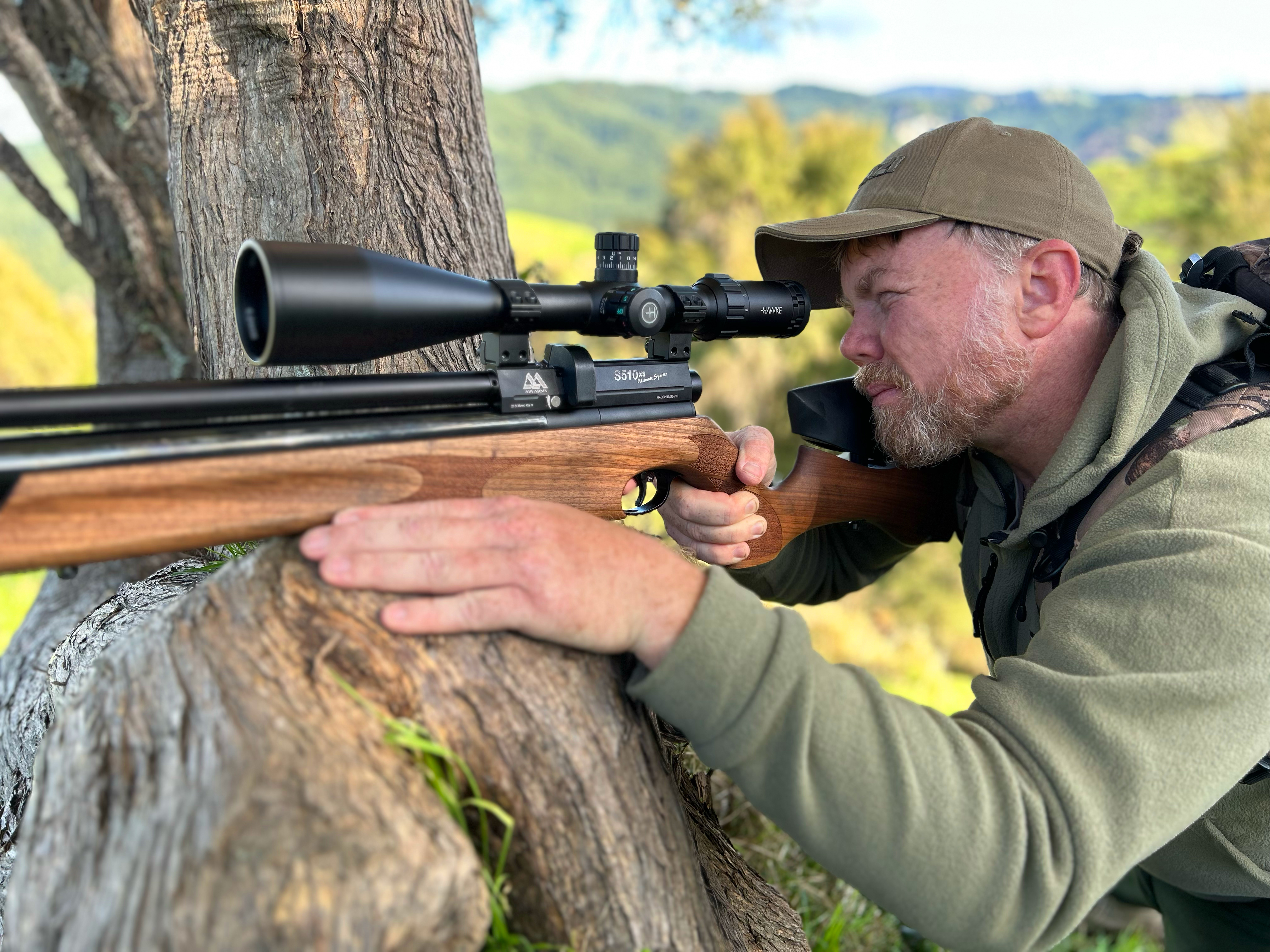
Best .22 Air Rifle Pellets for Hunting and Pest Control
Choosing the best .22 air rifle pellets for hunting is not a matter of picking the most popular tin on the shelf. It is a decision that touches on terminal performance, UK legal limits, your specific rifle, and the ethical responsibility that comes with every shot taken in the field.
For pest controllers managing rabbit populations, corvids, or grey squirrels, getting the pellet selection right is the difference between a clean, humane dispatch and a wounded animal. This guide cuts through the marketing noise and focuses on what actually matters downrange - grounded in over 40 years of British engineering expertise and real-world hunting application.
Why .22 Is the Preferred Calibre for Pest Control in the UK
The choice between the .177 and .22 calibres for hunting is not purely academic - it has real consequences for how energy is delivered to the target. Of the common calibres, .22 used to be widely seen as the best hunting option because it carries more stopping power, though .177 has become more popular in sub-12 ft/lb rifles. At equivalent muzzle energy, a .22 pellet transfers more energy per unit of impact due to its greater mass and larger frontal diameter. That translates to more decisive energy transfer on target, which matters when the quarry is a rabbit or a grey squirrel.
Where .177 achieves velocity through lighter projectiles, .22 achieves authority through mass. The .177 gives a flatter trajectory and usually needs less holdover than .22, while .22 pellets are generally heavier and deliver as much energy more forcefully on impact. The heavier pellet hits harder at moderate velocities, which suits the sub-12 ft/lb ceiling that governs unlicensed air rifles in the UK. Rather than relying on extreme speed to generate energy, a .22 load uses weight to deliver its payload more efficiently - particularly important when shots are taken at live quarry where accuracy and precise head or heart-lung placement are what deliver a clean kill.
Why calibre matters for pest control
.22 calibre delivers greater energy transfer per pellet compared to .177 at equivalent muzzle energy levels. For pest control applications where a clean, humane result is the only acceptable outcome, that additional terminal authority is a meaningful advantage.
The .22 is also less sensitive to wind at shorter hunting ranges, and the heavier pellet tends to be more forgiving of minor hold inconsistencies compared to the flatter-shooting but lighter .177. For practical field use in variable British conditions, this combination of qualities makes .22 the natural choice for most hunters and pest controllers working within the legal limit.
Domed vs Hollow Point Pellets: Energy Transfer and What Actually Happens Downrange
The pellet aisle offers two shapes that matter most for hunting: domed (sometimes called round-nose) and hollow point. Airgun pellets also come in other shapes, including pointed, flat head, and round head designs, each suited to different jobs such as hunting or target shooting, but these two are usually the most relevant here. Both have legitimate use cases, but their real-world performance at sub-12 ft/lb energy levels is often misunderstood - and the honest explanation is more nuanced than most product descriptions suggest.
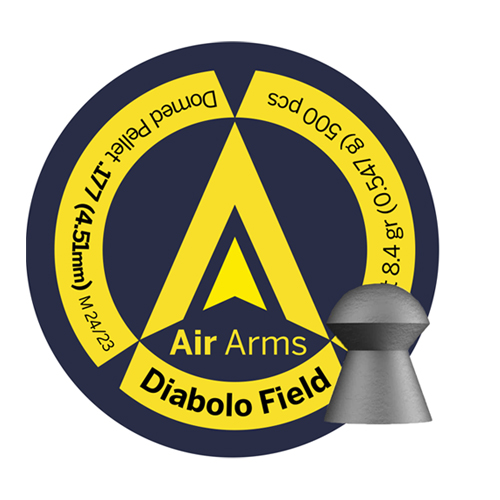
Domed Pellets
Domed pellets are the workhorse of field shooting and the best all-round, general use hunting option. Their rounded nose cuts cleanly through air, and their higher bc helps them stay stable and resist wind better than flat or hollow-nosed designs. At typical hunting distances, a well-matched domed pellet in a well-tuned rifle will group tighter than most hollow point alternatives - and in hunting, tight groups mean repeatable shot placement.
For close-range pest work - shots inside 25 metres where impact velocity remains relatively high - a quality domed pellet is suitable because it remains less likely to be blown off course by side winds than less aerodynamic shapes. The wound channel is clean and deep, which with accurate shot placement on vital areas is entirely effective for humane dispatch.
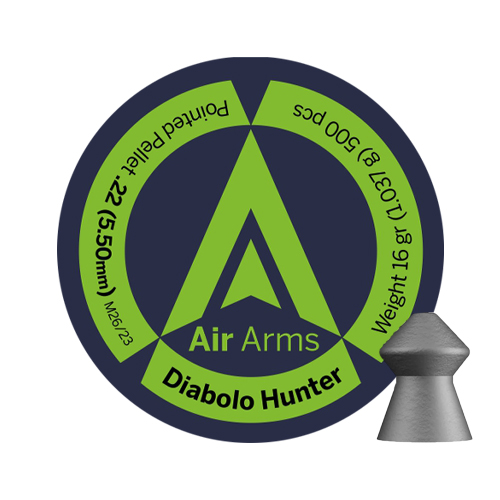
Hollow Point Pellets
Hollow point pellets are designed to expand on impact, creating a wider wound channel. In centrefire and rimfire cartridges operating at high velocity, this expansion is consistent and measurable. At sub-12 ft/lb air rifle energies, the picture is more complicated. Hollow point pellets sacrifice long-range trajectory for rapid deformation on impact, helping transfer energy quickly at short range rather than risking over-penetration.
Hollow point expansion at sub-12 ft/lb: be honest about the physics
At the impact velocities generated by a legal UK air rifle, hollow-point pellets may not expand reliably. Expansion depends on sufficient impact velocity to deform the lead nose - a threshold that sub-12 ft/lb airguns may not consistently meet, particularly at range. Do not assume expansion will occur. A hollow point that does not expand is simply a less aerodynamically efficient domed pellet. By contrast, flat heads are generally a short-range target option because their ballistic coefficient is poor.
At very close range - inside 15 to 20 metres - there is more likelihood of the hollow point behaving as designed, particularly with a rifle running close to the 12 ft/lb ceiling. This is the sort of close quarters distance where they are most practical, as hollow-point pellets expand upon impact and can do more damage to small game. But this is not guaranteed, and it varies significantly between pellet designs, weights, and rifle setups. The practical conclusion is that hollow points should not be relied upon for expansion at air rifle energies. If they do expand, consider it a bonus. If they do not, you need to know your shot placement will still achieve a clean result.
For most hunting applications, a consistent domed pellet that your rifle shoots well will outperform an inconsistent hollow point that groups poorly but expands occasionally. Accuracy and repeatability remain the primary criteria.
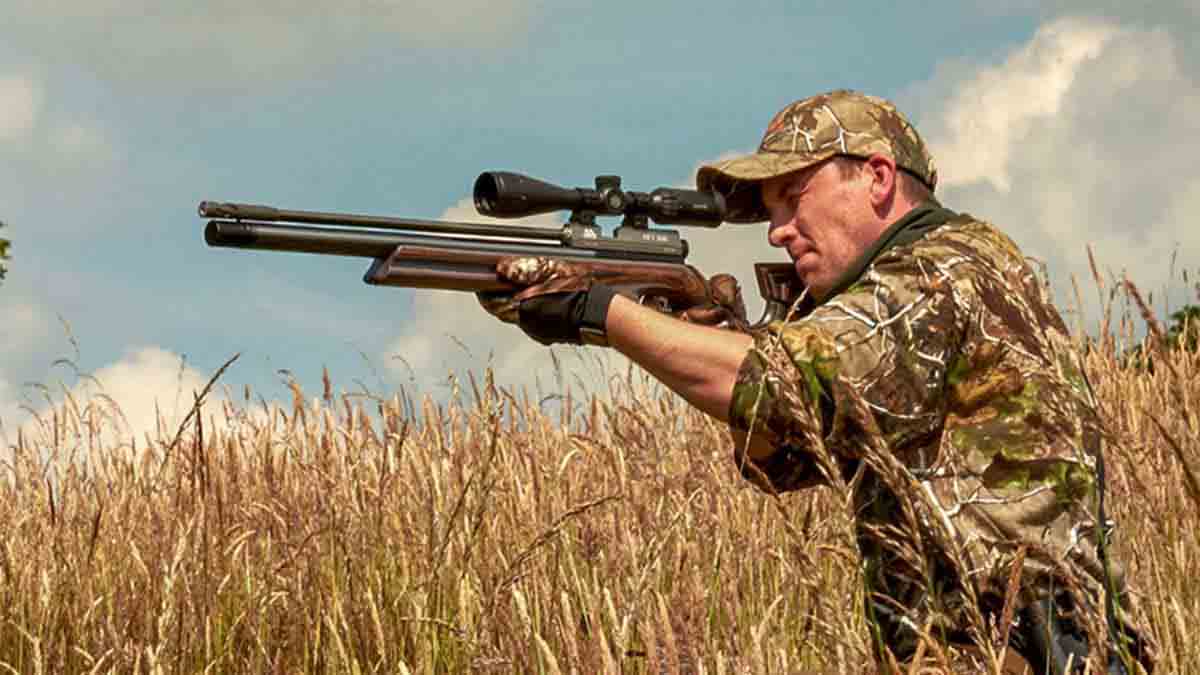
UK Muzzle Energy Limits and How They Shape Your Pellet Selection
Under UK law for air rifles, an air rifle may be owned and used without a Firearms Certificate provided its muzzle energy does not exceed 12 ft/lb. This is not a guideline - it is the legal ceiling. Exceeding it, even accidentally through pellet selection, places you in Firearms Certificate territory. Understanding how pellet weight interacts with this limit is essential.
Muzzle energy is calculated from both pellet weight and pellet velocity. A heavier pellet fired from the same rifle will travel at a lower velocity than a lighter one - but may or may not produce less muzzle energy, depending on how the rifle’s powerplant is tuned. Most .22 rifles are set up to run near the 12 ft/lb limit using mid-weight pellets in the 14 to 16 grain range. As a rule, most legal limit airguns work best with pellets around 7 to 8 grains in .177 and 14 to 16 grains in .22, especially in low powered airguns where trajectory and efficiency matter more. Switching to a significantly lighter pellet can push velocity - and therefore muzzle energy - higher than expected.
Chronograph before you hunt
If you change pellet weight - particularly to a lighter load - check your muzzle energy with a chronograph before using the rifle in the field. Pellet weight directly affects velocity at the 12 ft/lb ceiling and must be factored into your selection. This is both a legal responsibility and a safety one.
Heavier pellets in the 16 to 21 grain range tend to produce lower velocities from a standard sub-12 ft/lb rifle, often running comfortably under the legal limit while delivering excellent energy transfer at hunting distances. They are a sensible starting point for most pest control work, particularly where shots beyond 25 metres are common.
The TX200, Air Arms’ multiple Airgun of the Year award-winning spring-powered underlever, is a good example of a rifle where pellet selection and power output interact closely. Spring rifles can show more variation across pellet weights than regulated PCPs, which makes verifying your energy output with each new pellet selection a disciplined habit rather than an occasional task.
Effective Range, Pellet Drop, and Why Distance Changes Everything
Every air rifle pellet drops under gravity from the moment it leaves the muzzle. At sub-sonic velocities typical of legal UK airguns, this drop becomes significant beyond 30 metres - and the consequences of misjudging it in the field are serious, no matter how carefully you have chosen the best .22 air rifle for hunting.
Heavier .22 pellets in the 16 to 21 grain range retain energy well at range because their mass resists deceleration more effectively than lighter projectiles. This retention is useful, but it comes paired with increased drop — a pellet that shoots flat to 25 metres may require meaningful holdover at 40 metres.
- Inside 25 metres: pellet drop is relatively manageable; most .22 loads will perform predictably with a zero set at 20-25 metres
- 25 to 35 metres: drop increases meaningfully; holdover knowledge is essential and must be practised, not estimated
- Beyond 35 metres: heavier pellets retain energy but drop more steeply; lighter pellets drop less but arrive with less energy - neither is ideal for assured dispatch at this range from a sub-12 ft/lb rifle
For rabbit control, where the ethical kill zone on the skull or neck is compact, the margin for holdover error shrinks as distance increases. A pellet that groups consistently at 30 metres in your specific rifle is more valuable than one with theoretically superior ballistics that your rifle cannot reproduce reliably.
Set a realistic maximum range
Establish your maximum hunting range based on the distance at which you can confidently place five consecutive shots within the ethical kill zone of your quarry - not the distance at which your pellet still has theoretical energy. For most sub-12 ft/lb .22 setups, that means working inside 35 metres in most conditions.
Mid-to-heavy pellets in the 14 to 18 grain range typically represent the best balance of retained energy and manageable trajectory for the ranges at which most UK pest control work is conducted — generally inside 35 metres.
Field-Testing Pellets: How Pellet Weight Helps You Find the Right Load for Your Rifle
No pellet is universally superior. Every rifle has its own preference, shaped by barrel dimensions, choke, powerplant characteristics, and even pellet head size tolerance. Airgun barrels are often sensitive to accuracy with varying pellet designs, so different pellets from different brands can behave very differently in the same barrel. A pellet that produces exceptional results in one .22 rifle may group poorly in another of the same model. Field-testing is not optional - it is the process that identifies your specific rifle-pellet match, especially when you are choosing the best .22 pellets for air rifle hunting.
As practical advice, experiment with sample packs from reputable makers to find the best fit for your gun. Established manufacturers such as JSB, H&N, RWS, and Gamo are worth testing, and many of these brands also offer lead-free options that can behave differently from lead in different barrels, particularly once you understand what an air rifle is and how it works.
Field-Testing a .22 Pellet for Hunting Use
Chronograph for energy
Before any group testing, confirm your muzzle energy with each candidate pellet using a chronograph. Record velocity across a string of at least ten shots. Check you are within legal limits for all pellet weights you intend to use. Significant variation across the string can indicate a rifle condition issue that will affect grouping.
Paper testing at 25 metres
Fire five-shot groups from a supported position at 25 metres. Use a consistent hold and controlled trigger technique. You are looking for group size and consistency - not just the best single group. A pellet that produces one tight cluster and one flier is less useful than one that groups predictably every time.
Extend to your hunting range
Once a pellet shows promise at 25 metres, test at your intended hunting distance. Record the holdover or elevation adjustment needed and confirm groups remain consistent. This is where some pellets begin to show wind sensitivity or velocity instability that was not visible at shorter range. Expensive pellets are not automatically better than cheaper ones if your rifle does not group them well.
Confirm in field conditions
Bench testing cannot replicate all field variables. Shoot your confirmed pellet from field positions - kneeling, seated, using natural rests - to understand how positional variation affects group size. Your hunting zero must account for the positions you will actually use.
Accuracy and shot placement are more critical to ethical pest control dispatch than pellet design alone. Choosing a reputable brand and high-quality pellets is vital for consistent and reliable pest control. A consistent rifle-pellet combination that puts every shot where you intend it is the foundation of responsible hunting. No amount of pellet sophistication compensates for a poorly tuned match or inconsistent technique. Use these points as simple tips for narrowing down pellet choice.
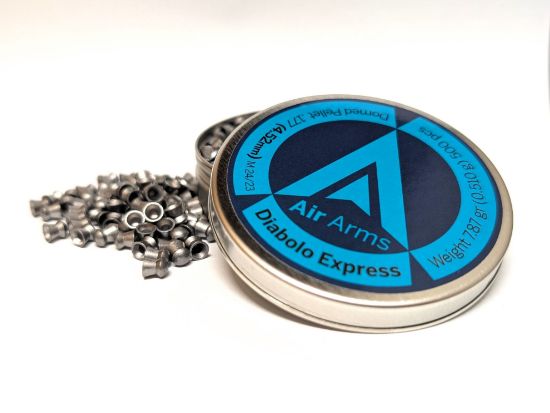
Answering the Key Questions: Which .22 Pellet Works Best for Rabbit Control
To make this practical, consider a representative scenario: a pest controller managing rabbits on agricultural land, using a sub-12 ft/lb .22 PCP or spring rifle, taking shots from 15 to 35 metres from positions that vary between supported and unsupported.
For this application, a quality domed pellet in the 16 to 18 grain range is the most reliable starting point. It offers the best combination of ballistic consistency, energy retention at range, and group-ability across a range of .22 rifles. The aim is to balance aerodynamic stability with either controlled expansion or deep penetration for ethical kills. It does not rely on expansion to do its work - it relies on precise placement and sufficient energy transfer through penetration.
Hollow point pellets are worth testing at close ranges - inside 20 metres - where impact velocity gives them the best chance of performing as designed. If your rifle shoots them accurately and your primary shots are taken at short range, they are a reasonable option. If grouping suffers compared to domed alternatives, they are not worth the trade-off regardless of their theoretical terminal benefit. Pointed pellets are often marketed for hunting, but damaged tips and weaker consistency can make domed pellets the safer practical choice.
Illustrative scenario - representative, not documented
A pest controller using a spring-powered .22 rifle regularly at 20 to 30 metres tests three pellet types through the same rifle. The domed 16-grain pellet produces the tightest groups and consistent velocity. A hollow point of similar weight groups 30 percent wider at 25 metres and shows more shot-to-shot energy variation. On a quarry animal where the ethical kill zone is small, the domed pellet is the correct choice - regardless of the hollow point’s theoretical wound channel advantage. You should expect the best result from the pellet that combines accuracy with dependable terminal performance, not simply the most aggressive profile.
The ethical responsibility of pest control demands that every decision - including pellet selection - is made to maximise the probability of a clean, humane result. That means choosing the pellet your rifle shoots most consistently, within the energy limits the law requires, at the ranges you can genuinely hold yourself accountable to.
Air Arms’ TX200 and the broader range of Air Arms .22 rifles are engineered with this principle in mind - built to deliver repeatable, consistent performance so that when the conditions are right and the shot is yours to take, the rifle gives you every advantage. That is what 40 years of British engineering expertise looks like when it matters.
Find the Right Air Arms Air Rifles for Your Pest Control Work
Find the Right Air Arms Rifle for Your Pest Control Work
Explore the Air Arms products range and find the rifle that fits your hunting and pest control needs. With over 40 years of British engineering expertise and a 3-year warranty on every new rifle, Air Arms gives you the consistent, dependable performance that responsible pest control demands, and you can use the dealer locator to find a retailer near you.