



Air Rifle Shooting Competitions Explained: HFT, FT and Benchrest
Air rifle shooting in the UK encompasses far more than informal plinking in the garden or paper targets at a club range. A rich competitive structure exists at every level — from relaxed internal club leagues through to regional championships and national events that attract the country’s best shooters, including flagship fixtures such as the HFT World Championships. For anyone looking to take their shooting further, understanding the main competition disciplines is the natural next step.
This guide covers the three primary competitive formats for sub-12 ft/lb air rifle shooting in the UK: Hunter Field Target (HFT), Field Target (FT), and Benchrest. Each discipline rewards different skills, suits different types of shooter, and takes place in a different environment. Understanding what each one involves will help you identify where your interests lie — and where to find a range or club to get started.
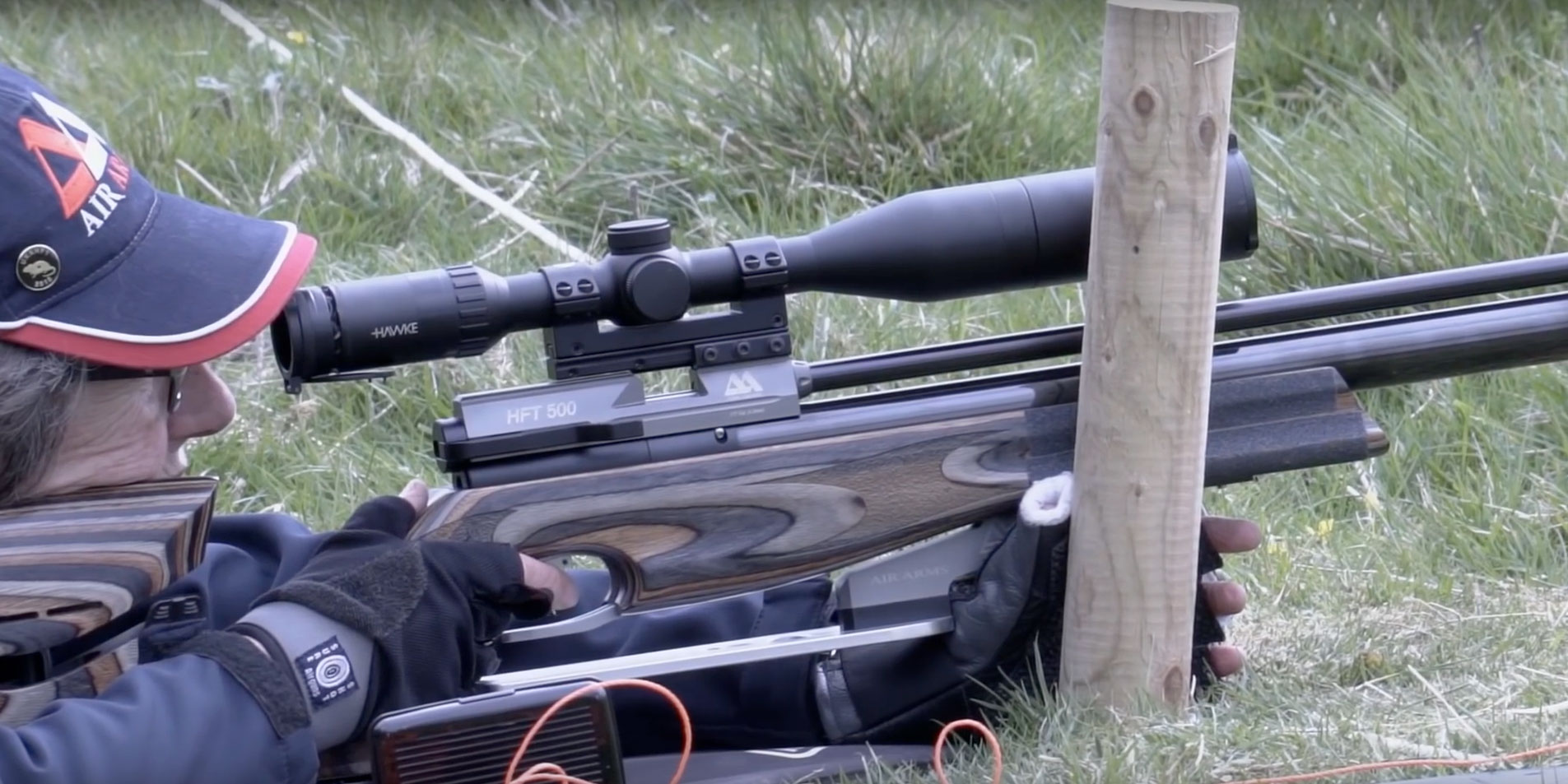
Hunter Field Target (HFT)
Hunter Field Target is the most widely practised outdoor air rifle competition discipline in the UK. It originated in Hampshire in 1991 as a reaction to the increasingly technical demands of Field Target shooting, with the aim of creating a format that more closely reflected real-world hunting scenarios. The result is a discipline that balances accessibility for newer shooters with genuine challenge for the experienced, and for many people an introductory guide to Hunter Field Target shooting is their first step into structured competition.
How a Course Works
A standard HFT course consists of 30 lanes, each with a metal knock-down target set at an unknown distance. The targets are shaped to represent typical UK quarry species — rabbits, grey squirrels, crows, magpies — and each has a circular kill zone ranging from 15mm to 45mm in diameter. The smaller the kill zone, the harder the shot.
Each lane is marked with a peg or disc. The shooter must keep some part of their body or rifle in contact with this peg throughout the shot. One shot is taken per target, and a direct strike to the kill zone causes the target to fall flat, scoring two points. Hitting the faceplate outside the kill zone scores one point. A miss scores zero. Over a 30-target course, the maximum possible score is 60 points.
Shooters may adopt three positions: prone (lying down), kneeling, or standing. Some lanes display a mandatory position sign — if a lane is marked ‘standing only’, that position must be used or the shot scores zero regardless of where it lands. Prone is the most commonly used position and is permitted unless otherwise stated.
The Key Challenge: Range Estimation
Because target distances are not disclosed, the central skill in HFT is estimating range accurately enough to apply the correct holdover — adjusting your aim point above or below the target to compensate for pellet drop at that distance. Unlike Field Target, HFT rules prohibit any scope adjustments once the shooter has stepped up to the peg. Turrets must not be touched, magnification must not be changed, and no other alterations may be made to the rifle or stock once the course of fire has begun.
This restriction places the emphasis on the shooter’s knowledge of their pellet’s trajectory at various distances and their ability to estimate range by eye. It is a skill that develops with experience and is one of the most satisfying aspects of the discipline.
Equipment and Grading
HFT imposes relatively modest equipment restrictions compared to FT. Most standard sub-12 ft/lb air rifles are legal for competition. Scope magnification is unrestricted, and .177 is the dominant calibre due to its flatter trajectory over the distances involved. Fore-end depth is limited to 150mm measured from the barrel centre, and dedicated FT-style butt hooks are not permitted.
Shooters are graded on their performance across rounds, beginning in U grade for their first three competitions before being placed into C, B, or A grade based on average score. This structure means you compete against shooters of comparable ability regardless of when you enter the sport.
Finding HFT Competition
HFT competitions are organised at club, regional, and national level. The UK Association for Hunter Field Target (UKAHFT) runs the national series, with rounds held at clubs across England, Wales, and Scotland throughout the spring and summer. Regional associations organise winter leagues, providing competitive shooting year-round. The BFTA (British Field Target Association’s outdoor organisation, BFTO) also operates HFT alongside FT events. Most clubs that run HFT hold regular practice days that are open to non-members, making it straightforward to try the discipline before committing to competition entry.
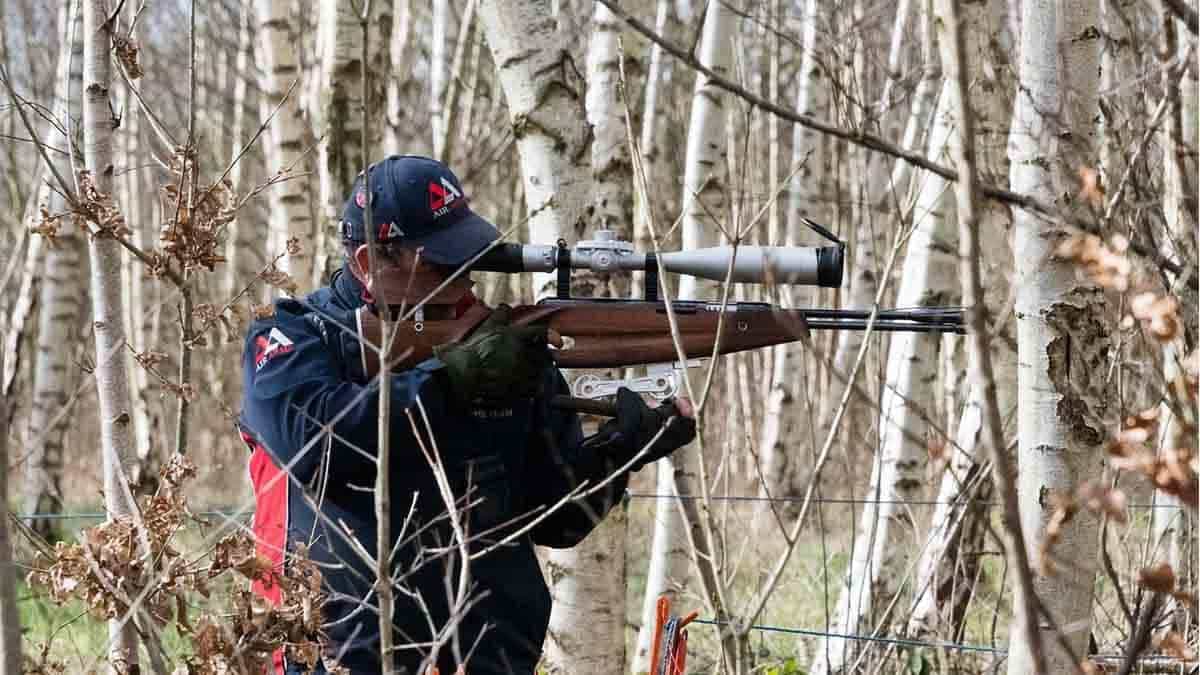
Field Target (FT)
Field Target is the oldest outdoor airgun competition discipline in the UK, originating with the National Air Rifle and Pistol Association in 1980. It shares the basic format of HFT — metal knock-down targets at unknown distances across a course — but is a considerably more technical discipline in both equipment and technique, so many newcomers benefit from a dedicated beginner’s guide to field target shooting before investing in specialised gear.
How FT Differs from HFT
The most significant difference is that FT shooters are permitted to use their scope’s parallax adjustment as a rangefinding tool. By adjusting the parallax until the target image is sharp, a skilled shooter can determine precise distance and dial in the correct elevation on their turrets for each shot. This transforms the scope from a sighting tool into an active instrument of precision, and high-magnification scopes are a standard feature of competitive FT rigs for this reason.
FT targets are placed at distances up to 55 yards, with kill zones of 15mm, 25mm, or 40mm. Courses typically feature 40 to 60 targets divided into lanes of two targets each, with a time limit of two to three minutes per lane. Unlike HFT, FT uses a distinctive seated position as its primary shooting stance — the shooter sits on the ground or a small foam pad, with the rifle resting on the forward knee. This position provides significant stability while remaining legal under FT rules. Some lanes require kneeling or standing.
Equipment Considerations
Competitive FT rifles tend to be more specialised than those used for HFT, with many shooters opting for purpose-built rigs such as the Air Arms HFT 500 when they decide to focus on competition performance. Deep fore-ends designed to rest on the knee, adjustable cheek pieces to suit large telescopic sights, and adjustable butt hooks or pads are common features of dedicated FT rifles. High-magnification scopes — typically 40x to 50x — are used both for accurate sighting and parallax-based rangefinding, and pairs of quality optics with appropriate air rifle targets for precision work allow shooters to refine their technique between competitions. The investment required to compete at the top level of FT is considerably greater than for HFT, though the discipline is entirely accessible with a standard PCP rifle and a quality scope at club and regional level.
FT competitors are separated into Piston class (spring-piston and gas-ram rifles) and PCP class, allowing fair competition between rifle types. Performance grades run from C through AA, assigned by the BFTA based on rolling average scores.
The Wind Challenge
Wind is the defining challenge of field target shooting in a way that it is not in any indoor discipline. Even a light breeze can push a sub-12 pellet sideways enough to miss a 15mm kill zone at 40 yards. Reading the wind — assessing its direction and strength from flags, vegetation, and windicators fitted to the barrel — and applying the right amount of windage compensation is a skill that experienced FT shooters spend years developing. It is also one of the things that makes the discipline endlessly interesting.
Benchrest
Benchrest shooting is a discipline defined by the pursuit of mechanical accuracy, but like all airgun disciplines it must be practised within the framework of UK air rifle law regarding power levels, venues, and safe backstops. Where HFT and FT test a shooter’s ability to perform across a varied outdoor course under environmental pressure, benchrest removes as many variables as possible to find out how accurately a rifle and ammunition combination can perform — and how consistently a shooter can replicate that performance.
The Format
Competitors shoot from a purpose-built bench, with the rifle supported on a front rest and a rear bag. This eliminates the positional element almost entirely. The target is a card printed to an exact specification, featuring 25 separate bulls arranged in rows, with additional sighter bulls used to confirm the zero and assess wind before the scored shots begin. On a 25-bull target, the maximum possible score is 250. In high-scoring competitions, X count — the number of shots in the central X ring — is used as a tiebreaker.
Competition is shot in timed ‘details’ of 20 minutes. Shooters on adjacent benches fire simultaneously, and wind flags placed down the range are used to read conditions and time shots for the calmest windows. The discipline is conducted under the oversight of qualified range officers and scored by independent markers.
Classes and Equipment
Benchrest competitions are structured into classes based on equipment weight. Light Varmint, the most common entry-level class, limits the combined weight of rifle and scope to a specified maximum. Sporter and Heavy Varmint classes allow heavier, more specialised equipment. At entry level, a quality .177 PCP air rifle with a suitable scope is sufficient to compete and to understand what the discipline demands, while dedicated HFT and benchrest shooters often transition to highly refined platforms such as the Air Arms HFT 500 competition rifle as they progress. As shooters progress, investment tends to move towards highly regulated, specialist rifles and precision pellets selected for consistent weight and head diameter.
.177 is the dominant calibre in benchrest. Its high velocity relative to .22 at sub-12 power levels produces a flatter trajectory and less sensitivity to wind drift at the distances involved, typically 20 to 25 yards for indoor and club-level competition. Postal competitions — where shooters send their scored targets to a central organiser rather than attending a shared venue — are a popular feature of UK benchrest, with the NSRA running several league formats throughout the year.
welcome
What Benchrest Teaches
Even shooters whose primary interest lies in HFT or FT will find benchrest a valuable exercise. By removing positional variables, it provides a clear window onto the performance of the rifle and ammunition and reveals the true effect of trigger control and follow-through with nothing else to blame. Many experienced field shooters use benchrest sessions to test pellets, confirm zero, and diagnose mechanical issues before taking the rifle back out onto a course.
Finding a Range or Club Near You
All three disciplines are accessible through affiliated clubs spread across the UK. The right starting point depends on the discipline that interests you most.
For indoor target shooting and benchrest, the NSRA club finder at nsra.co.uk lists over 800 affiliated clubs searchable by postcode. Many of these run regular sessions open to newcomers and have equipment available to borrow. The NSRA also operates its own shooting centres at Bisley in Surrey and Aldersley in Wolverhampton, both of which offer taster sessions, coaching from qualified instructors, and a range of indoor and outdoor facilities for air rifle shooting.
For HFT and FT, the UKAHFT and BFTA websites both carry club finders listing affiliated clubs by region. Most HFT clubs hold regular practice days alongside their competitive rounds, and visiting as a non-competing observer before you enter is an entirely normal and welcomed approach.
For shooters who want to try air rifle shooting before joining a club, a number of pay-to-shoot indoor air gun ranges operate across the UK, and these venues are also a good place to ask practical questions about air rifle licensing costs and local legal requirements. These range from small facilities offering 10-metre target shooting with hire rifles to larger indoor venues with multiple range distances and reactive targets, and many also provide guidance for those interested in legal and ethical air rifle hunting once they have mastered the basics of marksmanship.
Whichever discipline you choose to pursue, the structure of UK airgun competition means there is always a level appropriate for a newcomer. You do not need to reach a particular standard before competing — the grading systems in HFT and FT exist precisely to ensure new shooters compete against others at a similar stage. The most important step is simply to find your nearest range or club and get started.