



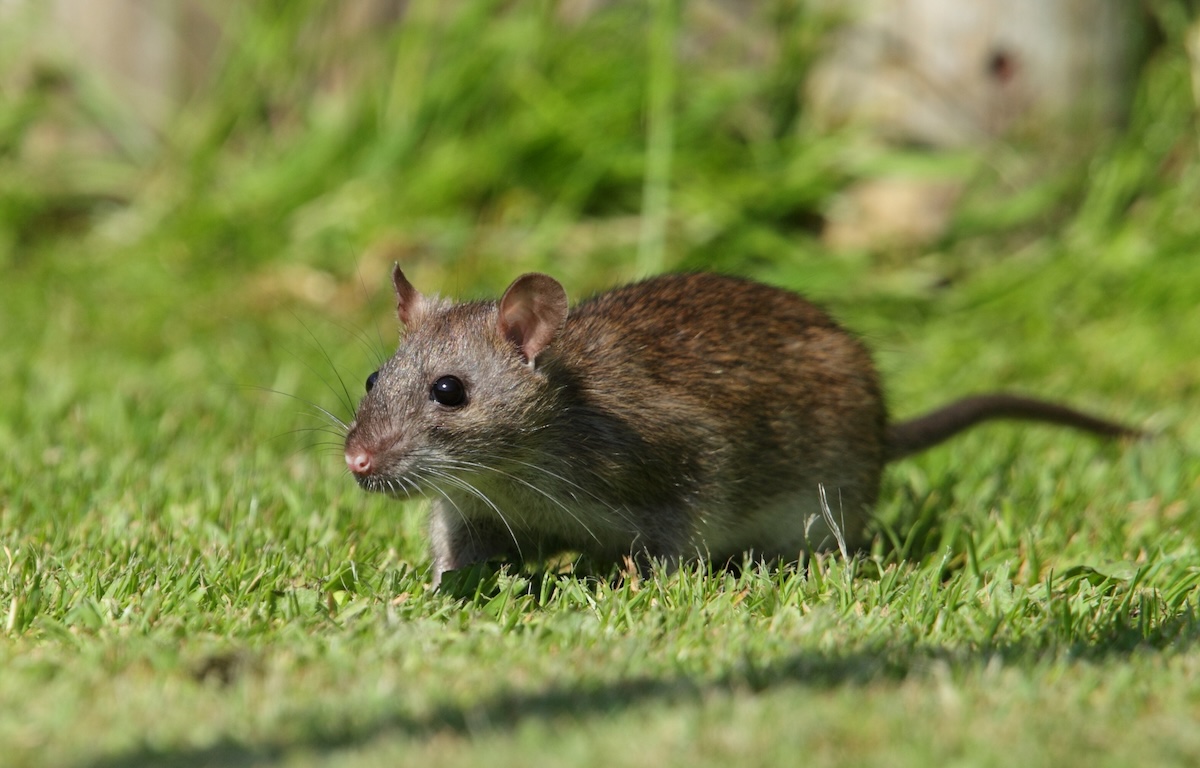
.177 Air Rifle for Rats: Is It the Right Calibre?
The calibre debate comes up every time a shooter chooses a rifle for rat control. .177 or .22? More penetration or flatter trajectory? The question matters - not just for accuracy, but for the humane dispatch that professional pest control demands. This article examines where .177 genuinely performs as a 177 air rifle for rats, where it has limits, and how regulated PCP performance addresses the consistency requirements that field conditions impose.
Is a .177 Air Rifle Powerful Enough to Kill Rats Cleanly?
The short answer is yes - but with conditions. Under UK law, any sub-12 ft/lb air rifle can be used for pest control without a firearms certificate, and a .177 pellet at legal muzzle energy is entirely capable of producing a clean kill on rats, provided the shot is placed correctly.
The critical factor is not energy alone. A .177 pellet travelling at high velocity carries sufficient energy to penetrate the skull and reach the brain when aimed at the head, or to reach the vital organs on a body shot. What determines whether that energy translates to a clean kill is how accurately and consistently that energy is delivered to the right point on the target.
The primary determinant of humane dispatch
Shot placement at the kill zone is the primary determinant of a humane outcome. Calibre supports that - it does not replace it. A precisely placed .177 pellet will produce a cleaner kill than a poorly aimed .22 shot every time.
In practical terms, this means .177 demands a higher level of accuracy from the shooter. The margin for error on an off-centre shot is smaller than with .22, which carries more kinetic energy and offers greater penetration even when placement is imperfect. Used by a competent shot at appropriate distances, however, .177 is a well-established and effective calibre for rat control.
How .177 Pellets Behave at Rat-Shooting Distances (10-30 Yards)
Most rat shooting takes place at relatively short range - typically between 10 and 30 yards in farm buildings, around grain stores, or along hedgerows. At these distances, .177 ballistics work in the shooter's favour.
.177 pellets are lighter and travel faster than their .22 counterparts at equivalent muzzle energy. The result is a flatter trajectory over short to medium distances, which reduces the holdover required and simplifies accurate shot placement. At 25 yards, the difference in point of impact between the two calibres can be meaningful - and .177's flatter arc makes it marginally more forgiving in terms of distance estimation.
Beyond 30 yards, the calculation begins to shift. .177 pellets are more susceptible to wind deflection than heavier .22 slugs at extended ranges, and energy at the target drops more noticeably over distance. For shots beyond 35 yards in open or windy conditions, this becomes a practical consideration.
Effective range guide
For consistent, humane rat dispatch with .177, keep shots within 30 yards as a working maximum. Inside that range, a flat trajectory and sufficient energy combine effectively. Beyond it, conditions and energy drop-off increase the risk of inadequate performance.
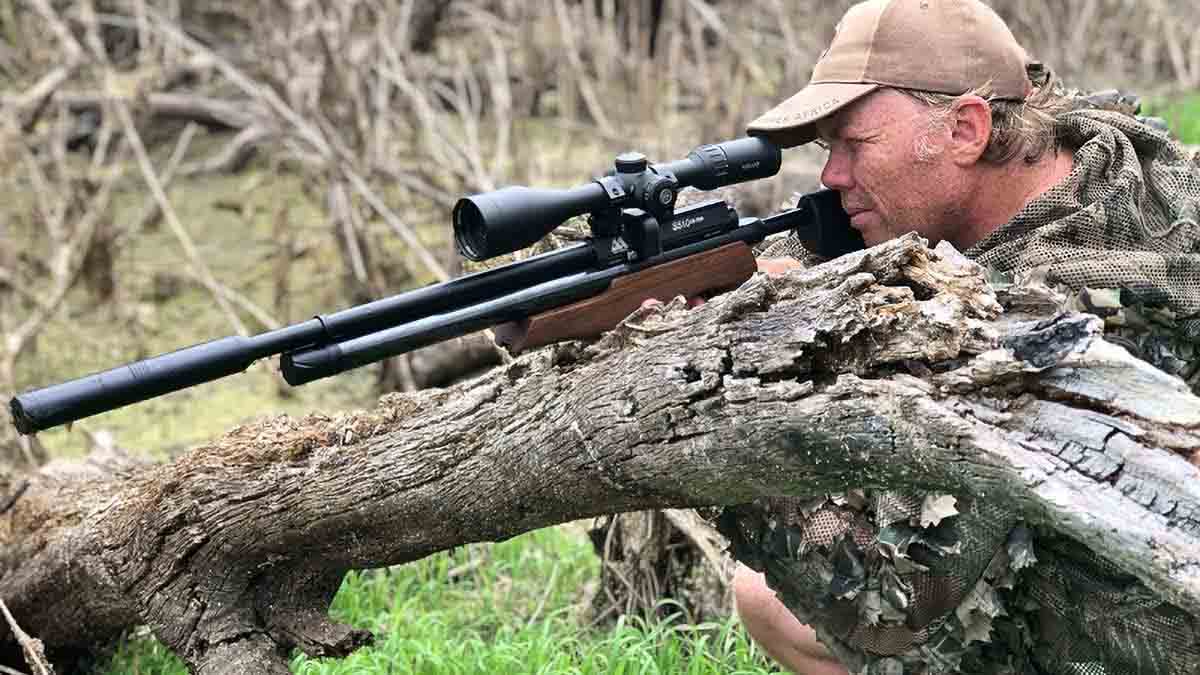
.177 vs .22 for Pest Control: Penetration, Trajectory, and Noise Compared
Choosing between .177 and .22 for air rifle pest control is not a straightforward win for either calibre. Each has genuine advantages in specific conditions, and the best calibre for air rifle hunting depends on how you balance penetration, trajectory, and noise. Several factors shape the choice, not just calibre labels alone.
Penetration and Energy Transfer
.22 carries more mass and delivers greater energy at impact, producing deeper penetration and a larger wound channel. This makes it a more forgiving calibre - when a shot is slightly off-centre, the additional energy and penetration increase the likelihood of still achieving a clean outcome. For shooters operating in high-volume, varied-position scenarios, that forgiveness has real practical value.
.177, by contrast, relies more heavily on precise placement to deliver the same result. The kill zone is effectively the same size on the target, but the consequences of missing it are more significant with a lighter, faster pellet that does not carry the same energy reserve at the point of impact.
Trajectory
.177 produces a flatter trajectory than .22 at 10-30 yards, which can aid precision when shooting at the small target presented by a rat's head. Less holdover compensation is needed, which simplifies the shot, particularly in the variable positions that outbuilding pest control demands.
Noise
.177 is generally quieter than .22 at equivalent muzzle energies in many configurations. For enclosed farm environments - grain stores, barns, machinery sheds - this matters. Excessive noise between shots can scatter rats before follow-up shots are possible. In these settings, the quieter report of .177 can make a meaningful operational difference.
- .22 advantage: greater energy at impact, more forgiving on off-centre shots, better suited to longer ranges and windier conditions
- .177 advantage: flatter trajectory at 10-30 yards, lower noise signature, lighter pellets allow higher shot count per fill on PCP platforms
- Neither calibre is universally superior - the choice depends on typical distances, environment, and the shooter's accuracy under field conditions
Why Shot Placement and Muzzle Energy Delivery Matter More Than Calibre Alone
The calibre debate can obscure a more important truth: the rifle's ability to deliver the same point of aim, shot after shot, under field conditions is what drives humane outcomes in practice.
Consider a realistic outbuilding scenario. A shooter may take four or five shots in quick succession at rats emerging from a bale stack, moving between positions - prone, kneeling, supported standing - in low light, at varying distances between 8 and 28 yards. In this situation, the ability to place each shot precisely is far more dependent on the rifle's consistency than on which calibre is loaded.
What field conditions actually test
Accuracy under pressure is not just a function of the shooter's skill. Velocity variation between shots, recoil-induced shift in point of impact, and trigger inconsistency all degrade accuracy when it matters most. These are rifle characteristics - and they vary significantly between platforms.
A consistent muzzle velocity is particularly important in this context. If the rifle delivers notably different velocities between shots - whether due to inconsistent spring power or an unregulated air supply - the pellet's trajectory changes, and the shooter's point of aim is no longer reliable across shots. For repeated humane dispatch in a single session, this is a significant practical risk regardless of calibre.
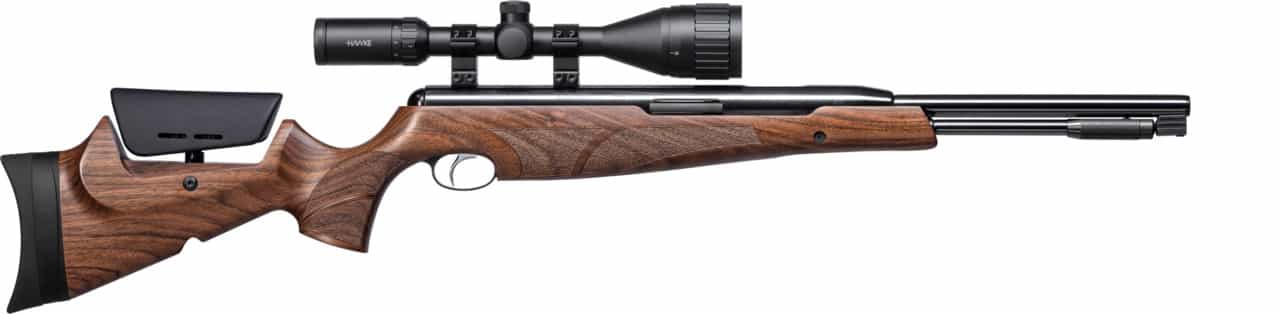
PCP vs Spring-Powered: Which Action Suits Professional Pest Control?
The action type matters as much as the calibre when evaluating a rifle for professional or repeat-use pest control. Air rifles come in several action types, including break barrel, spring-powered, pre charged pneumatic, and CO2 models, each with different mechanisms and trade-offs. For rat control, though, the practical comparison usually comes back to spring-powered versus PCP because those are the two most common choices for serious field use.
A spring-powered air rifle like the Air Arms TX200 is an excellent rifle in its own right - mechanically self-contained, requiring no external air supply, and highly capable in a single-shot, deliberate-fire context. Spring powered rifles are often a first choice for new shooters because they are affordable and simple, but the recoil and vibration take practice to master well. However, the springer’s shot cycle introduces a recoil impulse that requires consistent technique to manage. Under the varied positions and time pressure of active pest control, maintaining that technique becomes harder. Any deviation in hold introduces a variable that can shift the point of impact.
For professional pest control scenarios - multiple shots, varied positions, the need to shoot quickly and accurately - PCP air rifle platforms carry a clear practical advantage. They use compressed air and are generally easier to shoot accurately because of their low recoil, which also helps shooters with limited strength.
- PCP advantage: No recoil, consistent shot cycle, high shot count per fill, compatible with moderators and accessories
- Spring advantage: Self-contained, no charging equipment required, lower entry cost, reliable mechanical simplicity
- For repeated, rapid, accurate shooting in professional pest control - PCP is the more appropriate platform
Why springer recoil matters at the shot
A springer’s forward-and-back recoil cycle requires the shooter to hold the rifle in a consistent, deliberately relaxed grip on every shot. Under the physical and mental demands of active vermin control - moving positions, shooting in low light, managing multiple targets - this discipline is harder to maintain, and its breakdown shows up directly in accuracy.
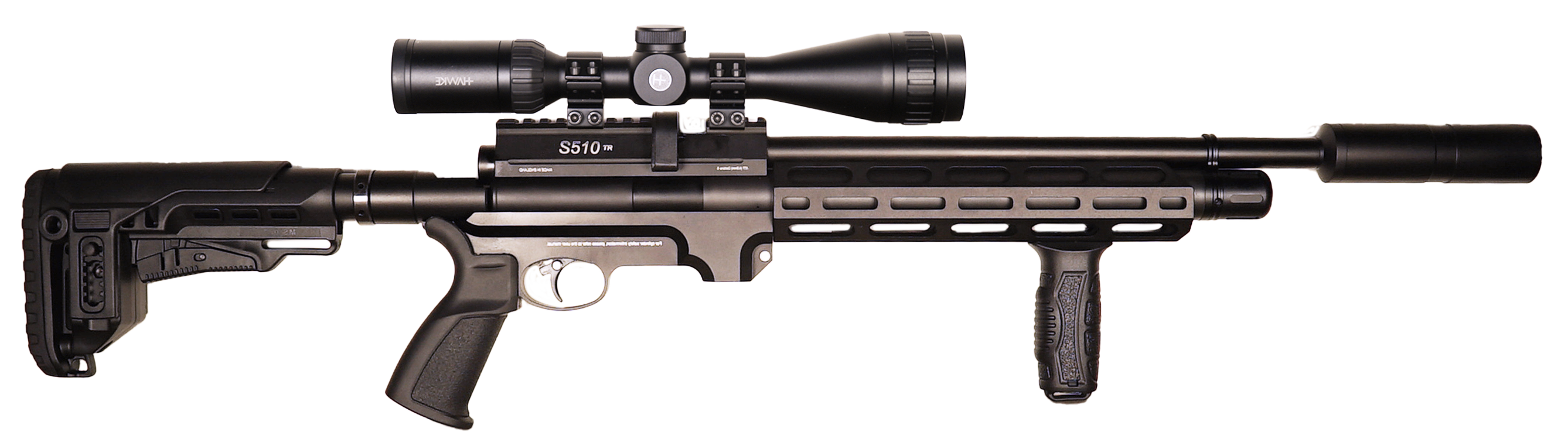
How Regulated PCPs Like the S510 Tactical Support Consistent, Humane Dispatch
Whether you are comparing a PCP with a springer or break barrel, action type matters because it affects consistency, effort, and how the rifle behaves in use. A regulated pre charged pneumatic (PCP) maintains consistent air pressure at the valve on every shot, using compressed air and releasing a precise small amount each time, which translates directly into consistent muzzle velocity across an entire shooting session. For pest control, this matters in a specific and practical way: when the shooter places the crosshair correctly, the pellet goes where it is aimed - not approximately where it is aimed, depending on whether this is the first or twelfth shot from the fill.
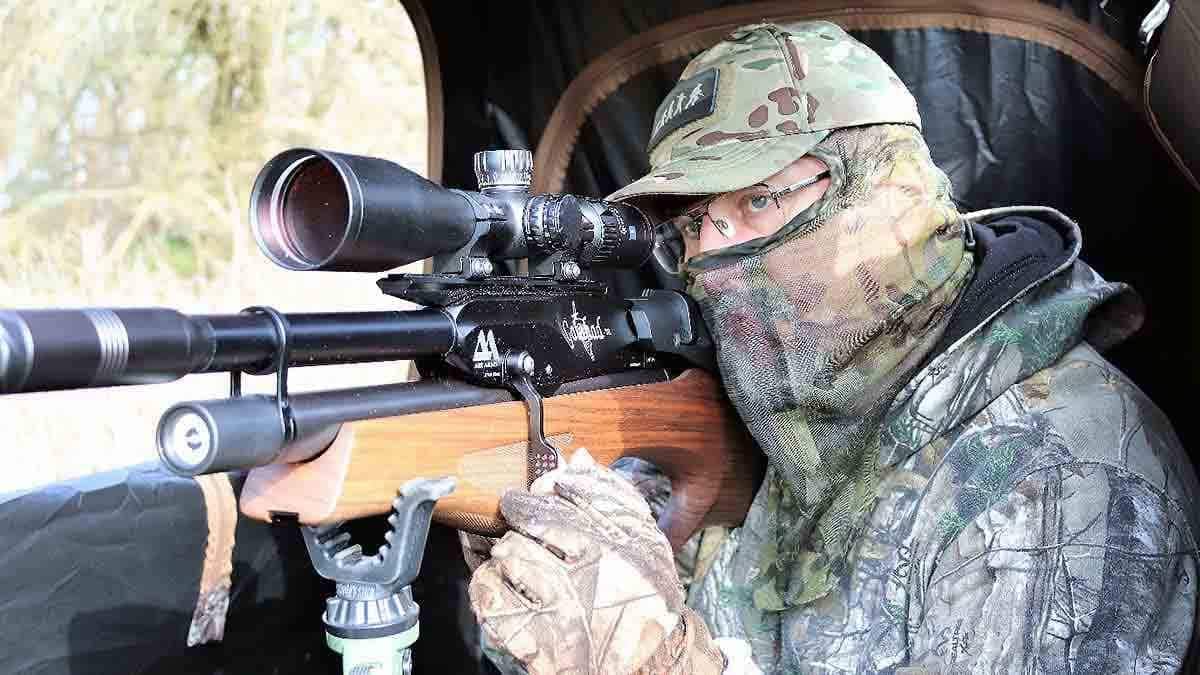
The Air Arms S510 Tactical is a regulated PCP built on the award-winning S510 platform and designed for exactly this kind of application. Its regulated action eliminates the shot-to-shot velocity variation that can undermine accuracy in unregulated systems, providing a reliable foundation for precise repeated shots in field conditions. When comparing the two main types of PCP, regulated and unregulated, this is the practical difference that usually matters most in the field.
Beyond regulation, the S510 Tactical’s modular, tactical build provides practical advantages in pest control environments. Its Picatinny rail system allows straightforward fitment of a moderator - essential for keeping noise levels down in enclosed spaces. Adjustable ergonomics allow the rifle to be configured for comfortable, consistent positioning across different shooting stances, which in turn supports repeatable accuracy. As with any PCP, it also requires the right filling equipment to keep the rifle charged and performing consistently.
Regulation and repeatability in practice
A regulated PCP removes velocity as a variable the shooter has to manage or compensate for. In a session where clean, humane dispatch is required on multiple targets across varying distances, that consistency directly reduces the risk of an underpowered or off-trajectory shot.
Air Arms has over 40 years of British engineering expertise behind the S510 platform, and the S510 Tactical is backed by a 3-year warranty and support through Air Arms’ authorised dealer network - relevant to shooters who depend on their equipment to perform reliably across extended working use.
Practical Considerations: Barrel Length, Noise, and Manoeuvrability on Farm
The ballistics and action type discussions matter, but so does what the rifle is actually like to use in the places where rat control happens. Farm outbuildings, machinery sheds, hay stores, and stable blocks present physical constraints that a shooter needs a rifle to work within - not against.
Manoeuvrability in Tight Spaces
Overall rifle length affects how easily a shooter can move through doorways, around equipment, and into tight corners. A longer barrel improves accuracy potential and reduces muzzle report, but in a confined outbuilding it can become a physical obstacle. A shorter, more compact configuration offers better handling in these environments without necessarily sacrificing the performance needed at the distances involved.
The S510 Tactical's modular design - including an adjustable stock - allows the shooter to configure overall length to suit their physical build and the working environment. This is not a cosmetic feature; in practical outbuilding pest control, a rifle that can be handled cleanly in a confined space is a more effective tool.
Noise Management
In enclosed farm environments, sound carries and reflects. A loud muzzle report between shots alerts remaining rats and ends a productive session prematurely. Using a moderator - where the rifle's accessory rail allows it - significantly reduces muzzle noise. Combined with .177's inherently lower noise signature compared to .22 at equivalent energies, a moderated .177 PCP is among the quieter options available for this type of work.
Shot Count and Practical Efficiency
.177 pellets are lighter, which means a regulated PCP in .177 will typically deliver a higher number of consistent shots per fill than the same platform in .22. For extended pest control sessions where recharging mid-session is inconvenient, this is a meaningful practical advantage. More shots per fill means more time on the ground and less operational interruption.
Before choosing .177 for rat control: practical checklist
- Confirm that typical shot distances fall within 30 yards - .177 performs best inside this range
- Assess whether the shooting environment is enclosed - .177's quieter report is an advantage in confined spaces
- Evaluate your accuracy honestly - .177 rewards precision and demands it more than .22
- Consider whether a regulated PCP is appropriate for your use case - repeated accurate shots under field conditions benefit significantly from consistent velocity
- Check that your rifle is compatible with a moderator if noise management is a priority
- Ensure your rifle and its use comply with UK air rifle regulations and land access permissions
Get the Right Platform for the Job
Find the Right Rifle for Your Pest Control Work
Explore the Air Arms S510 Tactical and discover how regulated PCP performance can support consistent, accurate shooting in demanding pest control environments. Visit your nearest authorised Air Arms dealer to see it in person and discuss the right configuration for your application. You and Air Arms: a winning combination.
In the UK, air rifles are subject to serious legal controls, and breaches can lead to large fines or imprisonment. The law for air rifles in the UK and the detailed rules on air rifle ownership, use, and safety differ across England, Wales, Scotland, and Northern Ireland, so you need to check the rules that apply in your region and, where necessary, follow the correct process to apply for an air rifle licence in the UK. If your work also involves lawful bird control, you must keep up to date with changes to general licences, as these can change.