



What Is an Airgun Moderator and Do You Need One?
If you have started researching air rifles and come across the term moderator, you might have found yourself unsure whether it is a standard accessory, a legal grey area, or something only experienced shooters need to think about. The answer is straightforward: an airgun moderator is a legal, practical, and widely used accessory in the UK, and understanding what it does - and what it does not do - will help you decide whether one belongs on your rifle.
This guide cuts through the confusion. Whether you are shooting in your garden, at a local club, or planning your first season in the field, here is everything you need to know about moderators, how they work, and how they apply to Air Arms rifles.
What Are Airgun Moderators and How Do They Work?
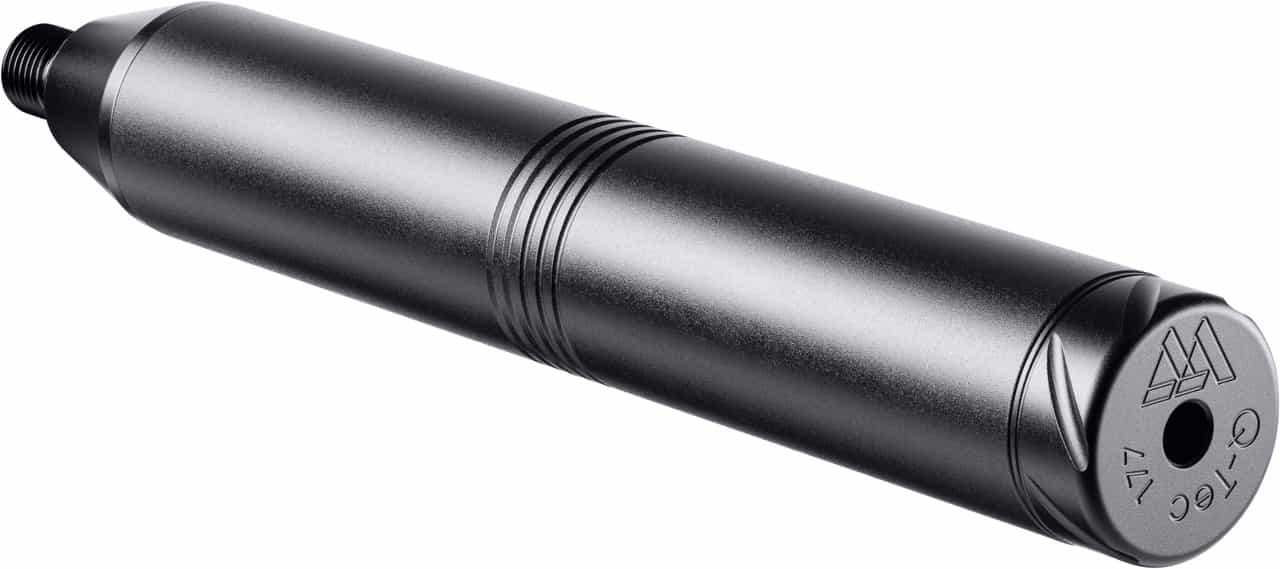
A moderator is a device fitted to the muzzle of an air rifle that reduces the audible report produced when a pellet is fired. It does this by managing the expanding gas that exits the barrel immediately after the pellet leaves the muzzle.
When an air rifle fires, compressed gas propels the pellet down the barrel. The moment the pellet exits, that gas releases rapidly into the open air, creating a sharp crack or pop - the sound most people associate with a shot. This is where air rifle moderators work by controlling the airflow, slowing and dispersing it through a series of internal chambers. A moderator captures that gas in a series of internal chambers, allowing it to expand and cool gradually before it escapes into the surrounding environment. The result is a noticeably quieter muzzle report, and with an effective design the reduction can be noticeable without making the rifle silent, often in the region of 30-40 decibels.
Two distinct sounds
There are two sources of sound when an air rifle fires: the muzzle report (gas escaping the barrel) and, if the pellet travels faster than the speed of sound, a supersonic crack. A moderator addresses only the muzzle report, not the mechanical noise of the airgun itself. Sub-12 ft/lb UK air rifles typically fire pellets well below the speed of sound, so the supersonic crack is not a concern for most recreational shooters - but it is worth understanding the distinction.
Most moderators used on air rifles are constructed from aluminium or a combination of aluminium and polymer. Inside, they contain a series of baffles - chambers that interrupt and redirect air, progressively reducing its energy before it exits the moderator, and some designs also use sound-absorbing materials to dampen noise further. The design, materials, and internal layout vary between manufacturers, but the underlying principle is the same across all sound moderators, sometimes also referred to as silencers.
Moderators screw directly onto the threaded muzzle of a compatible rifle. Most UK air rifles use a half-inch UNF thread as the standard fitting, though metric threads are also used on some models. Getting this detail right matters - more on that in the Air Arms compatibility section below.
Airgun Moderator vs Firearm Suppressors: Understanding the Difference
One of the most common sources of confusion for new shooters is the relationship between airgun moderators and the suppressors associated with firearms. They serve a similar functional purpose - reducing the sound of a shot - but they are legally and technically distinct categories in the UK.
Firearm suppressors fall under the Firearms Act 1968 in the UK and are tightly regulated. Owning or fitting one to a firearm requires a specific licence, and the rules around their use are strict. UK law is due to change in June 2025 so moderators will be removed from firearms licensing, but for now the current legal position still distinguishes them from airgun accessories. Airgun moderators, by contrast, are standard accessories for sub-legal-limit air rifles and are not classified under the same legislation. You do not need any licence or special permission to buy or use a moderator on a UK-legal air rifle.
The legal distinction matters
Airgun moderators are not the same as firearm suppressors under UK law, even though people sometimes casually call them silencers. A moderator fitted to a sub-12 ft/lb air rifle in .177 or .22 is a legal accessory that requires no licence. Using the terms interchangeably can create unnecessary legal anxiety - they refer to different products in different regulatory contexts.
The practical difference is also significant. Airgun moderators are designed for the relatively low gas pressures produced by air rifles operating within UK legal power limits. Air rifles use airflow rather than combustion gases, which is why these units are designed specifically for airgun use rather than firearm pressures. They are lighter, smaller, and simpler in construction than firearm suppressors, which must manage far greater forces. The engineering requirements - and the regulations - reflect those differences.
Is It Legal to Use an Airgun Moderator in the UK?
For most UK shooters, the answer is simply yes. Fitting a moderator to a sub-12 ft/lb air rifle in .177 or .22 calibre is entirely legal, and no licence is required to own or use one. Moderators are sold openly by dealers. UK dealers can legally sell airgun moderators for sub-12 ft/lb rifles, and they are a routine part of many shooters' setups.
There are a small number of situations where the position becomes more complicated. If a rifle is already close to the 12 ft/lb legal limit and a moderator causes back-pressure that pushes the output over that limit, the rifle could become technically unlicensed. This is an edge case and applies primarily to spring-powered rifles at the top of their tuning range, not to well-regulated PCPs - but it is worth checking your rifle's output if you have any concerns.
Shooting location also has some bearing on practical legality. If you are shooting on private land, the usual rules around landowner permission apply - your moderator does not change this. On public land, the same general laws around where and how you can shoot an air rifle continue to apply regardless of whether a moderator is fitted.
When in doubt, check with your dealer
If you are uncertain about your specific rifle's power output or the implications of fitting a moderator to it, your nearest Air Arms authorised dealer can advise you directly. Buying online is not always the simplest or cheapest route, as delivery requirements can affect what is practical. Some moderators may need to be delivered via an RFD rather than standard post. Checking is always the right approach before modifying any setup.
Does a Moderator Affect Noise Reduction, Pellet Velocity, or Accuracy?
This is one of the most frequently asked questions by shooters considering their first moderator, and it deserves a clear answer. When fitted correctly to a compatible rifle, a moderator does not reduce pellet velocity. Fit depends not only on thread compatibility but also on muzzle thread, barrel diameter, and clearance. The pellet has already left the barrel before the moderator does its work - the gas management happens after the shot, not during it.
On well-regulated PCP rifles, accuracy is typically unaffected by the addition of a moderator. The pellet's trajectory is determined by barrel quality, pellet consistency, and the rifle's regulation - none of which a muzzle-mounted moderator has any direct influence over, though a properly fitted moderator can improve shooting comfort without changing pellet velocity. Many competitive shooters use moderators routinely without any concession to performance.
Spring-powered rifles warrant a note of caution. Some spring rifles can experience a minor back-pressure effect when a moderator is fitted, which in isolated cases influences group consistency. This is most likely on rifles at the upper end of their output range and is not common — but it is why spring-rifle owners are advised to test groups with and without a moderator before committing to regular use.
Added weight and barrel harmonics
A moderator adds weight to the front of the rifle. On most PCP platforms, this has a negligible practical effect. On spring rifles with pronounced barrel harmonics, the additional mass can actually produce a slight stabilising effect in some cases, and good moderator design is a balance between noise reduction and pellet stability. The best approach is always to shoot groups at your target distance and verify performance on your specific setup, because fit and build quality matter.
Garden Shooting, Club Ranges, and the Field: When a Moderator Makes Sense
The practical case for a moderator is strongest in specific shooting environments, and understanding where they genuinely help will guide your decision more effectively than any general recommendation.
Garden shooting
Garden shooting is where a moderator delivers some of its most meaningful practical benefits. Even within legal power limits, an unmoderated air rifle produces a report that carries across fences and into neighbouring gardens - particularly in the quieter suburban environments where many recreational shooters set up their range. A moderator reduces this audible footprint substantially, making the shooting experience less intrusive to those around you and helping you maintain focus during longer sessions by lowering the startle effect.
To put this in context: consider a shooter setting up a 25-metre range at the end of their garden, shooting a quality PCP rifle at paper targets or spinner targets in the afternoon. Without a moderator, the muzzle report may prompt a neighbour or nearby landowners to investigate or raise a concern. With a moderator fitted, the same shooting session becomes noticeably quieter and less likely to attract unwanted attention. The goal here is responsible, considerate shooting - not concealment - and a moderator supports that directly.
Club ranges
Enclosed or semi-enclosed club ranges concentrate sound. When multiple shooters are firing alongside each other, the cumulative noise level rises quickly, and unmoderated rifles make that environment noticeably louder - both for those shooting and for anyone on the range providing coaching, scoring, or support. That is one reason moderators are common for target shooting, especially where several shooters are on the line.
Many clubs actively encourage or require moderators for this reason. Reduced range noise also makes communication easier between shooters, which improves both safety and makes the range experience more comfortable over time. If your club has specific rules around moderators, check before your first session - some venues make them mandatory.
Field and rural shooting
In open field environments, sound disperses more readily, so the noise-reduction benefit of a moderator is less pronounced than in a garden or club setting. That said, pest controllers and those out hunting on farmland often find that a quieter shot disturbs quarry and other animals less, which can make follow-up shots possible in situations that would otherwise require repositioning. It can also draw less attention from nearby landowners in rural settings.
- Garden shooting: reduces audible impact on neighbours, supporting responsible and considerate use
- Club ranges: lowers overall noise in shared and enclosed environments, improving communication and comfort
- Pest control in the field: reduces disturbance to surrounding animals, potentially improving opportunity for follow-up shots when shooting quarry
- General use: many shooters find a moderated rifle simply more comfortable to shoot, particularly during longer sessions
Air Arms has built its rifles with these real-world environments in mind. With over 40 years of British engineering expertise, a multiple Airgun of the Year award winner, and a 3-year warranty on every new rifle, the brand's moderator-compatible PCP and spring platforms are designed to work effectively across all of these contexts. Whether you are shooting in the back garden or competing at a club level, the right setup makes the experience better — for you and for those around you.