



How to Get Better at Air Rifle Shooting for Target Practice
Most air rifle shooters reach a point where they feel stuck, and if you’re using an air rifle for target practice, the way forward is usually not a new purchase but better fundamentals: a repeatable stance, clean trigger control, steady breathing, and a stable hold. The groups are consistent but not tight enough. The shots that miss feel inexplicable. Progress, which came quickly at first, seems to have plateaued. It's a familiar experience and one with a familiar cause: the fundamentals that seemed easy to pick up are harder to maintain at a higher level than they are to learn in the first place.
Getting better at air rifle shooting is not about buying better equipment, although kit matters. It is about developing consistent technique, building genuine self-awareness on the range, and finding the right environment to push your skills forward. Whether you're a beginner who has stopped improving or a more experienced shooter chasing tighter groups and better consistency, this guide covers the parts of target shooting that make the difference: stance, trigger control, breathing, pellet choice, practice structure, shooting disciplines, club training, equipment care, and the habits that lead to steady progress.
Start with the Fundamentals of Air Rifles, Not the Equipment
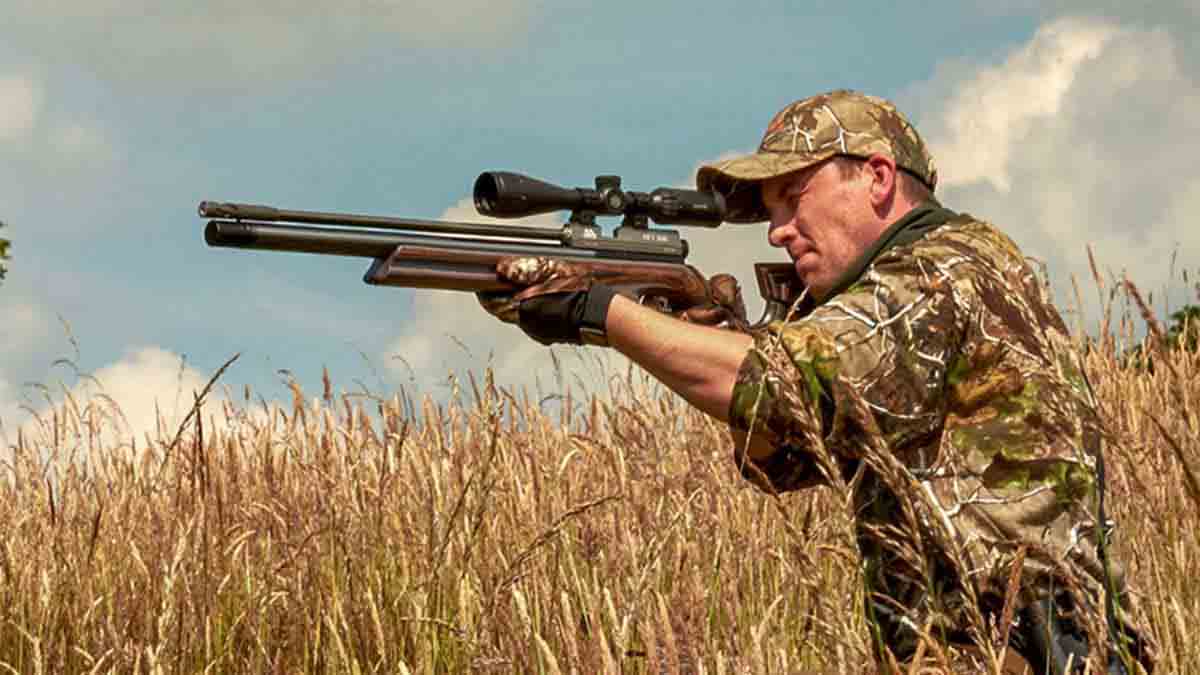
Before looking at what to change, it is worth understanding where most shooters lose accuracy. The vast majority of misses in air rifle shooting — across all disciplines, all experience levels, and all rifle types — come from the same four sources: an inconsistent stance, poor trigger control, incorrect breathing, and a hold that varies from shot to shot.
None of these are fixed by a better scope or a more expensive rifle. A quality air rifle will absolutely reward good technique with tighter groups, but it will also expose inconsistency more clearly than a forgiving entry-level gun. If your fundamentals are not sound, upgrading equipment will make your problems more visible, not less.
Work through each of the following areas honestly before drawing any conclusions about your rifle or ammunition, and revisit the core air rifle shooting basics whenever your progress seems to stall.
Build a Consistent Stance and Pistol Grip Hold
The single biggest variable in air rifle shooting is the human body. Stance and hold affect every shot, and inconsistency here will undermine accuracy regardless of how well everything else is managed.
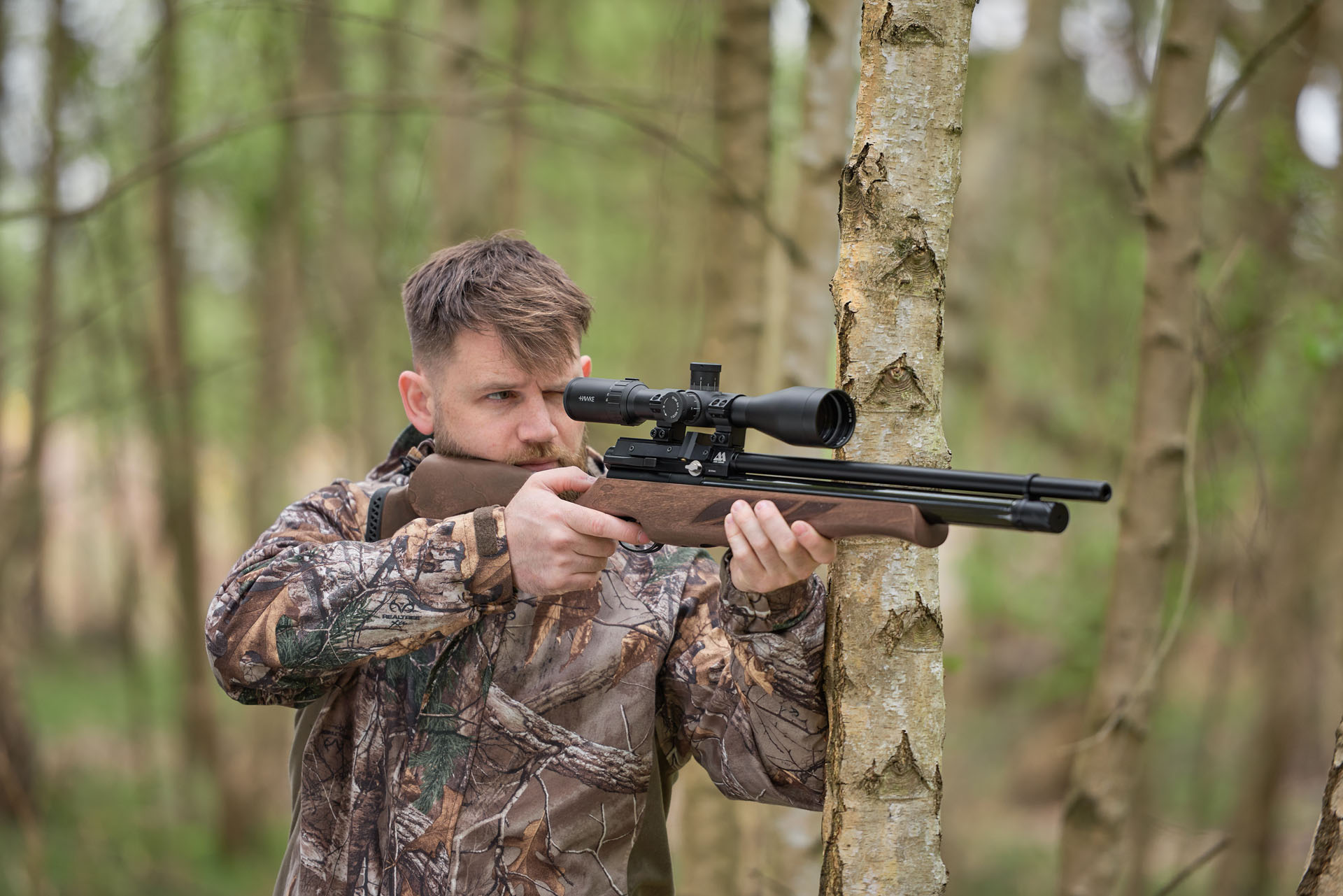
For standing target shooting, the feet should be roughly shoulder-width apart with the body turned approximately 45 degrees away from the target. Weight should be balanced and posture upright — leaning back or hunching forward introduces muscle tension that will disturb the aim. The rifle should be brought to the cheek, not the cheek brought down to the rifle. This means the cheekweld — the point at which your cheek contacts the stock — must be the same for every single shot. Eye-to-scope alignment depends entirely on the consistency of this contact.
For field shooting from prone or supported positions, the hold should be as relaxed as possible. Gripping the forend tightly, particularly on a spring-piston rifle, will cause the rifle to behave differently under recoil from shot to shot. The classic technique for spring-piston rifles is the ‘artillery hold': the rifle rests loosely in the hand, supported rather than gripped, allowing it to recoil consistently each time, which is a key part of shooting an air rifle more accurately. A PCP rifle, which produces negligible recoil, is more forgiving, but the principle of a consistent, repeatable hold remains.
Ask a fellow shooter or a coach to watch your mounting sequence from behind. Small inconsistencies — the shoulder position, the height of the cheekweld, the angle of the head — are almost impossible to detect yourself but immediately obvious to an observer.
Master Trigger Control
Trigger control is the most commonly identified weakness in developing shooters and, in many ways, the hardest to correct because it requires patience that feels counterintuitive. The instinct when the sight picture looks right is to fire immediately. The discipline required is to apply steady pressure to the trigger and allow the shot to break without anticipating the moment it goes off.
A well-adjusted two-stage trigger helps significantly. The first stage should take up slack and come to a clean, identifiable stop. The second stage — the break — should be crisp and predictable. If your trigger requires excessive force, is creepy throughout its travel, or breaks unpredictably, have it adjusted or serviced. Shooting around a poor trigger is possible but will slow your development considerably.
The gold standard test for trigger control is dry firing: cycling the action and pulling the trigger without a pellet loaded. Watch what the rifle does at the moment the trigger breaks. If the muzzle dips, the stock moves, or the sight picture shifts in a consistent direction at the point of release, you are flinching or pulling. Dry firing costs nothing and can be done at home. Incorporating ten minutes of dry firing into every practice session will accelerate improvement faster than live fire alone and complements other air rifle accuracy fixes for target shooting that focus on fundamentals rather than hardware.
Control Your Breathing
The human body moves constantly as a result of breathing, and this movement is amplified through a scope. Most experienced shooters work with the natural respiratory cycle rather than fighting it: take a breath, exhale partially, and hold at the natural pause point — the moment between exhaling and the urge to inhale again. This pause typically lasts around five to eight seconds, which is enough time to settle the aim and break the shot cleanly.
Do not hold your breath from a full inhale. Oxygen deprivation sets in quickly and introduces tremor. The natural pause after a partial exhale is a relaxed, stable position that the body returns to consistently. If the shot is not ready to go within that window, take another breath and begin again rather than forcing the shot.
In the field, physical exertion — walking to a hide, climbing a gate, or any activity that elevates the heart rate — will disrupt the respiratory cycle. Experienced pest control shooters learn to wait. Slowing the breathing before taking a shot is a discipline that takes time to develop but significantly improves consistency when shooting in the field rather than from a bench.
Find the Right Pellet for Your Field Target Rifle
Every air rifle barrel is individual. Two rifles of the same model, from the same production run, can perform best with completely different pellets. This is a well-established fact among experienced shooters and one that catches beginners off guard — particularly those who assume the most expensive pellet will always deliver the best results.
The only way to find the right pellet for your specific rifle is to test methodically. Set up a target at 25 yards from a rested position and shoot five-shot groups with a range of pellets — different brands, different weights, different head sizes. Use a fresh aim point for each group and note which produces the tightest, most consistent grouping. Once you have found a pellet that performs well in your barrel, stick to it. Changing pellets mid-session, or using different batches from the same brand, introduces variables that make it impossible to distinguish pellet performance from technique.
As a general guide, quality domed pellets from reputable manufacturers tend to produce the best all-round accuracy in most barrels. Wadcutter pellets, with their flat head, cut clean holes in paper and are useful for target shooting at shorter ranges but lose velocity quickly. Match-grade pellets are worth the investment for competition shooting, where consistency of weight and head dimension across a tin is critical, and they work best when you have already ruled out common air rifle accuracy problems caused by accessories and setup.
Structure Your Practice Sessions
Quantity of practice is less important than quality. Two hours of unfocused shooting will not improve a shooter as quickly as forty minutes of deliberate, structured practice. Each session should have a specific goal: working on trigger control, shooting from a new position, testing pellets at a new distance, or improving group size at a known range, especially if you are following a structured beginner’s guide to air rifle target shooting in the UK.
Keep a shooting log. Record the date, conditions, distance, pellet, and the results of each group. Patterns that are invisible session to session — a tendency to shoot left in crosswinds, groups that open up at 35 yards, improvement in standing position over time — become clear across weeks and months of recorded data. A log also forces reflection: it is much harder to dismiss a persistent mistake when it is written down.
Introduce variety once the basics are established. Shoot from standing, kneeling, sitting, and prone, and experiment with different air rifle targets for UK shooters so your practice challenges both your accuracy and your ability to read feedback from the target. Practice at distances shorter and longer than your usual zero range. If you shoot for pest control, practise taking shots quickly from different positions rather than always shooting from a bench. The field rarely offers ideal conditions, and only practice under imperfect conditions builds the adaptability that makes a genuinely capable shooter.
Join a Club
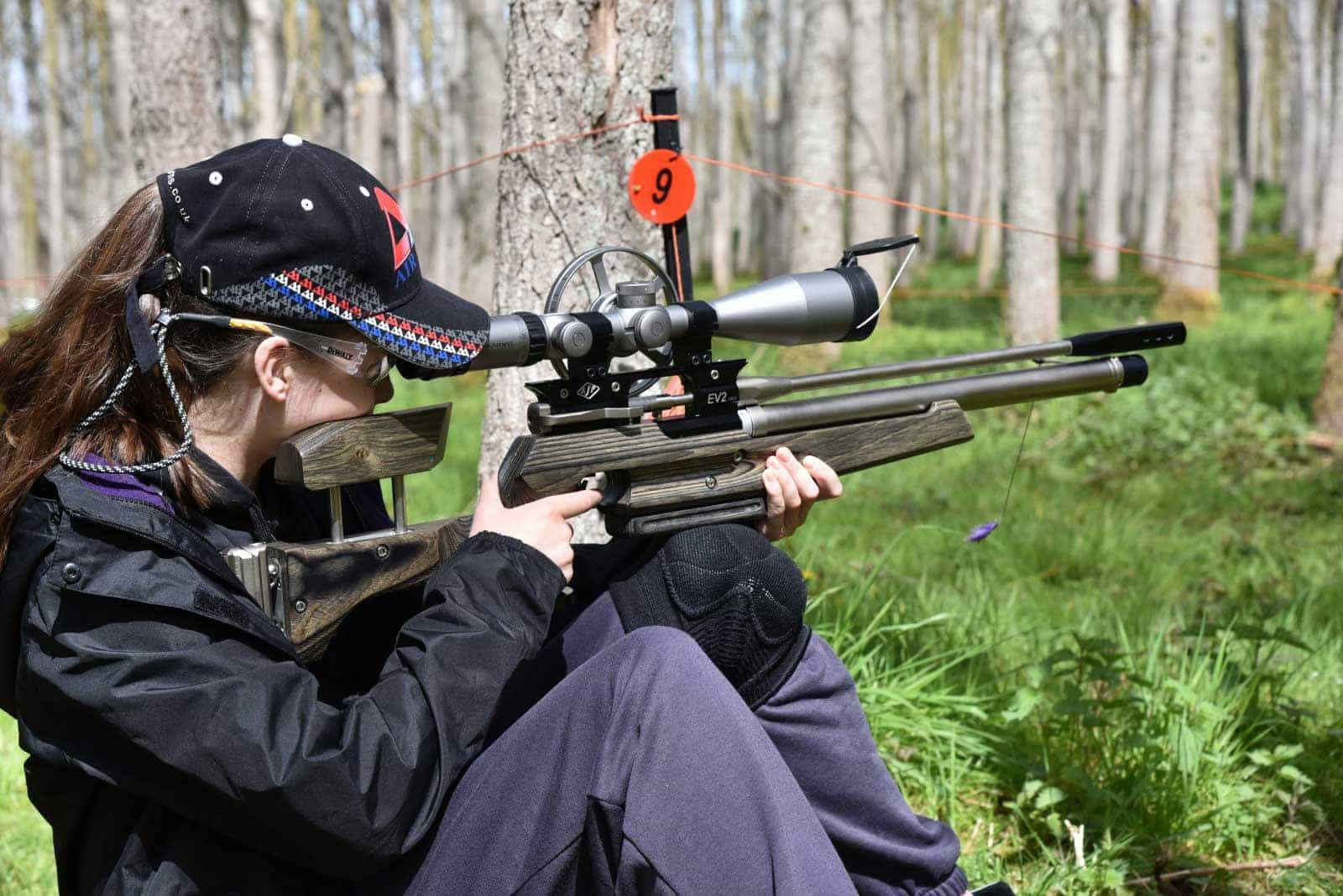
Perhaps the single most effective step any developing shooter can take is joining a local air rifle club. The improvement that comes from shooting regularly alongside more experienced people — receiving informal feedback, watching how others manage their technique, and having access to a proper range — is difficult to replicate any other way, and echoes many of the top tips for air rifle beginners about learning within a community. Safety is critical when using air rifles during target practice.
The National Small-bore Rifle Association (NSRA) has over 800 affiliated clubs across the UK and maintains a club finder on its website. The British Field Target Association (BFTA) represents field target clubs across England and Wales, while the UK Association for Hunter Field Target (UKAHFT) covers the HFT discipline. Most clubs welcome newcomers of all experience levels and many have equipment available for visitors to try before committing to their own rifle. A first visit is often a useful introduction at a basic level. Equipment varies by discipline, and the right setup is dependent on budget and competitive level. Many shooters start with simpler air rifles before deciding whether to progress further. Spring-action and Pre-Charged Pneumatic are common types discussed at clubs. Lower-powered airguns are distinct from firearms or other guns that may require a Firearms Licence.
The competitive element that clubs provide is also a powerful driver of improvement. Shooting in a structured competition — even an informal internal club league — introduces a level of pressure that solo practice cannot replicate. Competitions can include both able-bodied and disabled shooters, and UK rules require air rifles used in competition to stay under the 12ft/lb power limit. Managing nerves, maintaining focus across an extended course of fire, and performing under scrutiny are all skills that only develop through experience. Entering competition does not require an advanced level of ability. Most experienced club shooters will actively encourage newcomers to compete early and often.
Understand the Target Shooting Disciplines and Find Your Focus
Air rifle shooting in the UK encompasses several distinct disciplines, and understanding them can help a developing shooter identify where their interests and abilities lie, especially if you are considering air rifle shooting competitions such as HFT, FT and Benchrest.
Target shooting at 10 metres is the Olympic discipline, shot from a standing position using purpose-built target rifles and electronic scoring. It demands exceptional trigger control and mental discipline. Benchrest shooting, which is shot from a supported rest, strips away positional variables and tests the accuracy of both the rifle and the ammunition — it is popular among those interested in the technical side of the sport. Field target shooting (FT) involves shooting at knock-down targets at unknown distances, typically from seated or prone positions, requiring a combination of accuracy and range estimation, and in the UK these rifles must remain under the 12ft/lb power limit; comparing HFT vs FT vs Benchrest air rifle competition formats will help you decide which suits your interests and budget. Serious competitors usually favour Pre-Charged Pneumatic air rifles here because their zero-recoil characteristics help with consistency. Hunter field target (HFT) is similar but shot predominantly from prone with restricted equipment, designed to simulate realistic hunting scenarios, with targets at distances between 8 and 45 yards.
Each discipline develops different skills. Competing across more than one format broadens a shooter's overall ability. Many of the best field shooters in the UK have a background in target shooting, and many target shooters find that field disciplines improve their ability to manage the unpredictable conditions that a controlled range does not provide.
Maintain Your Equipment
A rifle that is not properly maintained will not shoot consistently, and inconsistency in the rifle makes it impossible to identify and correct inconsistency in the shooter. Keep the barrel clean using tools designed for airgun use — pull-throughs and felt cleaning pellets rather than rods, which risk damaging the rifling. Check scope mounts regularly and re-tighten if necessary; a loose mount is one of the most common causes of an unexplained zero shift. For PCP rifles, monitor air pressure and ensure the rifle is filled to the correct level before each session — shooting outside the optimum pressure range will affect both power and consistency.
Confirm your zero at the start of any session where accuracy matters. A quick three-shot group at your zero distance takes two minutes and will immediately tell you whether the rifle is performing as expected or whether something has shifted since you last shot it.
Be Patient with Progress
Air rifle shooting rewards patience more than almost any other shooting sport. Improvement at the higher levels comes in small increments and is easily reversed by a change in conditions, a period away from the range, or simply a bad day. Experienced shooters accept this and use setbacks as diagnostic information rather than discouragement.
The shooters who improve most consistently are those who approach each session with curiosity rather than frustration — asking what a miss can tell them about their technique rather than dismissing it as bad luck. That mindset, applied consistently over time, is what separates a good shot from a great one.