



Hard Air Rifle Case for Field Target Competition Travel
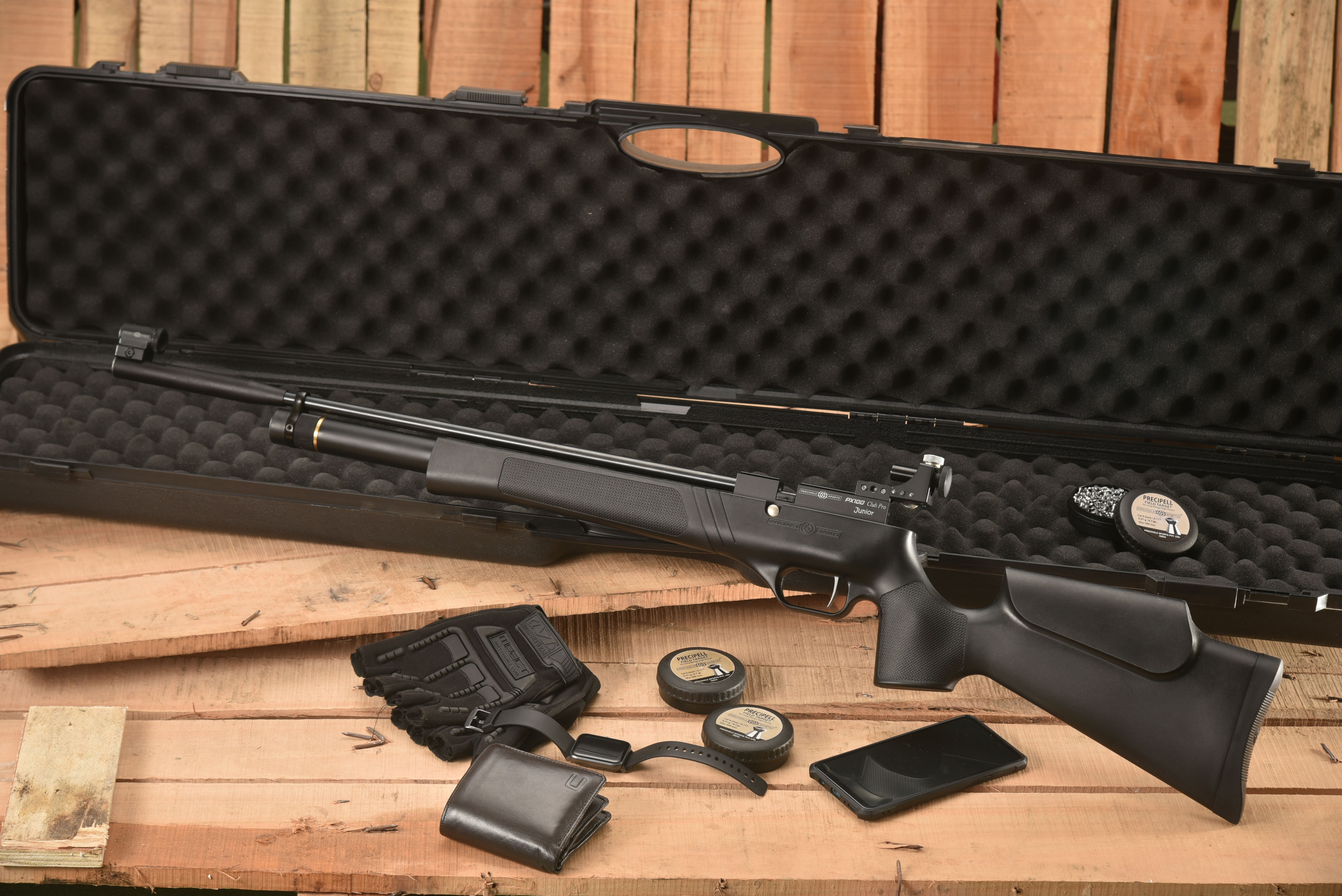
A competition-spec Field Target rifle is a precision instrument. The XTi-50 and Ultimate Sporter are engineered to extraordinary tolerances — and that precision is exactly what makes them vulnerable when travelling to an event. A hard air rifle case is not simply a carrying solution. For any serious FT competitor, it is the piece of kit that determines whether you arrive at the peg ready to shoot or spending your warm-up time chasing a shifted zero. This guide covers what to look for in a case built for a fully scoped FT rifle, how to pack it correctly, and the practical considerations for travelling to UK Field Target events by car or public transport.
This guide covers what to look for in a case built for a fully scoped FT rifle, how to pack it correctly, and the practical considerations for travelling to UK Field Target events by car or public transport.
Why Transit Conditions Are a Real Threat to Your Rifle's Zero
The challenge is not dramatic - it rarely is. Most transit damage to a competition rifle does not come from a single obvious impact. It comes from repeated low-level vibration over a motorway journey, a sharp deceleration in a car boot, or a bag being placed on top of your rifle at a shooting ground.
Even minor movement of scope mount bolts - movement too small to feel by hand - can be enough to shift point of impact at competition distances. At 45 metres on an FT course, the difference between a kill and a miss is measured in millimetres. A scope that has moved fractionally during transit does not announce itself. It simply costs you targets.
The risk is cumulative, not sudden
Road vibration over a long journey applies sustained stress to scope mount interfaces, side-wheel adjusters, and scope tube rings. These components are set precisely at home - and that precision can erode quietly in transit without a single noticeable knock.
Rifles like the XTi-50 are built specifically for high-pressure competitive environments, engineered with input from top-level FT competitors — including support for the World Field Target Championships 2025. That engineering holds zero exceptionally well under shooting conditions. The XTi-50 and Ultimate Sporter are also multiple Airgun of the Year award winners (2019, 2020, 2021, 2023, 2025), a record that reflects the consistency shooters rely on in competition. But no rifle — regardless of how well it is built — is immune to the physics of being transported in a vehicle. Protection in transit is the competitor's responsibility, not the rifle's.
UK regulations add a further dimension to this. Air rifles must be transported securely and kept out of public sight when in transit, in line with UK law for air rifles. A robust, lockable hard case satisfies both the legal requirement and the practical one - protecting your equipment and ensuring you are transporting responsibly and visibly compliantly.

What to Look for in a Hard Case for a Fully Scoped FT Rifle
Most competition FT rifles are not short, and most are not narrow. A fully assembled XTi-50 or Ultimate Sporter - with a large-objective scope, side-wheel adjuster, and scope tower fitted - is a substantial piece of equipment. The first thing to establish before purchasing a case is whether it will actually fit. Hard cases are often preferred for transporting rifles due to their durability and ability to withstand impact, while padded rifle bags provide additional protection against scratches and minor impacts. Padded rifle bags and hard cases are essential for safely transporting rifles to and from shooting locations, with popular brands of rifle bags including Beretta, Blaser, Buffalo River, and Winchester. When selecting from the range of products available, including both hard cases and bags, always measure your air rifle and any additional accessories to ensure a proper fit.
Internal Dimensions and Scope Clearance
For a scoped FT rifle, internal length is rarely the limiting factor - internal height and width are. The scope tower on a dedicated FT setup raises the scope well above the bore, and the side-wheel adjuster extends considerably to the left or right. These components need clearance in all directions. The foam insert must not compress the scope body, make contact with the objective bell, or press against the side-wheel when the case is closed.
As a working guide, a scoped FT rifle with a 50mm or larger objective lens and a side-wheel typically requires a minimum internal height of 200mm and internal width of at least 320mm to rest securely without any lateral pressure on scope components. Always measure your specific setup - including the scope objective diameter and side-wheel extension - before purchasing a case.
Measure before you buy
Take three measurements of your assembled rifle: overall length from the end of the stock adjuster to the muzzle, maximum height from the bore centreline to the highest point of the scope (typically the objective bell), and the full width including the side-wheel at its most extended. These three dimensions define the minimum internal void you need in any case.
Foam Density and Insert Quality
Not all foam is equal. Low-density foam compresses readily under vibration and road shock, offering limited protection over a long journey. High-density closed-cell foam maintains its structure under sustained loading and is significantly more effective at damping vibration before it reaches the rifle.
The best case setups use a layered or custom-cut foam insert - either pre-profiled to the rifle shape or cut using the rifle itself as a template. Custom-cut foam holds the rifle in a fixed orientation, preventing any movement within the case during transit. This is particularly important for protecting scope mounts, which rely on consistent clamping pressure that sustained micro-movement can undermine.
- High-density closed-cell foam - resists compression under vibration and road shock
- Custom-cut or profiled inserts - prevent lateral and rotational movement of the rifle
- Separate foam sections for ancillary kit - stops loose items becoming projectiles
- Full perimeter foam seal on lid - prevents the scope making contact with the lid interior
Case Construction and Locking Hardware
For competition use, the case shell should be rigid - typically high-impact polymer or aluminium - with reinforced hinges and a secure locking mechanism. Double-latch closures are the minimum. Cases with provision for a padlock through the latch points satisfy UK transport requirements for secure carriage and are worth prioritising if you travel by public transport or use shared transport to events.
How to Pack Your Case: Rifle, Scope, and Ancillary Kit
Most experienced competitors learn the same lesson eventually: arriving with the rifle but without the fill probe, or finding the hex key missing when you need to adjust the cheekpiece, is almost as disruptive as a shifted zero. A well-packed case carries everything you need for the day - not just the rifle.
The rifle occupies the primary void in the case. Everything else should be allocated a fixed, foam-secured position alongside it. This is not just about organisation - unsecured items moving around a case during transit are a direct risk to scope lenses, side-wheel adjusters, and the rifle's finish.
What to Include in Your Competition Case Pack
The Rifle
Fully assembled with scope fitted, positioned in a custom-cut or profiled foam insert. Check that the scope objective, eyepiece, and side-wheel have clearance in all directions before closing the lid.
Fill Equipment
Fill probe and adaptor, secured in a foam cutout or zip pocket. A missing fill probe at an event ends your day. Keep it in the case, not the bag.
Buddy Bottle
If your case has the internal volume, a small buddy bottle can be secured here. Pack the relevant adaptor as a backup and confirm valve protection before transit.
Tools
A compact hex key set covering the sizes for your stock adjusters, scope rings, and ancillary fittings. Include a small torque driver if you use one for scope mount checks on arrival.
Pellets
Competition quantity in a sealed tin or pellet wallet, allocated a fixed position. Loose pellets are not only disorganised — a loose item landing on the tin in transit can damage or deform what is inside.
Documentation
Club membership card, event registration confirmation, and a written record of your rifle's details. For public transport journeys, having documentation readily accessible is good practice.
One case, one system
Competitors who pack everything into one organised case consistently lose less time at events to missing kit. Always returning items to their fixed position after each event means your next pack is faster and your checklist shorter.
Travelling to UK FT and HFT Events: Car, Public Transport, and Practical Considerations
The majority of competitors travel by car, and for good reason - a quality hard case in a car boot is a well-controlled environment. The key consideration is securing the case against sliding during braking or cornering. A case that moves freely in the boot is applying repeated low-level impact to the rifle every time the vehicle changes speed or direction.
Placing the case flat, positioned against a fixed point, and using a boot organiser or luggage strap to prevent movement is straightforward and effective. Avoid stacking heavy items on top of the case - boot organisers often shift in transit, and a heavy bag compressing a case lid can be enough to create unwanted foam contact with scope components.
Legal carriage in the UK
UK law requires that you have a reasonable excuse to carry an air rifle in public — travelling to or from a club, competition, or retailer qualifies, and this sits alongside the wider framework governing air rifles legal to own in the UK. The rifle must be unloaded, un-cocked, and preferably with the magazine removed, and must be carried in a securely fastened, concealed case or slip at all times. It must not be visible in a public space. In a vehicle, keep the case in the boot rather than the passenger compartment, and never leave the rifle unattended in an unlocked vehicle. On public transport, the same principles apply — locked case, rifle out of sight, and documentation confirming your event attendance and club membership carried as a matter of course.
Some national FT and HFT events attract competitors travelling significant distances, and shared transport from clubs is increasingly common. In these situations, treat your case as you would on public transport - padlocked, positioned carefully in the vehicle, and with your name or contact details attached in case it is separated from you at any point, particularly if you are also managing the additional responsibilities that come with licensing requirements for an air rifle.
- Secure the case against movement in the boot - use straps or a boot organiser
- Never place heavy items on top of the case during transport
- Use a padlock on the latch points when travelling by public transport or shared vehicle
- Keep the case in the boot, not the passenger compartment
- Carry relevant documentation - club membership, event registration - when travelling publicly
- Label the case with contact details for shared transport situations
Checking Zero on Arrival: Non-Negotiable Pre-Shoot Routine
Even a quality hard case with custom foam inserts is not a guarantee that zero is unchanged. It is a system that substantially reduces the likelihood of disruption - but the only way to confirm zero before competing is to check it. This should be part of every competitor's pre-event routine without exception.
Consider a representative scenario: a competitor travels two hours by car to a regional FT event. The rifle is packed correctly in a quality case, and nothing has shifted visibly. At the zeroing range, the first three shots at 35 metres are slightly left of centre - not dramatically, but enough to affect performance on small kills at distance. A two-minute check, a minor scope adjustment, and the problem is resolved before the round starts. Without that check, those targets would have been missed without explanation.
This is not an unusual scenario - it is a representative one. The best competitors build zero confirmation into their event schedule as standard. It takes relatively little time and provides certainty that no amount of confidence in your packing can substitute.
Pre-Event Zero Check Routine
- Unpack the rifle and allow it to reach ambient temperature before shooting
- Visually inspect scope mount bolts and ring hardware for any obvious movement
- Confirm scope settings - magnification, parallax, and side-wheel reference marks - match your recorded setup
- Fire a group at your primary competition zero distance and compare to reference
- Make any required adjustments before moving to the course
- Allow time for this in your event schedule - do not treat it as optional
Know your reference
Keeping a written record of your zero settings - scope adjustments, parallax position, and a group size reference from your last session - gives you a meaningful baseline to check against on arrival. Without a reference, you are guessing whether the current point of impact is correct rather than confirming it.
The XTi-50 and Ultimate Sporter are championship-proven rifles built on over 40 years of British engineering expertise — and backed by Air Arms' sponsorship of the World Field Target Championships 2025. That performance is worth protecting throughout the journey, not just on the course. A disciplined transit and zero-check routine ensures the engineering advantage you have invested in is fully intact when the competition begins.
Explore the XTi-50 and Ultimate Sporter
Discover the full range of Air Arms competition rifles and find your nearest authorised dealer at air-arms.co.uk.
Air Arms competition rifles