



Do Air Rifle Silencers Need to Be Cleaned? A Guide
The short answer is yes - air rifle moderators do need to be cleaned, even if they rarely show obvious signs of fouling from the outside. For anyone asking do air rifle silencers need to be cleaned, the honest answer is that they accumulate oil residue, lead fouling, and debris over time, and ignoring that build-up can have a gradual but real effect on accuracy. Built on over 40 years of British engineering expertise, Air Arms PCP rifles are designed for long-term consistent performance — and proper moderator care is part of that. This guide walks Air Arms PCP rifle owners through exactly what happens inside a moderator, how to address it safely, and how often cleaning is genuinely needed.
What Actually Builds Up Inside Airgun Moderators Over Time
Most shooters assume moderators stay reasonably clean because air rifles don't burn propellant the way firearms do. That's partly true - but it doesn't mean the inside of a moderator stays pristine after extended use.
Three substances accumulate inside a moderator over time: oil residue, lead fouling, and environmental debris. Each one arrives differently and sits in different parts of the moderator.
- Oil residue - PCP air rifles use lubricants within their air systems, and trace amounts of oil mist travel down the barrel with each shot. Over time, this coats the internal baffles and surfaces of the moderator with a thin, sticky film.
- Lead fouling - pellets shed tiny particles of lead as they travel through the barrel and exit into the moderator. This lead deposits on baffle surfaces, particularly at the first baffle closest to the crown.
- Environmental debris - outdoor use introduces moisture, dust, and organic material. Moderators used in field conditions accumulate these from the muzzle end, especially when shooting in low or damp conditions.
None of these accumulate quickly. After a few hundred shots there is very little to concern yourself with. After a few thousand, the build-up becomes meaningful enough to warrant attention - particularly in well-used rifles like the S510 Tactical or the Ultimate Sporter, where consistent shot-to-shot performance matters.
Oil mist is normal - to a point
A small amount of oil mist travelling through a PCP air system is entirely normal and not a sign of a fault. The concern is cumulative coating inside the moderator over many hundreds of shots, not individual deposits from a single session.
How Internal Fouling Can Affect Accuracy and Pellet Flight
The mechanism is fairly straightforward. The way moderators work is by controlling the escaping air behind the pellet, reducing muzzle blast and supporting noise reduction; that cleaner, more even release is one reason they can also help accuracy. When that flow is managed properly through the internal chambers and baffles, it behaves predictably. When those surfaces are coated with oil and lead, that flow is disrupted.
The most direct risk is pellet contact with residue at the first baffle. A pellet travelling through a fouled moderator can clip or graze accumulated lead on the baffle face. Even a slight deflection at the muzzle - at that moment of exit - is enough to open up groups at distance. This isn't a catastrophic failure; it's a slow drift that's easy to blame on other variables.
A secondary effect is uneven gas distribution on exit. Uneven fouling across the baffle stack means gas pressure isn't dispersed symmetrically, which can produce an inconsistent push on the pellet's base as it exits. Competitive shooters using the XTi-50 or HFT500 in field target conditions - where small consistency advantages compound over a course of fire - will notice this before a casual club shooter does. But the underlying cause is the same.
Accuracy drift is gradual, not sudden
Moderator fouling rarely causes an obvious point-of-impact shift overnight. It tends to widen groups incrementally - which is why many shooters don't immediately connect a cleaning overdue moderator to their accuracy variance. If groups are opening for no obvious reason, the moderator is worth checking.
Safe Methods for Cleaning a Removable Air Rifle Moderator with a Cleaning Rod
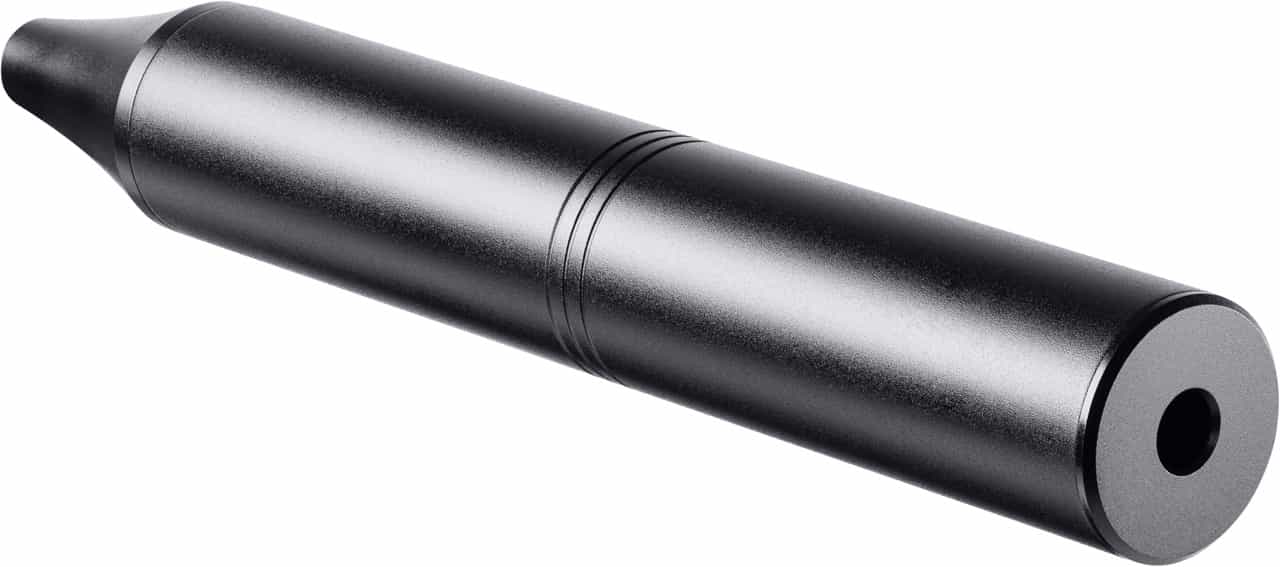
Before anything else: only clean a moderator that is designed to be removed. Check your rifle's documentation to confirm the moderator is a removable, add-on accessory rather than an integrated unit built into the airgun design, which should not be treated as a removable part. If it's removable, the following process is safe and straightforward.
Safe Moderator Cleaning Method
Remove and inspect
Unscrew the moderator from the barrel threading carefully. Many removable airgun moderators use a ½ inch UNF fitting, but you should still confirm the correct thread and setup in the manufacturer's instructions. Do not force it if it feels stiff - apply gentle, even pressure and check the thread is engaged squarely. Once removed, hold it up to a light source and look through it. You're checking whether the baffle stack is visibly fouled or obstructed, and whether there is any visible damage to the internal structure.
Clean the interior
Wear gloves and work in a well-ventilated area as a basic safety precaution. Use a clean, lint-free patch or cotton swab lightly dampened with a suitable airgun cleaning solvent or isopropyl alcohol. Push it through the moderator gently from the muzzle end - never from the barrel end - to avoid pushing debris back toward the crown. Work through the interior slowly, using fresh patches until they come out clean. Do not use abrasive materials, wire brushes, or solvents designed for powder-burning firearms, which can damage baffles or seals.
Dry thoroughly
Pass several dry patches through the moderator after cleaning. Leave it to air dry fully - in a warm, dry environment - before reattaching to the rifle. Moisture left inside a moderator can cause corrosion on internal baffles or affect the next few shots until it disperses. Do not use compressed air at high pressure, as this can displace or damage baffle internals.
Reattach and check
Thread the moderator back onto the barrel carefully, ensuring it seats flush and the thread engages cleanly. Hand-tight is typically sufficient - do not overtighten with tools. After reattachment, check alignment visually and fire a few shots at close range to confirm the pellet exits cleanly without any strike on the moderator.
Do not attempt to disassemble internal baffles
Unless the moderator's manufacturer explicitly provides guidance for baffle disassembly with standard tools, do not attempt it. Most moderator designs are not intended to be opened by the user. Forced disassembly risks damaging the baffle stack and will void any warranty. External and through-bore cleaning is sufficient for routine maintenance, and any deeper cleaning process limits should follow the manufacturer's instructions for safe setup.
Signs Your Moderator Needs Attention - and What Normal Wear Looks Like
Not everything you notice on or inside a moderator requires action. Learning to distinguish genuine fouling from cosmetic wear saves unnecessary effort and prevents over-cleaning.
Normal wear includes: light surface darkening on the exterior from handling, minor scuffing on the housing from being set down in the field, and faint grey discolouration inside the first baffle after a few hundred shots. These are cosmetic and do not affect function.
Signs that cleaning is genuinely needed include:
- Visible lead grey build-up on the first or second baffle face when you look through the moderator
- An oily residue coating the inner walls that transfers to a dry patch on first swab
- Groups opening or becoming inconsistent without any change to pellet batch, zero, or hold
- A faint metallic smell from the moderator after shooting - particularly in damp conditions
- Visible debris or organic material (field use) at the muzzle end of the moderator
A seized thread - where the moderator becomes difficult to remove - also warrants attention, but do not force it. If the moderator won't unscrew with normal hand pressure, take the rifle to an authorised dealer to avoid risking damage to the barrel crown or thread.
How Often Should You Clean Your Moderator? Intervals for Air Arms PCP Users
The most practical way to frame air rifle moderator maintenance intervals is around round count rather than calendar time, and moderator cleaning is usually only needed after several thousand shots. How often you shoot matters far more than how many weeks have passed, and keeping to the maker’s guidance is crucial if you want the rifle to keep working at a high rate over time.
- Light use (under 500 shots since last clean) - a visual check is sufficient. Look through the moderator; if the bore looks clear and unobstructed, leave it alone.
- Moderate use (500 to 1,500 shots) - a through-bore clean with solvent is recommended, particularly if the rifle is used outdoors regularly or shoots heavier lead pellets.
- Heavy use (1,500+ shots or competition season) - a full clean following the method above, with careful drying and thread inspection before reattachment.
For reference, a recreational shooter putting in a couple of club sessions per month is unlikely to reach the 1,500-shot threshold in under a year. A competitive shooter using the Ultimate Sporter or XTi-50 at regular FT or HFT events will reach it considerably faster - in which case cleaning after every major event or at the start and end of the competition season is a sensible baseline.
Keep a simple log
A rough running note of shots fired - even a tally in a notebook - makes moderator maintenance straightforward. It removes the guesswork and helps you build consistent habits alongside your other rifle care routines.
Common Mistakes to Avoid When Cleaning an Air Rifle Silencer
Most moderator cleaning errors come from applying habits borrowed from either firearm cleaning or excessive caution in the wrong direction. Both can cause real damage, and the point of proper care is to preserve consistent noise reduction as well as accuracy.
- Using firearm-specific solvents - products designed for powder fouling in centrefire or rimfire rifles are far more aggressive than needed for an airgun moderator. They can degrade rubber baffles or internal coatings.
- Forcing a seized moderator - if the thread is stiff, forcing it risks stripping the thread or damaging the barrel crown. This is a situation for your authorised dealer, not a pair of pliers.
- Cleaning from the barrel end - always push patches through from the muzzle end. Pushing from the barrel end can drive debris back toward the crown and cause more problems than it solves.
- Over-oiling after cleaning - a moderator does not need re-lubrication after cleaning. Applying oil to the interior will simply create a fresh layer for fouling to adhere to.
- Cleaning too frequently - over-cleaning a moderator that doesn't need it introduces unnecessary thread wear and handling risk. Inspect first, then decide.
A clean moderator helps keep shots less intrusive in backyard settings, improves shooting comfort around other people, and matters for hunting where lower muzzle noise is useful.
The underlying principle across all of these is the same: the goal is to remove what has accumulated, not to restore the moderator to factory-new condition. A few careful passes with the right materials, a thorough dry, and correct reattachment is everything that's needed.
Do not use abrasive tools on baffle surfaces
Wire brushes, abrasive pads, or any scrubbing tool will scratch or gouge baffle surfaces. Damaged baffles don't just reduce moderating performance - they create irregular surfaces that can alter gas flow and pellet exit in unpredictable ways. Lint-free patches and swabs are all that's needed.