



Best Pellets for .177 Air Rifle: A Practical Guide
Pellet selection is one of the most underestimated variables in club and sporter shooting. Shooters invest in quality regulated PCP rifles like the Air Arms S510 Tactical or the Ultimate Sporter, then spend far less thought on the ammunition they feed through them. The result is often frustrating group sizes that the rifle is not responsible for.
This guide covers how to find the best pellets for .177 air rifle use in a systematic, methodical way - from understanding pellet shapes and weights to testing protocols that save you time and ammunition at the range.
Understanding .177 Pellet Shapes: Wadcutter, Domed, Flat Head, and Pointed
Pellet shape is not an aesthetic choice. Each profile is engineered with a specific use case in mind, and using the wrong shape for your discipline will cost you accuracy regardless of how well your rifle is set up.
Understanding .177 Pellet Shapes: Wadcutter, Domed, Flat Head, and Pointed
Pellet shape is not an aesthetic choice. Each profile is engineered with a specific use case in mind, and using the wrong shape for your discipline will cost you accuracy regardless of how well your rifle is set up.
Pointed Pellets
Pointed pellets are used in some air rifles for maximum penetration, which makes them more relevant for pest control and hunting than for paper or knockdown target shooting, but they are often less accurate than domed pellets because even minor tip damage can affect consistency. In competitive disciplines, they rarely offer a ballistic advantage over a well-matched domed pellet, and their in-bore consistency can be harder to control. hollow point pellets are a separate hunting-focused option designed to expand on impact for more energy and a larger wound channel, which can also reduce over penetration, but they are usually better kept to closer distances than long-range precision work. For club and sporter use, they are generally not the first choice.
Domed Pellets
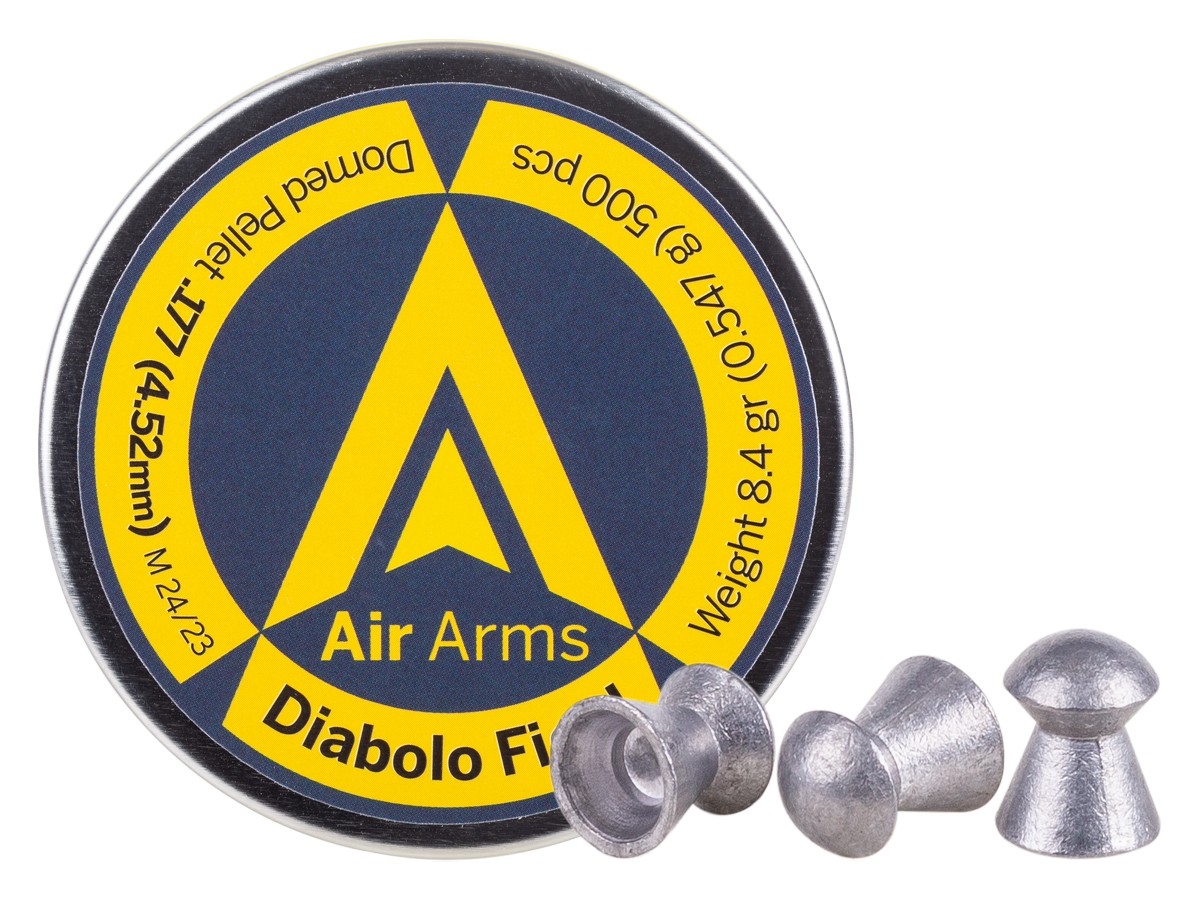
Domed pellets - sometimes called round-nose - are the most common airgun pellets profile, valued for combining accuracy and penetration in a way that suits a wide range of uses. Their higher ballistic coefficient comes from an aerodynamic design that helps reduce air resistance, retain velocity, and improve stability in flight, so they are considerably less affected by crosswind at 50 metres and beyond. For outdoor sporter shooting, HFT, and field target, domed pellets are the practical standard for good reason.
The rounded head does not produce as clean a hole on paper, but for disciplines scored by target position or knockdown, this is irrelevant. What matters is consistent point of impact - and domed pellets deliver that at longer ranges far more reliably than flat heads. That versatility is why they are widely used for both target shooting and pest control.
Wadcutter and Flat Head Pellets
Wadcutter pellets have a flat, cylindrical head that cuts a clean, circular hole in paper targets. That clean edge is what makes them specifically designed for target shooting, because clean holes make scoring easier. When scoring targets by inspection, a punched-out hole is far easier to read than a ragged tear.
They are at their best at short range and tend to lose stability at long range because the flat head creates more drag.
The flat head does come with a trade-off. At distances beyond 25 metres, the aerodynamic drag increases noticeably and the pellet loses velocity more rapidly, causing the trajectory to drop more steeply. For indoor club shooting at fixed distances, this rarely matters. For outdoor disciplines, it matters a great deal.
Indoor vs Outdoor Shape Logic
If you shoot indoor paper targets at 25 metres, a flat head or wadcutter is the practical default. If you shoot outdoors at 50 metres or beyond, switch your thinking to domed pellets before you switch anything else.
How Pellet Weight Affects Trajectory and Consistency at Club Distances
Weight is where many club shooters make their first significant pellet error. The assumption that a lighter pellet is always faster - and therefore better - ignores how trajectory and stability actually behave in a regulated PCP rifle.
In a rifle like the S510 Tactical or Ultimate Sporter, the regulated air system delivers a consistent muzzle velocity shot to shot. This consistency is a significant advantage - but it also means pellet weight becomes a more meaningful variable, because the power output is fixed rather than fluctuating. Compared with .22 air rifle pellets, .177 pellets usually run at higher velocities and give a flatter trajectory for target shooting, while .22 carries more energy into the target and offers greater stopping power for pest control. The .177 calibre remains the usual choice in competition shooting, while .22 is still the more common hunting option.
Regulation Changes the Equation
In an unregulated rifle, velocity variation can mask or compound pellet inconsistencies. In a regulated PCP like the Air Arms S510 Tactical, velocity is held constant shot to shot - which means pellet fit and weight have a more direct and measurable effect on group consistency.
In .177 calibre, pellets typically range from around 7 grains at the lighter end to 10 grains and above for heavier match-grade options. Here is what weight means in practice:
- Lighter pellets (under 8.0gr) - higher speed and a flatter trajectory, making them well suited to short-range target shooting and plinking, but more sensitive to wind and often less stable at 50 metres
- Mid-weight pellets (8.0 - 8.4gr) - a common balance point for club sporter shooting, offering manageable trajectory and reasonable crosswind resistance
- Heavier pellets (8.5gr and above) - hold energy better and resist wind drift at longer range, giving greater stability, but require adequate muzzle energy to maintain consistent velocity through the range, particularly if you move up to the best .22 pellets for air rifle hunting
Across the market, the vast majority still use lead as the standard pellet material, while lead free pellets are lighter and faster but can give up some stability in wind at longer range.
At 25 metres, lighter pellets perform well and the trajectory difference is minimal. At 50 metres, heavier pellets typically show improved group consistency in regulated rifles when the power plant can support them. The key is matching the pellet weight to both the distance you are shooting and the energy your rifle delivers at the muzzle.
Why Head Size and Skirt Fit Matter in Regulated PCP Rifles
Two shooters using pellets from the same tin can get meaningfully different results. Often, the reason is head size - a variable that receives far less attention than shape or weight, but has a direct effect on how the pellet engages the barrel from the moment it enters the breech.
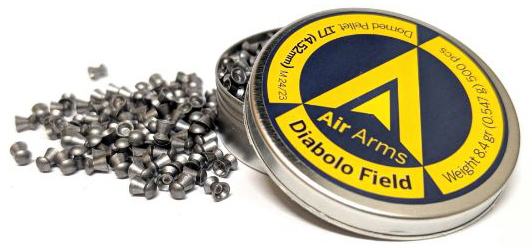
Most .177 pellets are produced in head sizes ranging from 4.49mm to 4.53mm, and sometimes beyond. Air Arms rifles are fitted with match-grade barrels, and the relationship between pellet head and bore diameter directly influences how consistently each pellet is guided through the rifling, especially when you pair them with high-performance products designed for precision and control.
Head Size Variation Across Batches
Head size can vary between pellet batches from the same manufacturer. If your groups open up unexpectedly after opening a new tin, head size variation between batches is a likely cause - not a problem with your rifle.
A pellet with a head that is too small relative to the bore will allow gas to escape past it before the pellet is fully engaged - reducing consistency and often grouping erratically. A pellet with a head that is too large may create excessive resistance, affecting velocity and wear on the barrel over time.
Skirt fit is equally important. The skirt is the rear section of the pellet that expands under pressure to seal the bore. In a regulated PCP, air pressure at the breech is consistent shot to shot - which means skirt expansion is repeatable. A skirt that is too thin or too soft may deform unevenly; a well-proportioned skirt expands reliably into the rifling and provides a consistent seal each time.
When testing pellets, sourcing head-sorted or batch-consistent pellets where possible removes one variable from the equation and makes your test results more reliable, and following the latest Air Arms developments in competitions and product innovation can also inform your choices.
How to Test Pellets Systematically in Your Air Arms Rifle
The most common testing mistake is drawing conclusions too early. A three-shot group tells you very little. A single session with one pellet type tells you even less. Systematic testing requires controlled conditions and enough shots to produce statistically meaningful results.
Consider a scenario familiar to many club shooters: a sporter shooter upgrades to a regulated PCP, assumes the pellets they used before will carry over, and finds inconsistent groups at 50 metres. The rifle is performing correctly - the pellet fit and weight are simply not optimised for the new platform. A structured test would identify the correct combination within two or three sessions rather than months of guesswork.
Systematic Pellet Testing Protocol
Control Your Variables
Use the same shooting position throughout — ideally from a rest or bag. Test at the distance you primarily shoot. Choose a calm day to eliminate wind as a factor, and clean the barrel before beginning a new pellet type if switching between very different head sizes.
Structure Your Groups
Fire a minimum of 10 shots per group for each pellet type. Small groups from few shots are misleading. Record each group size in mm centre-to-centre and fire at least two groups per pellet type before drawing conclusions.
Test One Variable at a Time
Do not change head size and weight simultaneously. Isolate one variable so you can attribute any change in group size to a specific factor. Start with shape, then compare weights within that shape, then test head sizes if your supplier offers them sorted.
Record and Compare
Keep a simple range log: pellet type, head size, weight, group size, distance, and conditions. Over two or three sessions, patterns become clear. The pellet that consistently produces the smallest groups — not just in one session — is your candidate.
Confirm Before Committing
Once you have a strong candidate, confirm it with a full session before buying in bulk. Run the same test on a fresh tin to verify the result is consistent across a new batch. Head size variation between batches makes this step worth doing.
How to Avoid Wasting Ammunition
Many suppliers offer pellets in small sampler quantities or trial tins. Start with 3 to 4 different pellet types across two shape categories and run a structured group test before committing to a full tin. Include reputable brands in that process rather than assuming price or popularity will decide it; Air Arms Diabolo Field is widely trusted for consistency and performance in both target shooting and pest control, while JSB Exact has a strong competition reputation, with heavy use at the 2011 Field Target World Championships. Ten shots per group across two groups per pellet type gives you enough data without excessive cost.
Common Mistakes Shooters Make When Switching Pellets Between Disciplines
Moving between shooting disciplines - from HFT to indoor sporter, or from 25 to 50 metres - is where pellet errors tend to compound. Shooters who have found a pellet that works well in one context often assume it will transfer cleanly. It frequently does not.
- Not re-zeroing after switching pellet weight — a heavier pellet travels on a different trajectory. Even a small weight change can shift your point of impact at 50 metres. Always re-zero when changing pellet weight.
- Using a flat head pellet for outdoor distances — flat heads work well at 25 metres indoors. At 50 metres outdoors, wind sensitivity and trajectory drop make them a poor choice. Discipline context must drive shape selection.
- Assuming the same pellet performs equally in different rifles — barrel dimensions vary between models. A pellet optimised for one Air Arms rifle will not automatically be the best choice in another. Each rifle needs its own test.
- Skipping the re-zero after a discipline switch — switching from HFT to sporter often involves a pellet change. That change requires a scope zero check before competition, not during it.
- Drawing conclusions from too few shots — a five-shot group can look deceptively consistent. Run proper group sizes before committing to a pellet for competition use.
Pellet Weight Change Requires a Re-Zero
Switching pellet weight between disciplines changes the point of impact at your target distance. This is not a scope issue - it is physics. Any change in pellet weight must be followed by a confirmed scope re-zero before you shoot competitively.
Matching the Right Pellet Selection to Your Shooting Discipline and Distance
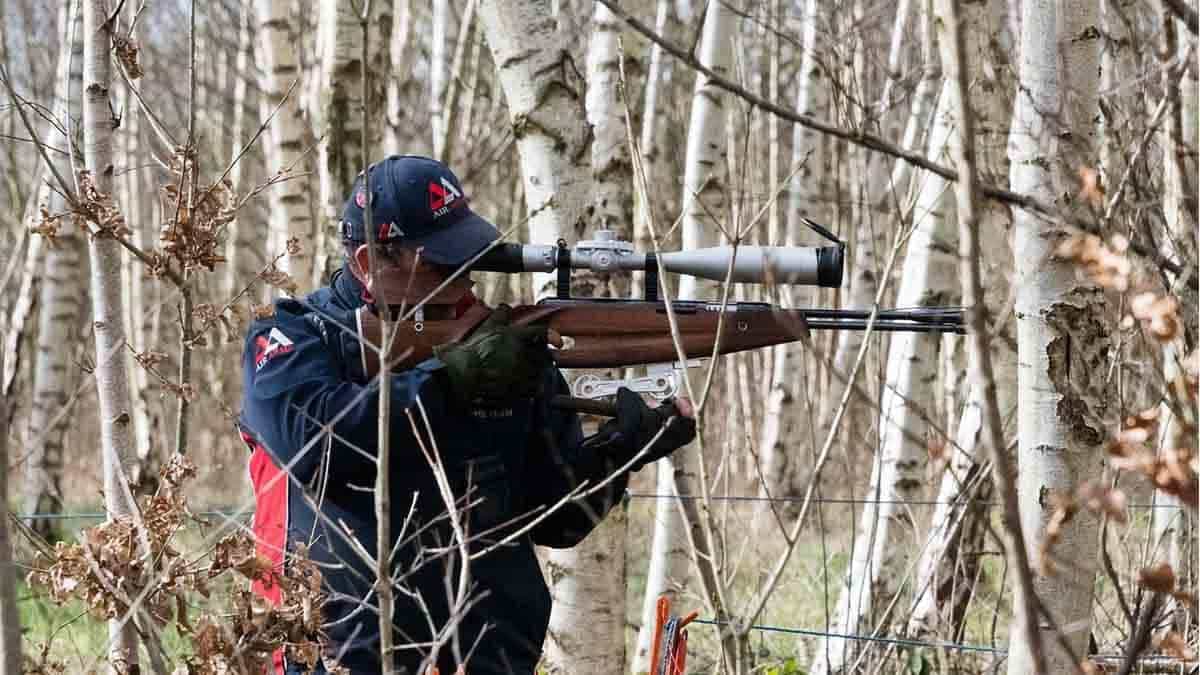
Once you understand the variables - shape, weight, head size, and skirt fit - the practical question becomes straightforward: what does your discipline demand, and what does your rifle confirm through testing?
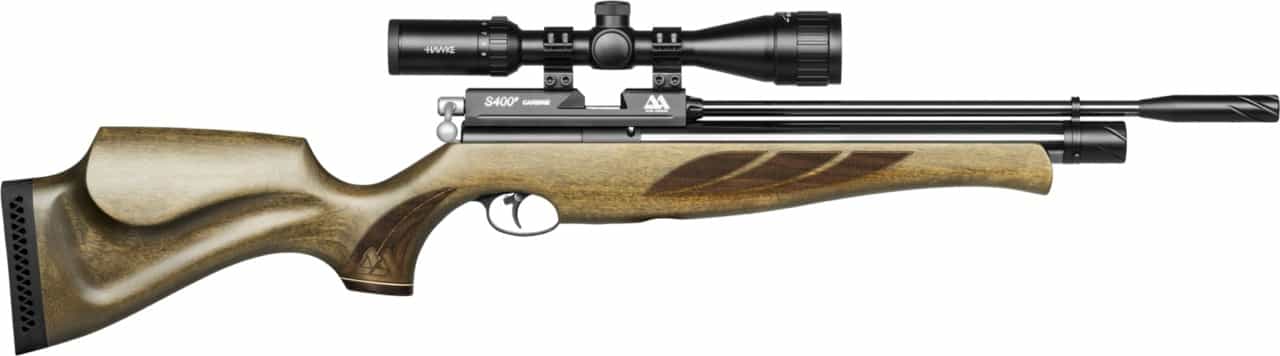
Air Arms rifles built for competitive shooting, including the S510 Tactical and Ultimate Sporter, are engineered to deliver repeatable performance with the regulated air system holding velocity steady. Backed by a 3-year warranty and built in the UK since 1983, that engineering creates the conditions where pellet selection has a direct and measurable effect. The rifle is doing its part consistently — the pellet needs to match it.
- Indoor paper target shooting at 25 metres - flat head or wadcutter, mid-weight, head size confirmed to match your barrel via testing
- Outdoor sporter or club shooting at 50 metres - domed pellet, 8.0gr to 8.4gr and above depending on rifle output, confirmed through structured group testing
- HFT shooting - domed pellet, weight selected for the specific range of distances in your HFT course, zero confirmed for the most common target distance
- Mixed discipline use - identify separate optimised pellets for each discipline and re-zero when switching. Using one pellet as a compromise across disciplines will cost accuracy in both
Pellet choice alone does not determine accuracy. The rifle, the shooter, the conditions, and the setup all contribute. What pellet selection does is remove an unnecessary variable - and in a regulated PCP like the S510 or Ultimate Sporter, built on over 40 years of British engineering expertise, removing unnecessary variables is exactly how consistent performance is achieved.
The Benchmark for Pellet Selection
The right pellet is the one that consistently produces the smallest groups in your specific rifle, at your primary shooting distance, under controlled test conditions - not the one that performed best in someone else's rifle, or that is most popular in your club.
Find Your Best Pellet Match with Air Arms
Find Your Best Pellet Match with Air Arms
Explore the full Air Arms rifle range and find the precision platform that makes every pellet count. Whether you shoot indoor sporter, HFT, or field target, our rifles are engineered to deliver the consistency that makes systematic pellet testing genuinely worthwhile. Visit air-arms.co.uk to explore the range or find your nearest authorised Air Arms retailer for hands-on guidance.